Family instability
Hillbilly ElegyFamily instability in J.D. Vance’s memoir is not a single rupture but a pattern: volatile conflict, shifting households and partners, and the fear that home may change again. Its effects reach from childhood sleep and schoolwork into adult intimacy, while the stability Mamaw eventually offered shows how a dependable home could interrupt the pattern without erasing its influence.
Conflict inside the household
After the family moved from Middletown, Ohio, to Preble County, Ohio, Mom and Bob Hamel were farther from Mamaw and Papaw, who lived more than forty-five minutes away. Arguments that had once drawn other relatives into the orbit became screaming matches. Money was a frequent subject, despite the household’s combined income of more than $100,000: new cars, trucks, and a swimming pool brought debt rather than security. The short marriage eventually ended with tens of thousands of dollars owed and little to show for the spending.
The conflict also became physical. One night, J.D. Vance woke to breaking glass and found Mom and Bob Hamel fighting in the kitchen. He stepped between them and punched Bob Hamel; the confrontation ended, and Bob Hamel did not strike him. For a child, the episode made domestic conflict something to intervene in, not merely something to witness. The memoir later presents the improvised lessons such scenes could teach: shouting instead of speaking, treating physical aggression as part of an argument, and leaving with the children rather than resolving the dispute.
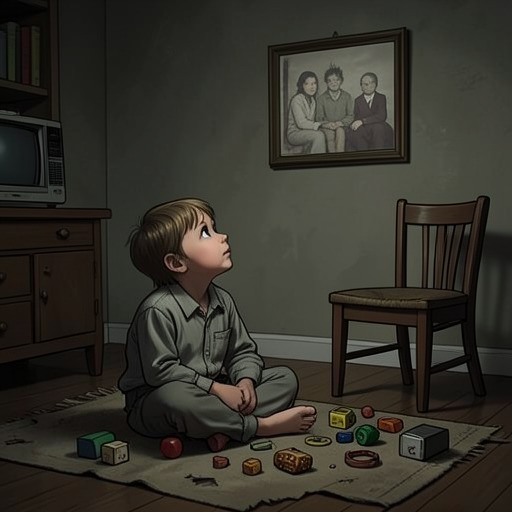
The disruption continued beyond any one confrontation. At night, furniture moving, stomping, shouting, and breaking glass kept J.D. Vance awake. He went to school tired and depressed, preoccupied with what might be happening at home. Rather than telling someone, he hid the circumstances out of embarrassment. His grades began to slip, and the end of the school day became a source of dread: home offered no dependable refuge, while school did not feel like an escape.
Bereavement and repeated moves
Papaw’s death intensified the family’s existing fractures. Mom treated her grief as singular and reacted angrily when Lindsay Leigh Lewis, Mamaw, or Aunt Wee grieved in their own ways. In the days after the funeral, a public crisis brought police to Mom’s home; Mamaw took Lindsay Leigh Lewis and J.D. Vance away from the scene. The memoir presents the episode as a point when a danger that had previously been obscured became impossible for a child to miss. Bereavement did not create the instability from nothing; it exposed how much the household depended on relationships already under strain.
A grade-by-grade account makes that instability concrete. In the middle of third grade, J.D. Vance left Middletown, Ohio, and his grandparents to live in Preble County, Ohio, with Bob Hamel. At the end of fourth grade, the family moved to a duplex on the 200 block of McKinley Street; at the end of fifth, it moved to the 300 block. Chip became a regular presence in the home without living there, then was replaced by Steve while J.D. Vance remained at the same address. By the end of seventh grade, Matt had taken Steve’s place, Mom was preparing to move in with him, and she hoped J.D. Vance would join her in Dayton, Ohio. At the end of eighth grade, she demanded that he move there; after a brief stay with his father, he agreed. At the end of ninth grade, he moved in with Ken, a stranger who had three children of his own. Across these changes, the memoir also names drugs, a domestic-violence case, children’s services, and Papaw’s death as pressures surrounding the family.
The difference a stable home made
The book sets this succession of addresses and adults against the years J.D. Vance lived with Mamaw permanently. At the end of tenth, eleventh, and twelfth grades, the arrangement was the same: Mamaw’s house, with no one else living there. The repetition is the point. Instead of another announced move or a new partner entering the household, there was a place where he could expect to remain.
That steadiness had practical consequences. A quiet home made it easier to do homework; the absence of fighting and household upheaval left more attention for school and work. Staying in one place also made lasting friendships easier to form, while a job and broader experience helped J.D. Vance clarify what he wanted from his own life. Looking back, he connected that period with losing interest in drugs, improved grades, a strong SAT score, and teachers who helped him value learning. Most immediately, he no longer feared the school bell as a signal that the next stretch at home was uncertain. His account gives stability its force not as an abstract ideal but as the assurance of knowing where he would live the following month.
The contrast remained emotionally vivid. Remembering the earlier years could still provoke intense anxiety. J.D. Vance described wanting a home where he could stay, without strangers repeatedly entering his family life. Mamaw’s home did not undo what had come before, but it gave him an alternative experience against which he could recognize the costs of instability and imagine a different future.
Patterns carried into adult relationships
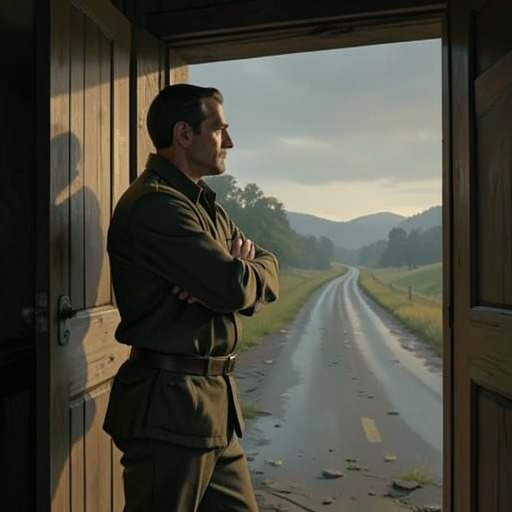
The pattern did not end when the childhood moves stopped. During his second year of law school, Usha Vance observed that J.D. Vance withdrew at the first sign of disagreement. He recognized that he had few ways to respond to relationship trouble: he could yell or retreat. When he tried repeatedly to end the relationship and then shouted at Usha Vance, he saw Mom’s behavior in his own. His reaction to conflict joined fear, sadness, and guilt with the impulse to escape rather than talk.
After a poor interview in Washington, D.C., he exploded when Usha Vance tried to reassure him and then left their hotel. Walking alone, he recalled Mom taking him and their toy poodle to a motel after a fight with Bob Hamel, and remembered Mom’s childhood flight from her own parents’ conflict. He understood himself as a third-generation escaper. Near Ford’s Theatre, he found Usha Vance waiting on the steps: she had followed because she was worried about him. He apologized, and she accepted, while telling him that he needed to talk rather than run away. The reconciliation marked a different possible response to conflict: neither escalation nor disappearance had to be the only available course.
The contrast also appeared in Usha Vance’s family. At Thanksgiving, J.D. Vance encountered relatives who spoke affectionately of one another and did not turn family disagreements into denunciations. When he asked about a relatively estranged relative, Usha Vance’s father described keeping in touch and making the effort to maintain the relationship. That example stood against the habit of treating estrangement or conflict as a reason to abandon family ties.
Other relatives showed both the persistence of learned vigilance and the possibility of change. Aunt Wee told J.D. Vance that she had once braced herself for arguments with Dan, even though their marriage was, by his account, the most successful he had seen. She said their relationship improved when she realized she did not need to stay on guard. Lindsay Leigh Lewis described fighting with Kevin in ways that anticipated his leaving; years later, their marriage continued. These accounts suggest that instability can shape how people read even safer relationships, but that awareness and changed behavior can alter the pattern.
Inheritance, choice, and responsibility
The memoir places individual lives within a wider pattern of family transitions. It compares the share of children exposed to three or more maternal partners in France, Sweden, and the United States: 0.5 percent, 2.6 percent, and 8.2 percent, respectively, with the American figure higher still among working-class families. It also notes research associating multiple changes in family structure with poorer developmental outcomes than stable two-parent households and, perhaps, stable single-parent households. The figures widen the frame beyond one family, while the narrative’s school-night fears and repeated moves keep the consequences personal.
J.D. Vance also describes escape as a response that can lead into further instability. Aunt Wee married at sixteen to an abusive husband; Mom, a high-school salutatorian, had a child and divorced before earning a college credit. The book does not treat these outcomes as inevitable, but it emphasizes how leaving one harmful situation without support can lead into another. In its formulation, instability reproduces itself across relationships and generations.
The memoir resists assigning all responsibility either to personal choices or to inherited circumstances. Papaw once wept over Mom’s troubles and wondered whether he had failed her. J.D. Vance considers how his parents’ fighting and alcoholism affected Mom, and how she responded differently from Aunt Wee: where Aunt Wee confronted or tried to redirect the conflict, Mom hid or fled. Yet he rejects the idea that a painful childhood excuses every later choice. Mom, as he describes her, loved her children and tried to be a good mother, sometimes succeeding and sometimes not; compassion for her history does not remove her responsibility. Family instability therefore functions both as a social inheritance and as a pattern that individuals may recognize, resist, or pass on. Mamaw’s stable home offers the book’s clearest counterexample: support can change what becomes possible, even when it cannot erase the past.