Intergenerational cycle of family instability and trauma
Hillbilly ElegyIntergenerational cycle of family instability and trauma is the pattern by which childhood exposure to conflict and disrupted relationships shapes how later generations respond to intimacy, disagreement, and home life. In J.D. Vance’s account, the pattern is not a simple inheritance or an excuse: it moves through remembered scenes, repeated ways of handling conflict, and attempts to escape, but it can also be recognized and resisted. His narrative connects Mom’s childhood to the household he grew up in and then to the conflict he carried into his relationship with Usha.
Formation in the Family
Mom grew up amid her parents’ fighting and alcoholism. The sisters responded differently: Aunt Wee tried to calm her parents or draw their father’s attention away from their mother, while Mom hid, ran away, or shut herself off from what was happening. J.D. Vance presents that contrast not as proof that one child was stronger, but as evidence that siblings can be shaped differently by the same unstable home. The account suggests Mom was less able to withstand what she experienced, while leaving open how much of her later life should be attributed to her choices and how much to the conditions in which she grew up.
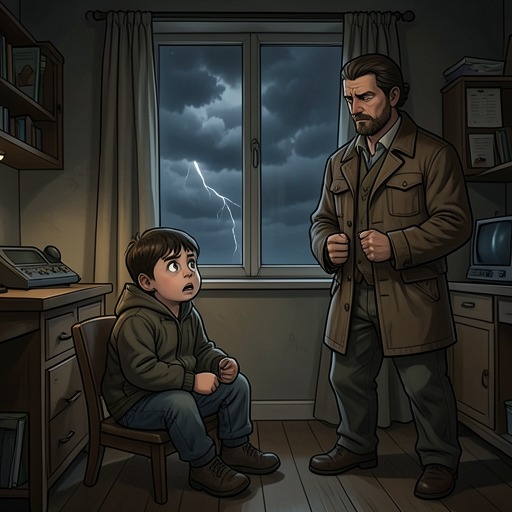
The pattern continued in the next household. During a conflict between Mom and Bob Hamel, J.D. Vance intervened, and the confrontation stopped. The incident became an early lesson in what conflict looked like at home: arguments could escalate, and a child could feel drawn into the adults’ dispute. Later, after Papaw died, Mom’s grief developed into a public crisis. Lindsay, Matt, and other people close to her were also grieving, but Mom treated their grief as illegitimate beside her own. A few days after the funeral, police were present during her breakdown, and Mamaw took Lindsay and J.D. Vance with her. The loss did not create the family’s instability; it exposed how much had already been building beneath the surface.
Repetition and Escape
The memoir places these family scenes beside a broader account of relationship instability. It reports that children in the United States were more likely to experience three or more maternal partners than children in France or Sweden: 8.2 percent in the United States, compared with 0.5 percent in France and 2.6 percent in Sweden, with the American figure higher among working-class families. Citing sociologists Paula Fornby and Andrew Cherlin, the narrative notes that multiple changes in family structure may affect children’s development. The figures give social scale to a pattern the memoir also renders through individual lives: changing partners and households can make home feel provisional, and instability may reproduce itself rather than resolve itself.
Escape is one recurring response, but the memoir shows that leaving a difficult situation does not necessarily lead to safety or independence. Aunt Wee married at sixteen to an abusive husband. Mom, despite being salutatorian of her high-school class, had a child and a divorce before her teenage years were over and had earned no college credits. As a child, Mom had run from her parents’ home with her mother and sister to avoid another night of conflict. Later, she took J.D. Vance and their toy poodle to a Middletown motel after a fight with Bob Hamel; Mamaw persuaded her to return and face the problem. Looking back, J.D. Vance understands his own impulse to leave as part of this family history: he calls himself a third-generation escaper. The phrase links separate generations without claiming that their circumstances or decisions were identical.
The Pattern in Adult Relationships
J.D. Vance recognized the cycle most sharply when he began repeating familiar forms of conflict with Usha. When relationship problems arose, he tried to end the relationship or withdraw; when he stayed, he sometimes yelled and then felt guilty and afraid. He saw himself adopting behavior he had associated with Mom. After an argument connected to a disappointing law-firm interview in Washington, D.C., he left their hotel and walked through the city. He remembered Mom’s earlier retreat to the Comfort Inn and her childhood flight from her parents’ house. Usha found him near Ford’s Theatre, and their conversation brought the realization that running away and hurting a partner were patterns he needed to confront, not merely traits he could declare absent from himself.
His reflections extend beyond escape to the habits that conflict had taught him. He mistrusted apologies because he had seen an apology used to lower someone’s guard; he had learned to use words as weapons because that was how people around him fought. Disagreement could feel like a contest to win rather than a problem to work through. These learned responses did not disappear as soon as he recognized them. He describes continuing to struggle with conflict and relying on Usha’s help to manage reactions he compares to a delayed explosion. The relationship therefore becomes both a place where the family pattern recurs and a setting in which it can be named and handled differently.
Stability, Responsibility, and Change
The memoir sets this inherited instability against the years J.D. Vance lived permanently with Mamaw. Before that move, his childhood had involved repeated changes of home and adult partners: from Middletown to Preble County, back to different addresses in Middletown, then changes in Mom’s relationships and households, including a move to Dayton and a period living with Ken and his children. Drugs, a domestic-violence case, children’s services, and Papaw’s death added further disruption. After moving in with Mamaw, he stayed in the same home through tenth, eleventh, and twelfth grades. The contrast is concrete: instead of wondering where he would live next, he knew he would remain with the same person in the same house.
J.D. Vance connects that steadiness with happiness, improved grades, doing well on the SAT, losing interest in drugs, and finding teachers who helped him love learning. He does not present Mamaw’s home as a formula that erased the past; rather, its stability offered a counterexample to the churn he had known and space for other possibilities. His later service in the Marines and return to Ohio with a clearer sense of what he wanted further complicate any claim that childhood patterns determine adult outcomes. Change came through structure, relationships, and choices rather than through recognition alone.
The account’s moral conclusion is deliberately mixed. Uncle Jimmy remembered Papaw weeping over the belief that he had failed Mom, while Aunt Wee insisted that Mom remained responsible for her own choices. Lindsay allowed for the possibility that Mom had her own demons but also emphasized responsibility. J.D. Vance acknowledges that his grandparents’ fighting and alcoholism affected their children, and that Mom responded differently from her siblings; he also rejects the idea that her childhood grants her permanent immunity from blame. He describes Mom as someone who loved her children and tried to be a good mother, sometimes succeeding and sometimes not. The cycle matters precisely because it can explain how harm is carried forward without making harm inevitable or responsibility disappear.