J.D. Vance’s decision not to confront another driver
Hillbilly ElegyJ.D. Vance’s decision not to confront another driver is a small road incident with a larger personal consequence: for once, he feels the impulse to defend his honor and chooses not to act on it. Recounted as part of his reflection on the habits childhood left behind, the episode connects an aborted confrontation in Cincinnati to a past in which readiness for conflict could seem necessary for survival. His restraint marks progress, but the self-criticism that follows shows that changing behavior does not immediately erase the standards by which he learned to judge himself.
Identity and Background
Vance presents the incident as evidence of a persistent divide between the conditions that shaped him and the relationships he has as an adult. He has learned to respond to conflict by either withdrawing or preparing for a fight. In childhood, that stance had a practical purpose: he believes that without it, the homes in which he grew up would have overwhelmed him. In adulthood, however, the same readiness can misread an ordinary slight as a threat demanding an answer.
That inherited vigilance appears in more than confrontations. Vance recalls learning to divide and hide his money in different places, including beneath a mattress, in an underwear drawer, and at Mamaw’s house, because he feared that Mom or someone else might find it and borrow it. When he and Usha Vance later combined their finances, she was surprised to discover that he had several bank accounts and small overdue credit-card balances. The details show how a protective habit could persist after the circumstances that formed it had changed: precautions once directed at family instability remained built into his adult financial life.
The Encounter in Cincinnati
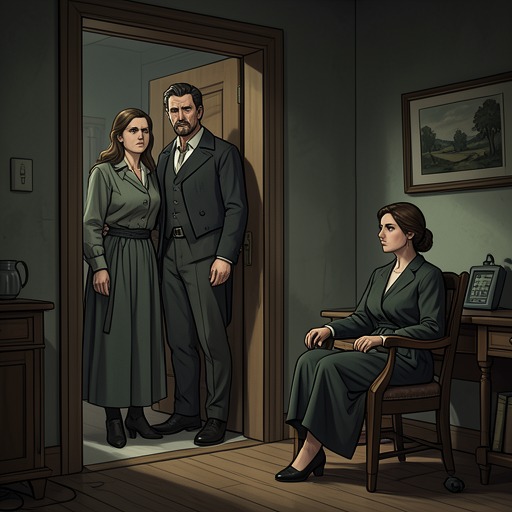
A couple of years before the account, Vance was driving in Cincinnati with Usha Vance when another driver cut him off. Vance honked; the other driver responded with an insult. At a red light, with the other car in front of his, Vance unfastened his seat belt and opened his own car door. He intended to demand an apology and was prepared to fight if the exchange escalated. The confrontation remained only an intention: before getting out, he changed his mind and shut the door.
Usha Vance was pleased that he stopped himself before she had to tell him to stop acting recklessly, something she says had been necessary in the past. She told him she was proud that he had resisted his instinct. Her response gives the decision a relational dimension: the change is noticed and affirmed by someone who knows the pattern, rather than existing only as a private resolution. The immediate outcome is not reconciliation with the other driver or a negotiated settlement. It is simply that Vance stays in the car and the encounter does not become a fight.
Honor, Conflict, and Relationships
Vance explains why the insult had such force for him. As a child, honor was tied to several forms of security and belonging. Defending himself could deter a school bully; defending Mom could make him feel connected to her when a man or that man’s children insulted her, even when Vance agreed with what they said. In a turbulent environment, fighting also gave him a limited sense of control. The Cincinnati incident therefore activates more than irritation at a traffic maneuver: it touches a learned rule that an insult must be answered if he is to remain worthy in his own eyes.
That rule does not fit the ordinary disputes of his adult life. Usha Vance sometimes reminds him that a perceived slight from a passing motorist or a neighbor who criticizes his dogs does not warrant a lasting feud. Vance says he concedes that she is probably right, even while recognizing the strength of his emotions. Their difference is not presented as a simple contrast between anger and calm; it reveals how an old measure of danger can continue to shape reactions in relationships where the same response is no longer useful.
Change and Significance
The pause at the red light is a modest but consequential break in Vance’s established pattern. He has already opened the door and formed an intention to confront the other driver; restraint comes at the point when the intention might have become action. The event does not suggest that his anger has disappeared. Instead, it shows that he can recognize the impulse and reverse course before it dictates what happens next. Usha Vance’s approval confirms the value of that interruption within their relationship.
The change also has an uneasy aftermath. For several hours, Vance silently criticizes himself for having done what he considers the objectively correct thing. He recalls that, during roughly the first eighteen years of his life, backing down would have brought contempt from others and seemed incompatible with being an upstanding young man. The old standard remains emotionally persuasive even after his judgment has rejected it. His concluding comparison is between that temporary self-reproach and the prospect of sitting in jail after trying to teach the other driver a lesson: restraint is progress precisely because the alternative could have carried a far greater cost. The incident’s ending is not a triumphant release from the past but a clearer choice within its continuing pressure.