Kinship care as an informal safety net
Hillbilly ElegyKinship care as an informal safety net is the support provided by relatives who take responsibility for a child when a parent cannot offer a stable home. In J.D. Vance’s account, it meant more than shelter: Mamaw’s continuing presence, the support of Aunt Wee and Dan, and a wider circle of relatives and trusted adults helped preserve family ties and make stability possible. Yet the arrangement remained vulnerable because the child-services system did not automatically treat a grandmother as a suitable caregiver. The concept therefore carries two meanings at once: the practical strength of family care and the risk that public rules may fail to accommodate it.
Family Care Amid Instability
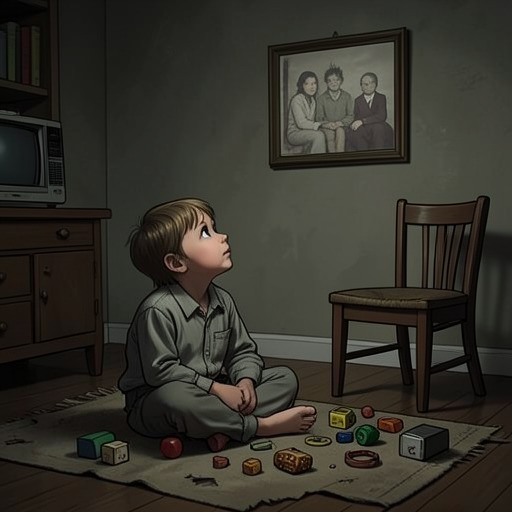
J.D. Vance’s childhood was marked by repeated changes in household and residence. In third grade, he and his family left Middletown, Ohio, to live in Preble County, Ohio, with Bob; later moves and changes in Mom’s relationships continued to unsettle home life. The uncertainty was not simply a matter of addresses. Conflict between Mom and Bob could dominate the household, and J.D. Vance describes intervening in one of their fights. In another crisis, after Papaw’s death, Mom’s distress spilled into a public breakdown. Mamaw took Lindsay and J.D. Vance with her. These episodes show why the availability of a trusted relative mattered: family members could respond directly when the home environment became difficult, without waiting for a stable arrangement to emerge on its own.
Mamaw’s care also joined emotional support to practical continuity. After Papaw died, J.D. Vance stayed close to Mamaw, while she prevented him from staying at Mom’s during a period of upheaval. His relatives tried to shield him from the full extent of the adults’ grief and difficulties, though they could not make those problems disappear. Lindsay offered reassurance as the family faced the change, and Mamaw provided a nearby place to turn. The care network was therefore not limited to one caregiver or one moment: it involved relatives noticing distress, taking children into their homes, and helping them remain connected to people they trusted.
From an Open Door to a Stable Home
The difference between temporary refuge and lasting stability becomes clearest in J.D. Vance’s comparison of life before and after he moved in with Mamaw permanently. Before that move, the family’s changing circumstances brought repeated transitions, including moves between Middletown and Preble County, later household changes, and a period when Mom wanted him to join her in Dayton, Ohio. At the end of ninth grade, after a brief stay with his biological father, he moved in with Ken and Ken’s children. By contrast, throughout tenth, eleventh, and twelfth grades, he lived with Mamaw in the same house, with no one else.
That constancy had consequences beyond the fact of having a place to sleep. The quiet at Mamaw’s home gave J.D. Vance room to do homework and focus on school and work. Living with the same person in the same house made it easier to build lasting friendships. He no longer feared the end of the school day without knowing where he would live the following month, and Mom’s romantic decisions no longer determined his household. His grades improved, he lost interest in drugs, he performed well on the SAT, and teachers helped him discover a stronger interest in learning. He connected the opportunities that followed with the happiness and security that had become possible in Mamaw’s home.
The account does not reduce those changes to a single cause. J.D. Vance acknowledges that a peaceful home, freedom from fighting, time for school, work, and friendships all mattered, while emphasizing that the stability itself was what he most clearly remembers. That distinction is central to the idea of kinship care: a relative’s home can provide the conditions in which a child’s capacities and choices have room to develop, even when no single intervention explains the eventual outcome.
A Wider Network of Protection
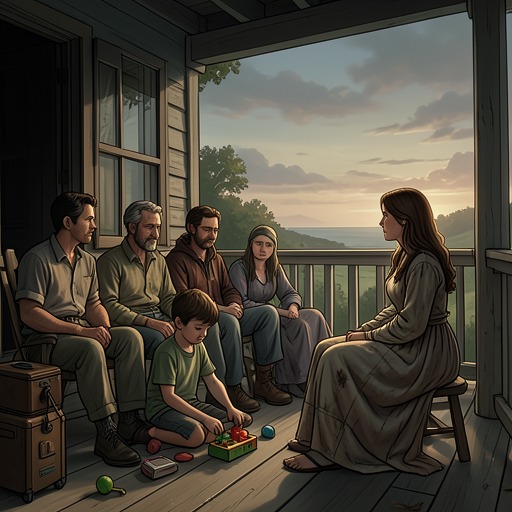
Mamaw’s home was the center of the safety net, but J.D. Vance attributes his chances to a larger set of people. His grandparents remained present even when Mom and her husband moved farther away in an effort to exclude them. Lindsay protected him, including after he had grown physically bigger than she was. Aunt Wee and Dan opened their home when he was too afraid to ask for help; their marriage also gave him an early example of a loving, durable partnership. Teachers, distant relatives, friends, and caring men around the family contributed support in different ways. Mom, despite her difficulties, instilled in him a lasting interest in education.
These forms of help were not interchangeable, and none guaranteed a particular future. Together, however, they gave J.D. Vance reliable relationships and examples beyond the instability of his immediate household. His account of Aunt Wee and Dan is especially instructive: they were both a practical refuge and a model of a marriage that did not treat conflict as a reason to abandon the relationship. Kinship care thus included more than taking a child in. It also meant access to adults whose conduct could demonstrate other ways of living and relating.
The Limits of Formal Recognition
The family’s informal support did not fit neatly into the child-services system. At twelve, after Mom was taken away in a police cruiser, J.D. Vance understood that social workers, mandated family counseling, and a court date had brought the family under official scrutiny. When he said that he spent most of his time with his grandparents and wanted to continue doing so, caseworkers warned that the courts might not approve the arrangement. Mamaw was treated in the eyes of the law as an untrained caregiver without a foster license. J.D. Vance feared that if Mom’s court case went badly, he might be placed with a foster family rather than Mamaw, and he kept quiet with social workers because he feared losing the people and home he loved.
The feared separation did not happen: Mom did not go to jail, and J.D. Vance stayed with Mamaw. The arrangement remained informal. He could stay with Mom if he chose, while Mamaw’s home remained open to him. This outcome depended on the family’s own capacity to maintain care rather than on a clearly secured placement with a licensed relative. Its success in his case does not make the uncertainty incidental; it reveals how a child can experience family as a safety net while simultaneously confronting the possibility that official procedures may redirect him away from it.
J.D. Vance’s policy argument broadens that problem beyond his own family. He observes that grandparents, cousins, aunts, and uncles play a substantial role in many families, including many Black and Hispanic families, yet child-services systems can leave those relatives out. Some states require foster-care licensing even when the prospective caregiver is a grandmother or another close family member. In his view, rules designed without these extended-family arrangements in mind can worsen an already difficult situation. Kinship care is therefore both a personal source of protection and a test of whether public systems can recognize the family relationships that children already depend on.
Meaning and Consequences
The concept’s significance lies in the difference between a family’s lived network and the categories through which institutions assess care. In J.D. Vance’s experience, Mamaw could offer what he most needed: an enduring home, a stable adult relationship, and a dependable base from which to attend school, work, and form friendships. Aunt Wee and Dan, Lindsay, and other relatives and adults reinforced that support. These ties did not erase family conflict or prevent every crisis, but they made it possible for him to remain within a network of people who knew him and were prepared to help.
The narrative also resists treating kinship care as a complete substitute for public protection. Not every child has a Mamaw able to take them in, and informal support can leave a child’s placement dependent on family circumstances rather than formal assurance. J.D. Vance presents relatives as essential participants in the safety net, while arguing that systems meant to protect children can make their work harder when they exclude or undervalue family caregivers. The lasting contrast is between the repeated uncertainty of his earlier household and the predictability of Mamaw’s home: a private family arrangement supplied the stability that helped open later opportunities, even as the law offered no certainty that such an arrangement would be allowed.