Preble County move
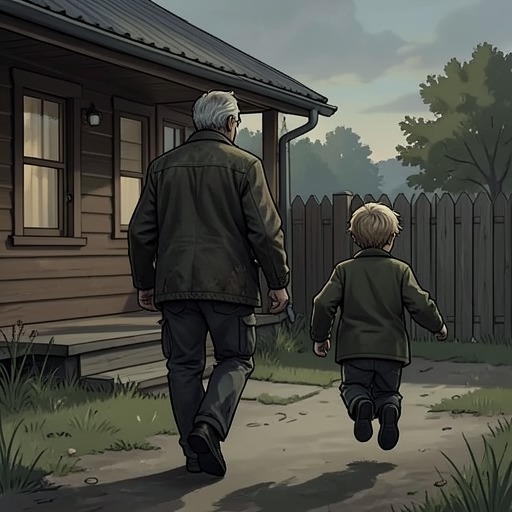
Hillbilly ElegyAt about nine years old, J.D. Vance moved with Mom and Bob Hamel from Middletown, Ohio, to Preble County, Ohio. The relocation took him into a sparsely populated farming area roughly thirty-five miles from his former home and, more consequentially, away from Mamaw and Papaw. Vance remembered the move as the worst thing that could happen to him: his grandparents were his best friends, helped him with homework, and gave him treats when he behaved well or completed difficult assignments. Their distance removed a familiar source of care and protection at the moment the household was becoming less secure.
Relocation and Separation
Mom and Bob wanted to leave Papaw’s constant presence and what they regarded as Mamaw’s interference. For Vance, however, those grandparents were not an unwelcome intrusion but the people who made the family’s chaotic life feel manageable. The family had been organized around a wide network of aunts, uncles, grandparents, and cousins; moving to Preble County changed that daily arrangement. Mamaw and Papaw were now more than forty-five minutes away, rather than close at hand.
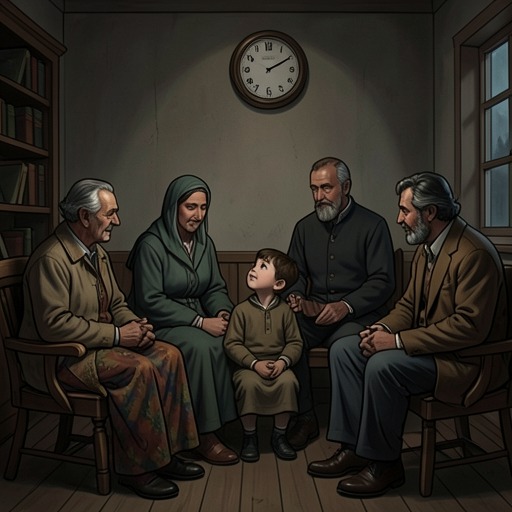
The move also placed Vance in a home where conflict between Mom and Bob had already begun. Bob was Mom’s third husband, and their marriage was short-lived. Vance’s account presents the relocation not as a clean break from family tension but as a change of setting that left its underlying problems intact. Before and around the move, arguments could lead Mom to take the children to a local motel until Mamaw or Papaw persuaded her to return and confront the problems at home. In Preble County, that nearby intervention was harder to reach.
Conflict and Its Effects at Home
In the new home, many arguments became screaming matches, often about money. The family had a combined income of more than one hundred thousand dollars, yet spent on items they did not need, including new cars, new trucks, and a swimming pool. By the time the marriage fell apart, they were tens of thousands of dollars in debt and had little to show for those purchases. The financial disputes were therefore not simply a matter of insufficient income; they took place alongside spending that intensified the household’s instability.
The conflict also became physically charged. Vance woke one night to breaking glass and found Mom and Bob fighting in the kitchen. When Mom fell to the floor, he moved toward her; when Bob came closer, the boy punched him, then covered his head in expectation of a return blow. Bob did not hit him, and the intervention brought the confrontation to an end. The adults separated without further violence, but Vance absorbed a troubling picture of how disagreements were handled: raised voices, insults, physical escalation, and retreat from the home seemed to form a usable set of responses.
The nights affected his days as well. He lay awake listening to arguments and movement in the house, then went to school tired and depressed, preoccupied with what might be waiting when he returned. He wanted silence but felt too embarrassed to tell anyone what was happening. His grades began to slip, offering the first visible sign that the household conflict was affecting him. Over time, he found himself listening more closely to the fights instead of avoiding them. The anticipation came to resemble the excitement of a basketball game, and he later recognized that the drama had acquired an addictive pull.
Crisis and Return to Middletown
The family’s time in Preble County ended after Mom attempted suicide. When Vance came home from school and saw Mamaw’s car in the driveway, he recognized the unexpected visit as an ominous sign. He was eleven. Mom was in the hospital after intentionally driving her new minivan into a telephone pole, following a confrontation with Bob, who had discovered her affair with a local fireman and demanded a divorce. Mom said the crash was an attempt to kill herself; Mamaw suspected it was also connected to the affair and financial troubles. Vance and Lindsay largely accepted Mamaw’s interpretation and felt relief that Mom had not been seriously hurt and that the move might be over.
Mom spent only a couple of days in the hospital. Within a month, the family had returned to Middletown, one block closer to Mamaw than before and without Bob. The return restored the grandparents’ physical closeness, but it did not restore the earlier family life. Mom’s behavior became increasingly erratic; she was more like a roommate than a parent, came home late, and cycled through boyfriends. The Preble County move thus ended geographically while the instability it had exposed continued in a different form.
Retrospective Significance
Vance later connected the move and its surrounding crises to a multigenerational pattern of responding to conflict by leaving. He remembered Mom taking him and the family’s toy poodle to a Middletown motel after a fight with Bob, and recalled that Mamaw eventually urged her to return and face the problem. He also thought of Mom’s childhood escapes from a frightening home with her mother and sister. In Washington, D.C., during law school, after he stormed out of a hotel room following an argument with Usha Vance, these memories helped him recognize that he was repeating the family’s flight from conflict. He called himself a third-generation escaper and apologized, beginning to see that withdrawal was not the only response available to him.
That later recognition gives the Preble County relocation significance beyond the move itself. It marks a childhood separation from supportive relatives, but also an early chapter in the pattern Vance would eventually name: instability at home, retreat when conflict intensified, and the transmission of defensive habits into adult relationships. His later conversations with Aunt Wee and Lindsay further showed him that readiness for confrontation had shaped other family relationships too, even where marriages endured. The return to Middletown changed the family’s address; understanding the inherited response to conflict took much longer.