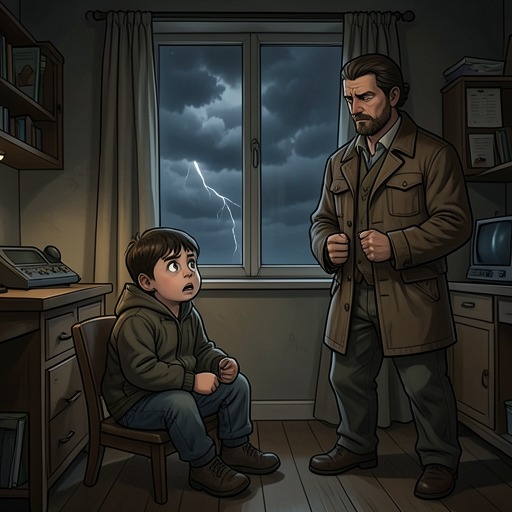
Trauma-induced chronic stress and hypervigilance
Hillbilly ElegyTrauma-induced chronic stress and hypervigilance is the enduring state of alertness that J.D. Vance links to repeated conflict and instability in his childhood home. In his account, a response that helped him get through family crises later interfered with the peaceful relationships he wanted: he could flee, prepare for a fight, or turn words into weapons, but had difficulty treating disagreement as something other than danger.
Origins in a Conflict-Ridden Home
Vance locates the beginnings of this pattern in a household where arguments could become loud, prolonged, and unpredictable. After his family moved to Preble County, away from Mamaw and Papaw, arguments between Mom and Bob increasingly became screaming matches. Their financial strain was especially confusing because the household earned more than a hundred thousand dollars, yet spending on new vehicles and a swimming pool left them tens of thousands of dollars in debt. The material circumstances did not make the home feel secure; conflict remained a regular feature of family life.
One night, Vance woke to a fight between Mom and Bob and ran downstairs. When Mom fell, he went to her; when Bob moved closer, Vance punched him, expecting that Bob might hit back. Bob did not strike him, and the intervention brought the confrontation to an end. The episode mattered not only as a frightening scene but as a lesson in what conflict looked like: escalation, physical intervention, and an abrupt return to silence rather than an explanation or resolution.
The strain reached beyond individual confrontations. Vance describes lying awake to the sound of arguments and disruption, then going to school tired and depressed while anticipating what might happen at home. He found it difficult to tell anyone what was happening because he felt embarrassed. School became something to endure, and even the announcement that the day was almost over could bring dread, since it meant returning home. His slipping grades were the first visible sign that the household turmoil was affecting his life outside it.
The Body's Alarm System
The memoir explains persistent alertness through the body's fight-or-flight response. Drawing on research discussed in the book, Vance describes how sustained stress in early childhood can leave the physiological response chronically activated, with increased potential for fear and anxiety. In this account, the system meant to prepare a person for an immediate threat does not reliably switch off when the threat is no longer present. A child accustomed to conflict can remain ready to fight or flee, carrying the expectation of danger into settings that do not require either response.
Vance emphasizes that this readiness outlasts the original circumstances. His image of a bear returning from the bar every night makes the home itself the source of repeated alarm; the problem is not a single frightening episode but exposure that keeps the body and mind prepared for the next one. The resulting pattern is described as learned adaptation, not as a formal diagnosis. Its costs become clearer in adulthood, when the same vigilance that once helped a child navigate an unstable home can make ordinary intimacy and disagreement feel threatening.
Patterns Repeated Across Relationships
Vance sees the pattern recur across generations and relationships. After Mom and Bob's conflicts, Vance later recognized a similar impulse in himself: when a relationship became difficult, he tried to get away; when escape failed, he could yell and say hurtful things. During a difficult period with Usha, he attempted to end the relationship repeatedly, then became angry and felt guilty and afraid. He recognized that his responses resembled behavior he had condemned in Mom, an unsettling discovery because he had regarded her as a villain rather than as someone whose patterns he might repeat.
A failed law-firm interview in Washington, D.C., brought the pattern into focus. When Usha tried to comfort him, Vance responded angrily and left their hotel room. Walking alone, he recalled Mom taking him and their toy poodle to the Comfort Inn in Middletown after an argument with Bob, and he remembered Mom's childhood escapes from her alcoholic father. He understood himself as part of a succession of family members who ran from conflict. Usha had followed him; when they met again at Ford's Theatre, she told him that running away was not acceptable and that he needed to learn to talk with her. Her concern and acceptance of his apology offered a different ending from the confrontations and withdrawals he had learned to expect.
Vance also connects vigilance to distrust and defensive habits beyond arguments. He came to mistrust apologies because, in his experience, an apology could persuade someone to lower their guard before another hurtful event. He understood his use of words as weapons as something learned in an environment where disagreements were treated like contests to be won. He also describes hiding money in several places, including at Mamaw's house, because he had learned to protect it from being found and borrowed. Later, Usha was surprised to discover that he kept multiple bank accounts and small overdue credit-card balances. These habits show how a childhood strategy of guarding against sudden loss could persist even after his circumstances changed.
Recognition, Support, and Continuing Risk
Conversations with relatives helped Vance see that the pattern was not confined to him. Aunt Wee said she had sometimes physically braced herself for an argument with Dan, despite their long and successful marriage. Lindsay described insulting Kevin and telling him to leave during fights, even though they remained married. Their accounts suggested that a person could feel under threat in a relationship that was not, in fact, ending. Vance interpreted this readiness as a consequence of growing up in a home where it could be difficult to tell friend from foe, and where defensive reactions could continue after the original danger had passed.
Recognition did not instantly undo those reactions. Vance says that he continues to struggle with conflict and sometimes fears that family breakdown is an inheritance he cannot escape. He describes himself as capable of being defused, but dependent on Usha's skill and attention to do so, and observes that relatives who built successful homes, including Aunt Wee, Lindsay, and Gail, married people from outside their family culture. These reflections make support important without presenting it as a simple cure: stability requires sustained attention to habits formed much earlier.
The memoir also revises Vance's account of his own success. He had taken pride in leaving town, serving in the United States Marine Corps, succeeding at Ohio State, and reaching Yale Law School, and had imagined that these achievements meant he had escaped his past without lasting damage. Instead, he came to see that a happy partnership and home demanded continuing effort. Trauma-induced chronic stress and hypervigilance thus names the tension at the center of his account: survival strategies can be effective in a chaotic childhood and damaging in adult life. Understanding where they came from gives Vance hope, but the pattern remains a risk he must actively confront.