Breannin Clan
His Property (A Dark Vampire High School Bully Romance) (Vampire Boy Swords): Prince of Londinium (Dead Sun: Prince of Londinium (A Dark High School Bully Romance) (Vampire Boy Swords) Book 1)The Breannin Clan is the second royal clan of the ancient Taleians and the hereditary source of the Queen’s Knight of Swords, a consort, military commander, and royal adviser. Its importance is therefore not merely genealogical: the clan forms one half of the monarchy’s governing structure, linking the Queen’s first royal lineage with a warrior lineage charged with defending her people and supporting her rule.
Identity and Royal Function
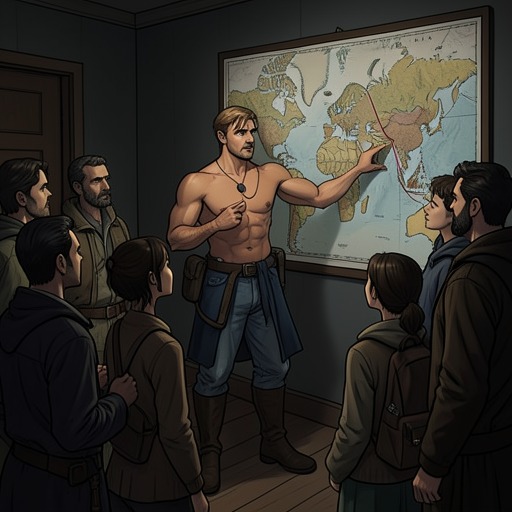
The Breannin Clan belonged to the Taleian social order before the Roman invasion of ancient Briton, when the Britons were divided between the Druids and the Taleians. The Taleians were organized into clans and governed by a Queen from the first Royal Clan, Morrigan. Beside her stood the Knight of Swords, who was always chosen from the Breannin Clan. The clan consequently occupied a formally defined position beneath or alongside the ruling house: it was not the source of the Queen’s crown, but it supplied the royal consort and the knights who served as her military power.
The Knight of Swords combined intimate and public authority. As Morrigan’s consort, he represented the dynastic bond that joined the two royal clans; as the leader of her army, he embodied the Taleians’ martial gifts. Taleian men were described as great warriors with expert sword skills and exceptional strength, while Taleian women possessed extraordinary psychic abilities. The Breannin Clan’s place in the hierarchy thus complemented the first clan’s royal and psychic authority with inherited military strength.
Place in Taleian Political Order
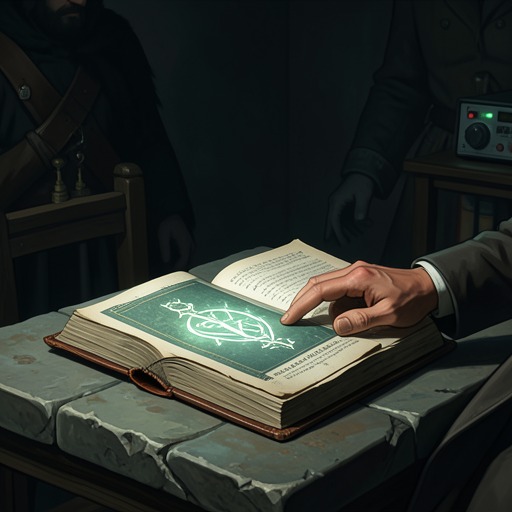
The clan system was reinforced by the Book of Talus, a magical book that selected a Taleian’s fated mate at birth. A child’s name appeared in the book with the name of the designated mate written beside it, although no one knew how the selection occurred. This system made marriage, succession, and political alliance inseparable from supernatural designation. The Breannin Clan’s provision of the Queen’s consort therefore belonged to a wider culture in which bloodline and mate-selection determined the legitimate structure of power.
The royal order also depended on an ancient bonding ritual. Several duels had to be fought before two fated mates could be joined by blood, establishing a psychic bond in which their thoughts flowed as one; only after that union could the male bite the female. In this context, the Breannin Clan’s traditional role was connected not only with military service but with the ritual reproduction of the ruling order. The clan helped anchor a system in which royal authority was preserved through a combination of clan descent, magical selection, combat, psychic union, and bodily transformation.
Destruction and Historical Displacement
The Breannin Clan’s ancient order was devastated when the Druids, jealous of the Taleians’ lands and royal power, devised a curse that transformed the Taleians into vampires. The cursed people turned on one another in blood lust, while Druids and other humans hunted them and drove them from their lands. The clans scattered across the world, converting an organized political society into a dispersed and endangered population.
Morrigan and the Knight of Swords were murdered by the Druids while attempting to aid their people with the help of the mighty Magician, the Queen’s magical adviser. Because the Knight of Swords was drawn from the Breannin Clan, his death represents more than the loss of a single warrior. It marks the violent severing of the clan’s traditional connection to the monarchy and the destruction of the paired royal structure that had governed the Taleians.
The later Taleian population could no longer reproduce among themselves. Taleian men sought relationships with human women and produced hybrids, while Taleian women were hunted by slavers and sold to humans for various purposes, including the use of their flesh as a supposed cure for terminal illness. This history transformed clan identity from a stable political inheritance into a precarious biological and cultural survival. The Breannin Clan is named within the ancient order, but the evidence does not establish a continuous institutional presence after the dispersal and reproductive crisis.
Bloodline, Hybridity, and Clara Driscoll
The clan’s significance reaches the modern plot through the broader question of Taleian descent. Hybrid children did not assume their true Taleian vampire form immediately. They might undergo the change later in life, or when their bodies judged the time suitable, and they appeared no older than twenty-five. Prince Octavius identifies Clara Driscoll as possessing the psychic gifts of a Taleian hybrid while remaining not yet fully changed into a vampire. Her body and identity therefore stand at the threshold between human appearance and inherited Taleian nature.
Clara’s concealed heritage is tied to the murder of the Empress and her child. The old imperial order had preserved the DNA strands of all the people, and the Empress had governed with the Five Princes, whose mates were provided by the Book of Talus and who served as advisers and guardians of her immense power. The Emperor is accused of finding a way to murder the Empress, her child, and the Princes. Against this background, the Breannin Clan’s earlier royal function becomes part of a long history in which blood, reproduction, and succession are repeatedly treated as political resources.
The clan also illuminates the conflict over Clara’s status as a person rather than a possession. Lord Phraeon claims to have staked a courtship claim upon her, while Darius rejects the idea that a muted version of the ancient Taleian bonding ritual is sufficient to establish a bond. Clara objects when the two men speak about her as though she were an object to be owned. The Breannin Clan’s tradition is not directly responsible for this confrontation, but the clan-based system it represents supplies the historical framework through which male protection, mate-selection, courtship claims, psychic bonding, and bodily marking acquire political force.
Narrative Significance
The Breannin Clan functions as a compact emblem of the Taleian world’s fusion of lineage and violence. Its place as the second royal clan promises continuity through the Queen’s consort and the army, yet its history ends in murder, curse, exile, and reproductive collapse. The clan therefore connects the ceremonial authority of the ancient court with the vulnerability of a people whose inheritance survives in scattered bloodlines and unstable hybrid bodies.
For Clara Driscoll, that history makes ancestry an active danger rather than a passive origin. Discovering that her life may have been built around false memories and that she may be the lost Empress’s child turns family identity into a question of erased succession. The Breannin Clan stands behind this revelation as part of the older dynastic grammar: who belongs to a royal line, who may serve as its warrior consort, who may reproduce it, and who has the power to destroy or conceal it. Its limited but decisive appearance gives the novel’s supernatural romance a political depth rooted in the struggle to control bloodline, memory, and legitimacy.