Taleian-human hybrids
His Property (A Dark Vampire High School Bully Romance) (Vampire Boy Swords): Prince of Londinium (Dead Sun: Prince of Londinium (A Dark High School Bully Romance) (Vampire Boy Swords) Book 1)Taleian-human hybrids are the product of a historical compromise forced upon the Taleian people: after the Druids’ curse transformed the Taleians into Vampires and scattered their clans, the survivors could no longer reproduce among themselves. Unions between Taleian men and human women therefore created a new lineage whose mixed ancestry allowed Taleian life to continue. In the story, hybridity is not merely a biological condition but a concealed political inheritance, linking descendants to the lost Empress, the Book of Talus, and a suppressed royal history.
Origins in the Taleian Catastrophe
The hybrids emerged after the Druids attacked the Taleians. According to Prince Octavius’s account, the Druids changed the Taleians into Vampires, driving them into blood lust while Druids and other humans hunted them from their lands. The surviving clans scattered across the world, and the Taleian population entered a prolonged crisis of survival.
The crisis became reproductive as well as political. The Taleians were unable to reproduce among themselves, so the men sought relationships with human women and produced hybrids. This lineage thus arose from the aftermath of persecution rather than from a stable social design. It represents the continuation of Taleian life under conditions in which the original people could no longer preserve themselves through internal reproduction.
Physical and Psychic Development
A hybrid child does not immediately display the complete nature of a Taleian Vampire. The children remain outwardly human until later in life, or until their bodies judge that the transformation is suitable. At that point, they undergo what Prince Octavius describes as a small death before awakening into their true Taleian vampire form. The change is therefore both biological and symbolic: the human appearance conceals a second nature that has not yet become visible.
The hybrid body also follows a distinctive age constraint. Once transformed, hybrids always appear no older than twenty-five years. Their apparent youth consequently does not indicate a lack of lineage or history; it is the enduring outward form of a people whose true nature may emerge only after years of concealment.
The hybrids retain psychic potential even before completing the transformation. Prince Octavius identifies Clara Driscoll as possessing the psychic gifts of a Taleian hybrid while still being unable to undergo the full change into a Vampire. Her condition shows that the hybrid inheritance can become perceptible through mental abilities before the body completes its awakening. The sequence separates psychic identity from visible transformation and makes Clara’s uncertain status central to the story’s revelation of her heritage.
Position in Taleian Society
The hybrid lineage is connected to the restoration of Taleian political life. Prince Octavius explains that another Queen was not born until 1893, and that she was the product of a union between a Taleian male and a human female. The return of a Queen through mixed descent demonstrates that hybridity did not merely preserve the species; it eventually enabled the reappearance of royal authority.
This history also places the hybrids within a violent economy of blood and bodies. Taleian women were hunted by Taleian slavers and sold to humans for various purposes, while some were taken for their flesh because it could cure a terminally ill human. Against this background, unions between Taleian men and human women appear as one survival route, but the wider history remains marked by enslavement, commodification, and the loss of many women. Hybridity therefore carries both continuity and the memory of exploitation.
The later royal order depended on the mixed lineage. The Empress possessed the DNA strands of all the people and governed wisely with the Five Princes, while the Book of Talus selected mates and advisors who would guard her power and keep her safe. The hybrid descendants were consequently tied to questions of succession, protection, and collective identity. The Emperor’s hostility toward this history was not simply personal: he wanted no reminder of the Empress’s rule or of the order that had survived through hybrid evolution and contact with aliens.
Connection to the Book of Talus and Bonding Customs
Hybridity places descendants within the old Taleian system of predetermined mating. The Book of Talus is described as a magical book in which a child’s name appears at birth alongside the name of a designated fated mate. The book therefore turns ancestry into an active social mechanism: birth establishes not only identity but also a prescribed future relationship.
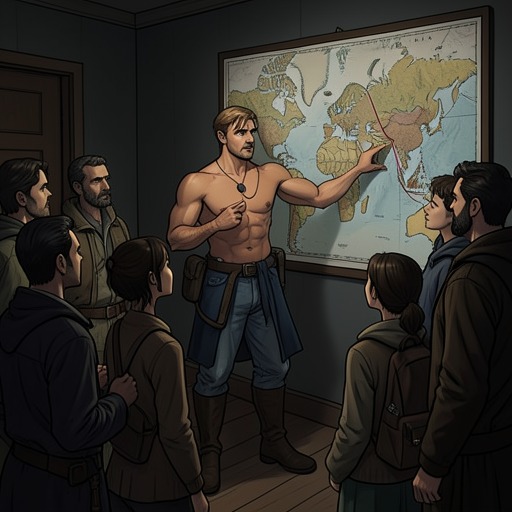
That relationship is completed through a demanding bonding system. Fated mates must establish a psychic bond in which their thoughts flow as one, and the union is later sealed when the male bites the female. Six sword duels must be fought against designated challengers before the bond can be consummated, with the mate required to win each duel to retain the prize. These rules make hybrid inheritance inseparable from ritual, combat, and possession.
The surviving court has reduced or muted these customs. Lord Phraeon claims that his kiss has staked a claim upon Clara Driscoll according to the rule of courtship, but Darius Constantine rejects that interpretation, explaining that the ancient Taleian bonding ritual has not been properly initiated. Prince Octavius likewise describes the Emperor’s suppression of true heritage and the need to find muted ways of claiming a mate. The contrast reveals a society in which old hybrid-linked customs remain powerful even when official authority attempts to erase them.
Clara Driscoll and the Politics of Concealed Blood
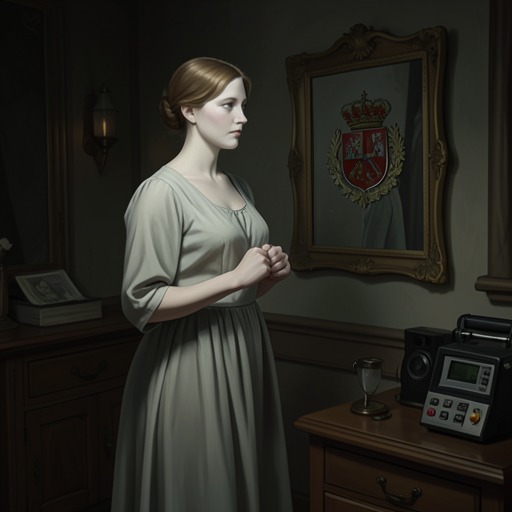
Clara Driscoll embodies the hidden and unstable status of the hybrids. At the ball in the Emperor’s Palace, she learns that she may be the child of the lost Empress and that she was stolen and hidden in 1987, centuries before Londinium existed. The revelation destroys her confidence in the story of her upbringing: the memories and family relationships she had accepted as ordinary are suddenly exposed as part of a concealed history.
Her possible descent also changes how the men around her interpret her body and mind. Lord Phraeon treats her as someone upon whom he can stake a courtship claim, while Darius Constantine insists that possession cannot be established merely through a muted gesture. Prince Octavius senses a pull toward her and says that her psychic consciousness is already accessible at the edge of his mind. He then identifies her as a hybrid whose psychic gifts have appeared before the full vampire transformation.
Clara resists being reduced to inherited status or romantic property. When the men discuss her as though she were an object to be owned, she objects directly and attempts to leave the dancefloor so that she can think about the truth of her heritage. Her resistance does not dissolve the pressure exerted by bloodline, ritual, and male claims, but it establishes the ethical conflict at the center of hybrid identity: a lineage that promises belonging and power is also used to deny personal choice.
Narrative Significance
Taleian-human hybrids make the story’s ideas of identity, succession, and survival inseparable from the body. Their mixed descent prevents the Taleians from being understood as a closed or pure race; the future of their people depends on contact between Taleian and human lineages. Yet the same mixed inheritance is concealed, controlled, and politically dangerous, particularly when it may restore the authority of the lost Empress.
The hybrids also occupy a threshold between states. They are human in appearance but potentially vampiric in nature, psychically gifted before their physical awakening, and connected to both ordinary human history and the ancient Taleian order. Clara’s unfinished transformation leaves that threshold unresolved. At the point covered by the revelation, hybridity is not a settled identity but an approaching change—one that could determine her place in the royal succession, her relation to the Taleian bonding system, and the struggle against the Emperor’s attempt to erase the past.