Taleians
His Property (A Dark Vampire High School Bully Romance) (Vampire Boy Swords): Prince of Londinium (Dead Sun: Prince of Londinium (A Dark High School Bully Romance) (Vampire Boy Swords) Book 1)Taleians are an ancient race whose history provides the hidden biological, political, and ritual foundation of the world depicted in Lady of Londinium. Once divided into clans and ruled by a queen, they possessed extraordinary gendered gifts, were transformed into vampires by a Druid curse, and survived through scattered descendants and hybrids. Their suppressed customs continue to govern questions of inheritance, desire, legitimacy, and bodily identity centuries after their original kingdom disappeared.
Origins and Social Structure
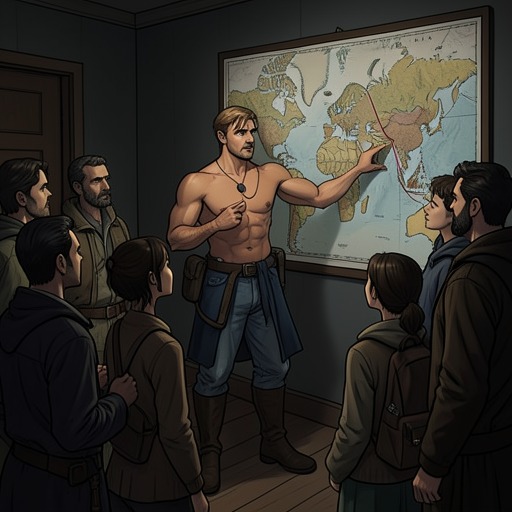
Taleian society existed in ancient Briton before the Roman invasion and was divided into two races, the Druids and the Taleians. The Taleians were organized into clans and governed by Queen Morrigan, who belonged to the first Royal Clan. Her consort, the Knight of Swords, was traditionally drawn from the Breannin Clan, the second royal clan, whose members also supplied her knights. This arrangement joined royal authority, military leadership, and clan inheritance in a single structure.
The race was marked by a pronounced division of gifts. Taleian men were renowned warriors with expert sword skills and exceptional strength, while Taleian women possessed powerful psychic abilities. The distinction was not merely personal but part of the society’s inherited order, helping explain why bloodline and birth carried such political importance. Later revelations identify Clara Driscoll as a Taleian-human hybrid with psychic gifts, though her full transformation into a vampire has not yet occurred.
The Curse and Diaspora
The Druids were jealous of the Taleians’ lands and of their beautiful queen and warrior consort, and they responded by devising a curse. The curse changed the Taleians into vampires and drove them into blood lust against one another. Pursued by the Druids and other humans, the survivors were expelled from their lands and scattered across the world in separate clans.
The destruction of the original royal line was violent. Queen Morrigan and the Knight of Swords were murdered by the Druids while attempting to aid their people with the help of the Magician, the queen’s powerful magical adviser. Their deaths left the Taleians without their founding rulers and turned the race’s later history into one of dispersal, survival, and incomplete restoration.
The curse also altered the race’s ability to reproduce. Taleians became unable to reproduce among themselves, while Taleian women were hunted by Taleian slavers and sold to humans for various purposes. Some women were taken for their flesh, which was believed capable of curing terminally ill humans. In response, Taleian men formed relationships with human women and produced hybrids, ensuring the continuation of Taleian blood through a new and vulnerable lineage.
Hybrids, Dormant Blood, and Survival
Taleian-human hybrids do not immediately assume their true Taleian vampire form. Their transformation occurs later in life, or when the body determines that the time is suitable, and it is preceded by what is described as a small death before awakening. Afterward, they appear no older than twenty-five years. This age constraint makes the hybrid body a visible sign of interrupted development: it carries an ancient inheritance that may remain hidden until a decisive biological change.
The Taleian legacy extends far beyond a surviving clan or isolated vampire family. Everyone in Londinium and in the other cities of a broken world drifting through space in search of a new sun is said to descend from the Taleians and their hybrids. Their genetic influence entered the population in ancient times and lay dormant alongside strains associated with Lycans and other supernatural creatures. These inherited traits helped many people survive the frozen wastelands on the surface, while later alien refugees contributed another strand to the world’s shared blood.
This history makes Taleian identity both collective and concealed. The race is no longer presented as a separate ancient population living in its original land; it has become a buried inheritance distributed through the descendants of a transformed and dispersed people. Clara’s shock at learning that she is the lost Empress’s child therefore also becomes a shock about her own body. Her life in 1987, her family history, and her apparent humanity are recast as incomplete or false explanations of a dormant Taleian-human identity.
The Book of Talus and Mating Law
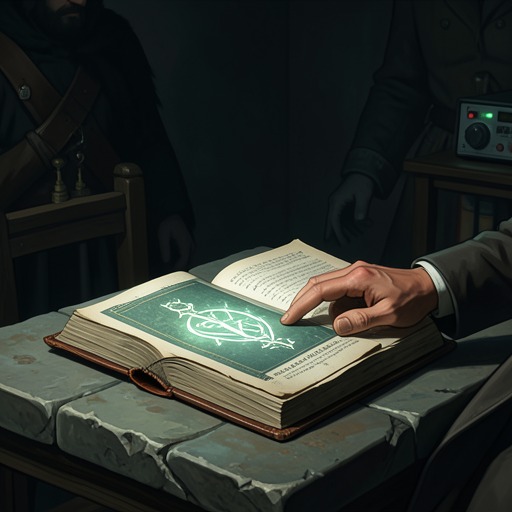
Taleian social order is governed not only by descent but by the Book of Talus. At a child’s birth, the magical book reveals the child’s name and writes beside it the name of the designated fated mate. No one knows how the book performs this selection, but its verdict forms the basis of Taleian mating law and gives intimate attachment a public, hereditary, and almost juridical force.
The Book of Talus operates alongside an ancient mating ritual. In its older form, a male seeking to join with his fated mate must fight several challenges or duels. The contests establish a psychic bond between the participants, allowing their thoughts to flow as one. Only after this bond has been formed can the union be completed through the male biting the female and joining the pair by blood.
The ritual has been weakened in modern Londinium by order of the Emperor, but its older logic remains powerful. Lord Phraeon invokes a muted form of it when he kisses Clara Driscoll on the cheek and claims that he has staked his claim under the rule of courtship. Darius Constantine disputes that interpretation, arguing that the act is not an appropriate use of the ancient Taleian bonding ritual and that Phraeon has not initiated a true bond. The disagreement shows how Taleian custom survives as a contested authority: its participants recognize its force even while debating which acts count as lawful or sufficient.
The ritual also turns the mate into the prize of a competition. The winner receives the woman, who is forced to spend eternity with him even if she cannot love him as she loved her true mate. The result is described as cruel, making the tradition a system in which communal recognition and supernatural connection coexist with coercion. Clara directly objects when the men discuss her as though she were an object to be owned, but the surrounding ritual pressure repeatedly threatens to override her refusal.
Royal Suppression and Continuing Influence
The Taleians’ political legacy reaches its height in the account of the Empress who appeared in 1893, the first queen born since the ancient destruction. She was the product of a union between a Taleian male and a human female, making her restoration of the royal line inseparable from hybrid existence. The Empress possessed the DNA strands of all the people and governed wisely with the Five Princes, whom the Book of Talus provided as mates and advisers to guard her immense power and keep her safe.
That order was destroyed by the Emperor. Prince Octavius claims that his father murdered the Empress, her child, and the Princes, and that he did so because he wanted no reminder of the Empress’s rule, the hybrid contribution to Taleian survival, or the aliens who had joined the population. The imperial suppression of the old heritage is therefore also an attempt to control historical memory. The Taleians are not simply a vanished people; their past has been politically censored because acknowledging it would challenge the Emperor’s authority.
Yet suppression cannot erase the inherited system. Prince Octavius feels an immediate pull toward Clara and says that his consciousness has reached the edge of her mind, where he intends to establish a bond. Darius Constantine likewise reports that his bond with her came first and is presently the strongest, while warning that Clara may have more than one mate. Their competing claims revive the Taleian system inside the imperial palace, where the official order has muted the old ritual but has not removed its psychic and biological foundations.
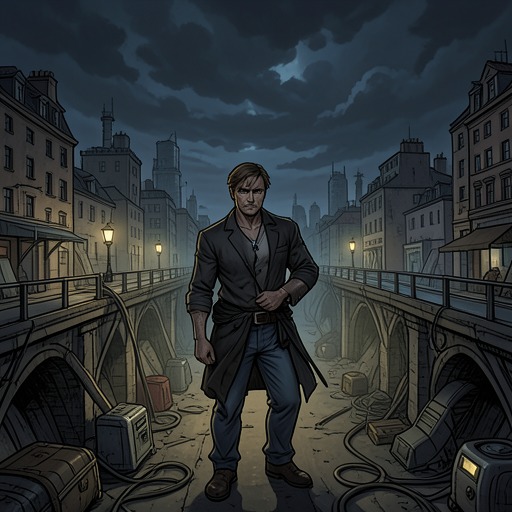
The Taleians thus function as the buried civilization beneath Londinium’s futuristic society. Their curse explains the vampire population, their alliances with humans explain hybrid inheritance, their Book of Talus explains fated mating, and their royal history explains the struggle over Clara Driscoll’s identity. Even the unfinished ending, in which the conflict over claiming her is interrupted by a violent shockwave and blue explosion, leaves the Taleian legacy active rather than resolved: ancient blood, ritual obligation, and suppressed succession remain the forces driving the next stage of the story.