The Emperor
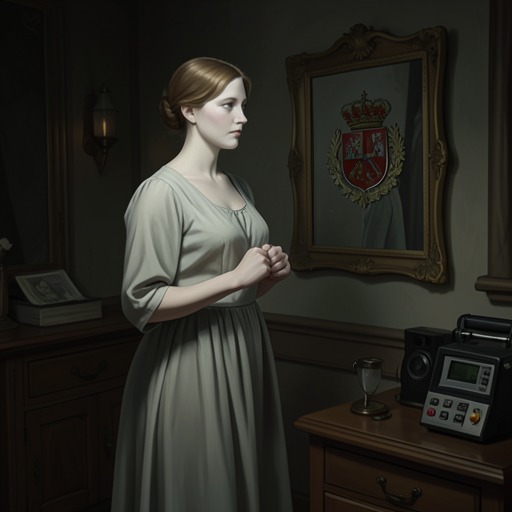
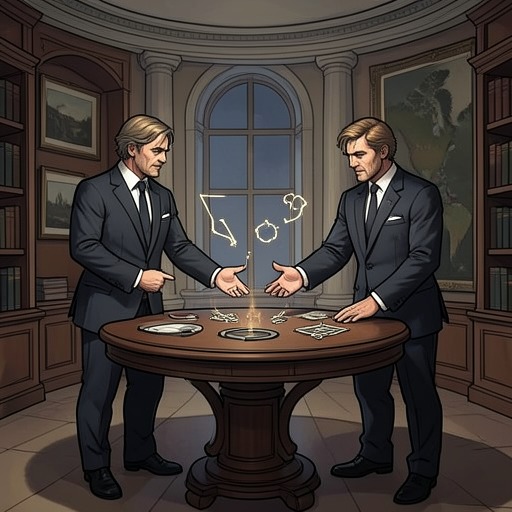
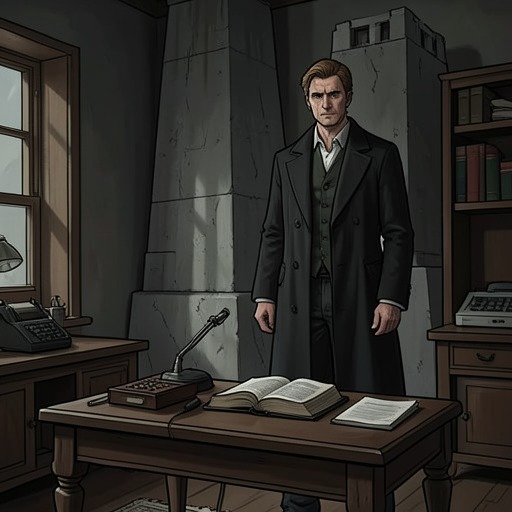
His Property (A Dark Vampire High School Bully Romance) (Vampire Boy Swords): Prince of Londinium (Dead Sun: Prince of Londinium (A Dark High School Bully Romance) (Vampire Boy Swords) Book 1)The Emperor is the reigning authority behind the suppression of Taleian tradition and the violent remaking of Londinium’s royal order. Although he never appears directly in the supplied scene, Prince Octavius’s account presents him as a cruel and jealous ruler whose policies have buried an older system of blood, prophecy, psychic bonds, and royal partnership. His decisions turn inherited ritual into forbidden knowledge and make Clara Driscoll’s identity a danger to the court.
Position and Historical Context
The Emperor rules after a period in which Taleian society had already been transformed by catastrophe. In ancient Briton, the Taleians were divided into clans and governed by Morrigan, the Queen of the first Royal Clan, alongside a Knight of Swords drawn from the Breannin Clan, the second royal clan. Their culture distinguished martial gifts in men from psychic gifts in women, while the Book of Talus assigned each child a fated mate at birth. The Emperor’s regime stands in opposition to that older order, not merely as a different government but as an attempt to erase the institutions that once organized Taleian identity and succession.
The history he suppresses begins with the Druids’ curse, which changed the Taleians into Vampires and drove them from their lands after blood lust turned them against one another. The scattered clans survived across the world, carrying their customs with them. The Taleian mating ritual therefore represents continuity after exile: it preserves a connection to ancient Briton even after the people’s bodies and political circumstances have changed.
Suppression of Taleian Heritage
The Emperor has formally dampened the ancient mating ritual. Octavius explains that the ritual remains essentially the same as it was in ancient Briton, but that his father ordered it weakened in modern times. Even discussing the practice is dangerous for Octavius because the Emperor would not approve of his son reviving or publicizing a tradition that the court has tried to mute.
This suppression does not eliminate the ritual’s power. The old ways continue to exert a pull on some Taleians, who seek “muted ways of claiming our mate” when open observance is forbidden. The ritual’s original structure is coercive as well as sacred: several duels precede the joining of two fated mates by blood, after which their thoughts flow as one through a psychic bond, followed by the male’s bite of the female. The Emperor’s intervention thus produces a contradiction. He restricts the public form of the custom, yet the desire, possessiveness, and psychic pressure associated with it remain active beneath the surface.
Destruction of the Former Royal Order
The Emperor’s most consequential crime is his attack on the Empress’s regime. Octavius describes an earlier order in which the Empress possessed the DNA strands of all the people, governed wisely with the Five Princes, and relied on the Book of Talus to provide mates and advisors who would guard her immense power and keep her loved and safe. This account makes the former monarchy a system of collective protection, however strange and hierarchical its customs may appear to Clara Driscoll.
The Emperor rejects every reminder of that order. He does not simply oppose the Empress politically; he seeks to remove the memory of her rule and the institutions that sustained it. According to Octavius, he found a way to murder the Empress, her child, and the Princes. The revelation confirms that the current dynasty rests on deliberate bloodshed and that the disappearance of the former royal family was not an accidental historical loss.
The murder also gives Clara Driscoll’s situation a wider political meaning. Her connection to the old royal history places her in danger from a ruler who would have her killed if he learned who she really was. The Emperor’s violence therefore reaches beyond the dead: it continues as a threat against the living and helps explain why knowledge of lineage must be concealed.
Conflict with Octavius and Clara Driscoll
The Emperor’s relationship with Prince Octavius is defined by contempt and rebellion. Octavius speaks of his father with heavy disdain, blaming him for stamping on the ritual and denying their true heritage. Yet Octavius remains the Emperor’s son and operates within the very culture of ownership and authority that the Emperor has shaped. His response is not a clean rejection of domination. Instead, he revives the old language of claiming while adapting it to a forbidden, private form.
That tension becomes visible in Octavius’s pursuit of Clara Driscoll. He tells her that he has felt a pull toward her from the moment he first saw her and that his consciousness has reached the outskirts of her mind, preparing to establish a bond. He also senses Lord Protector Darius Constantine near her mind and declares that he will fight to the death to win her, insisting that she is his property and that he will rule her. The Emperor’s suppression of the public ritual has not produced freedom for Clara; it has helped drive the claim into intimate encounters where political power, psychic invasion, and desire become difficult to separate.
Octavius’s conduct also reflects the Emperor’s wider legacy of treating people and relationships as instruments of rule. The prince threatens to demonstrate ownership through physical discipline, presenting domination as both flirtation and entitlement. Clara Driscoll’s divided response—wanting both Octavius and Darius Constantine while recognizing that each man seeks control over her—shows the emotional cost of a system in which fate and possession are repeatedly fused.
Narrative Significance
The Emperor functions as an offstage shadow over the scene. His absence makes him more than a participant in one confrontation: he is the force that has altered history, silenced ritual, destroyed a royal family, and made revelation dangerous. The story reaches Clara Driscoll through Octavius’s intimate retelling, so the Emperor is initially known through accusation rather than direct action. That mediated presentation gives the political history the pressure of a secret being uncovered in real time.
His role also creates a central contrast between official history and suppressed memory. The public understanding of the Druids and the past is incomplete, while Octavius offers Clara Driscoll a hidden Taleian account involving ancient clans, vampiric transformation, fated mates, and a murdered royal household. The Emperor’s power depends on controlling which version of that past can be spoken. By forcing the old history into secrecy, he turns ancestry into evidence, ritual into resistance, and Clara Driscoll’s unknown identity into a potential threat to the regime.