Carter
His Property (A Dark Vampire High School Bully Romance) (Vampire Boy Swords): Prince of Londinium (Dead Sun: Prince of Londinium (A Dark High School Bully Romance) (Vampire Boy Swords) Book 1)Carter is Clara Driscoll’s familiar ally from her own world, 1987, and one of the few figures in the palace crisis whose attention remains fixed on Clara rather than on the contest over her. He appears as a stabilizing presence amid aristocratic spectacle, possessive courtship, and supernatural violence. His importance lies in the contrast he creates: while Byron Phraeon, Prince Octavius, and Darius Constantine treat Clara as the object of competing claims, Carter addresses her as a person capable of deciding whether she needs assistance.
Identity and Introduction
Carter is introduced within the twenty-sixth-century palace as someone recognizable to Clara from her own time. His familiarity matters because Clara is confronting the revelation that she may be the lost Empress’s child, that she was hidden in 1987 centuries before Londinium existed, and that her memories and family history may have been constructed around a lie. At the ball, he is among the witnesses to Byron’s public kiss and possessive display. Clara notices that Carter turns away when she nervously looks toward him, a reaction that registers the embarrassment and shock of the scene rather than joining its eroticized performance.
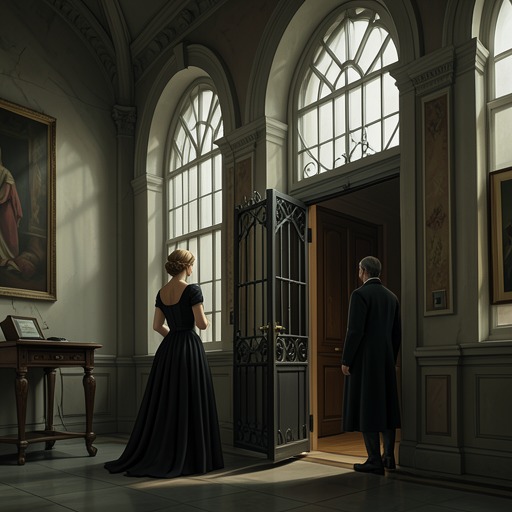
The social setting makes Carter’s position especially distinct. The ballroom is vast, the size of a football field, lined with tall mirrored panels and gold statues holding burning candles, beneath crystal chandeliers and frescoes of Greek myths. Around Clara, the dancers’ attention turns her distress into a spectacle. Carter belongs to the same watching crowd, but the later confrontation shows that he does not remain merely a spectator.
Conduct During the Palace Crisis
Carter enters the immediate crisis after Prince Octavius attempts to bite Clara. Octavius has raised his mouth to her when Darius pulls her away, placing her against his body and holding her in place. Octavius bares his incisors and hisses at Darius; Darius answers with a hiss of his own. At that moment, hurried footsteps announce Carter’s arrival. He frowns at the scene, stops, and looks at Clara with concern.
His first response is direct and practical. He asks Clara whether she is all right and whether she needs him to come and get her. His American accent, described as melodic, gives his speech a familiar quality amid the antagonism of the two supernatural rivals. Carter remains relaxed and composed while Darius and Octavius glare at him. His eyes stay focused on Clara, making her condition the measure of the situation rather than the men’s claims or the ritual’s demands.
Carter’s restraint is tested when he begins moving closer with purpose. Both Darius and Octavius bare their teeth at him, turning their hostility toward a potential third participant. Darius orders Carter to stay back and says that he will take care of Clara. Carter does not answer with a threat or attempt to overpower either man. Instead, the scene preserves his controlled readiness: he has offered help, advances when the danger remains unresolved, and continues to orient himself toward Clara.
Relationship with Clara Driscoll
Carter’s relationship with Clara is grounded in recognition and protective concern. Unlike the men invoking the rule of courtship, he does not claim her, kiss her as a brand, or speak of her as a prize. His concern is expressed through questions about her condition and an offer to retrieve her, leaving the immediate choice with her. When Clara motions with her eyes for him to stay back, she is trying to prevent him from being caught in the conflict and hurt. Carter responds by remaining available without forcing his way into the fight.
That exchange also reveals Clara’s trust in him. She believes Carter’s presence could help, but she does not want his intervention to expose him to the danger surrounding Darius and Octavius. His willingness to attend to her signal distinguishes his protection from Darius’s physical restraint. Darius holds Clara tightly despite her struggles, insisting that he will take care of her; Carter’s approach is verbal, observant, and conditional upon what Clara says or indicates.
Carter’s role becomes still clearer when Clara attempts to take command of the situation. She tells the men to stop and declares that she is not going with any of them. They ignore her, while Carter continues checking whether she is truly all right. His questions do not resolve the coercive struggle, but they preserve a competing account of Clara’s agency: she is distressed, endangered, and entitled to answer for herself.
Contrast with the Courtship Conflict
Carter functions as a counterpoint to the palace’s possessive courtship system. Byron Phraeon claims that a kiss on Clara’s cheek has staked his claim under the rule of courtship and predicts that the men will fight for her hand. Prince Octavius later insists that Clara belongs to him, while Darius invokes the ritual’s requirement that challenges be fought before a victor may claim her with a bite and brand. These statements convert intimacy into ownership and conflict into a procedure for deciding possession.
Carter does not participate in that language. Even when he approaches and becomes a possible target of the rivals’ anger, his stated concern is whether Clara is safe and whether she wants him to come to her. This difference gives him a limited but significant ethical position within the scene. He cannot simply extract Clara from the palace or end the ritual, and the evidence does not show him defeating either rival. His resistance is therefore situational rather than triumphant: he refuses, through conduct, to translate Clara’s danger into another claim upon her.
The contrast also sharpens the emotional politics of the ball. Clara is expected to endure public scrutiny, conceal tears, and manage the men’s escalating behavior. Carter notices that she does not look all right, even after she says that she is. His attention treats her visible condition as meaningful rather than dismissing it as embarrassment or folding it into romantic excitement.
Change and Ending
Carter’s most consequential appearance occurs at the end of the supplied narrative, when the confrontation is about to become a fight. After Clara rejects all three men’s demands, the ground shakes violently. The tremor happens again, threatening to knock everyone off their feet, and a flash of blue light accompanied by a loud bang throws Clara, Darius, Octavius, and Carter into the air. They crash to the floor unconscious.
The shockwave interrupts Carter’s attempted intervention before he can bring Clara to safety. He therefore ends the book not as the victor of the conflict but as one of its victims, physically swept into the same unexplained catastrophe as the men whose rivalry he has tried to navigate. His composure does not protect him from the palace’s supernatural upheaval, and the announcement that the next book is coming leaves his fate, as well as Clara’s, suspended.
Narrative Role and Significance
Carter is a comparatively restrained character whose dramatic function is defined by contrast. In a story filled with hidden lineage, ritualized possession, predatory desire, and competing male authority, he supplies a recognizable human connection to Clara’s lost world and a mode of care based on observation and choice. The narrative does not give him the power to overturn the courtship rules, but it gives him the clearest immediate response to Clara’s distress.
His presence also complicates the boundary between protection and control. Darius genuinely fears for Clara yet restrains her; Carter fears that she may be unsafe yet asks what she needs and follows her signal to stay back. The difference is not that Carter can solve the crisis, but that his conduct leaves Clara’s answer intact. When the blue explosion ends the scene, that small distinction remains one of the few forms of agency not fully absorbed by the palace’s struggle over ownership.