
The Value of Hidden Knowledge
Hold TightThis flow explores how surveillance, concealed messages, and private discoveries can protect people while also creating fear and broken trust.
increasing Bearing strength in each event
 decreasing
Bearing strength in each eventdecreasingA Right to Know

A Right to Know
Protection as an Argument
Tia invokes a parent's responsibility to know what is happening in a child's life. The language of protection makes surveillance sound like care rather than intrusion.
Privacy as a Need
Mike argues that a person needs private thoughts, including a teenager. Their debate establishes that knowledge can help protect someone and still violate a relationship.
Messages Without Context
Messages Without Context
A Cryptic Exchange
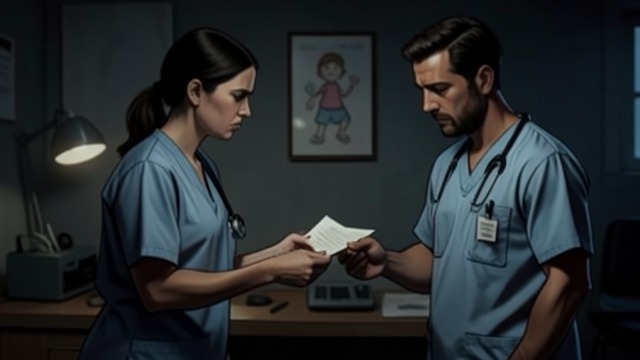
The parents read Adam's message about staying quiet and safe, but cannot tell whether it concerns a game, a school incident, or something dangerous. The data offers words without the context that gives them meaning.
Fear Fills the Gap
Tia's question about what Adam must hide to be safe expresses how uncertainty turns information into alarm. Reading a message does not automatically make its sender understandable.
The Unseen Sender
The Unseen Sender
A Computer Used in Absence
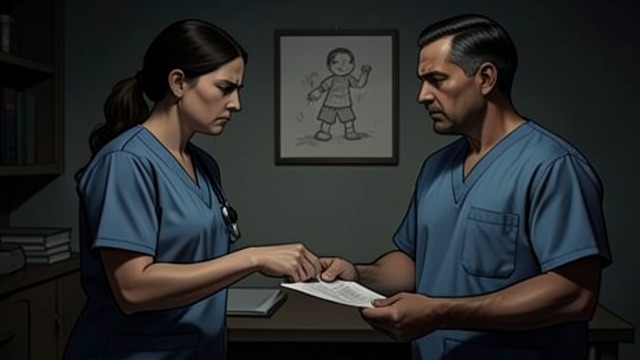
Tia discovers that the supposed party invitation was sent, opened, and deleted on Adam's computer while he was away. Someone has used their monitoring system to manipulate what the parents know.
Surveillance Reversed
Brett's analysis suggests that the message was planted inside the home. The watchers themselves become uncertain about who has access to their information and why.
A Gun Kept Hidden

A Gun Kept Hidden
A Discovery in a Drawer
Jill and Yasmin find Guy's loaded handgun while snooping in his bedroom. Jill later warns Guy to hide it better, revealing how information moves between children and adults without direct conversation.
Knowledge Changes the Outcome
When Nash threatens the household, the girls remember where the gun is. A private discovery becomes a possible means of survival.
The Cost of Watching
The Cost of Watching
Tools Cannot Predict
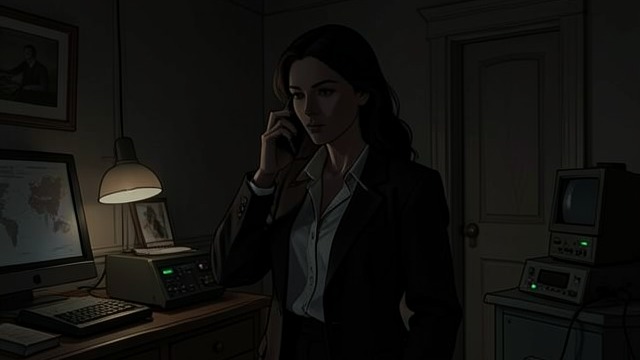
Tia reflects that parental monitoring did not prevent Adam's danger and that Jill, not Adam, came closest to dying. The family learns that gathering information does not grant command over chance.
A Complicated Lesson
The girls' snooping also helped them survive the hostage crisis. The novel resists a simple verdict: hidden knowledge can be invasive, manipulative, and lifesaving at once.
During the parents' debate about software
Three weeks after monitoring begins
After Tia checks the archived report
Before Nash enters Guy's home
One week after the crisis
