Adam Baye's withdrawal and worsening behavior
Hold TightAdam Baye's withdrawal and worsening behavior are marked by a series of losses in connection: he quits the hockey that had long bound him to Mike Baye, retreats to his room and computer, and increasingly refuses family contact and help. In the aftermath of a friend's suicide, his parents struggle to decide whether his distance is a troubling decline or an adolescent response they should not overread. Their disagreement leads to monitoring, attempted therapy, and a two-day disappearance that leaves them frightened and without an answer to what is happening to him.
Signs of Withdrawal
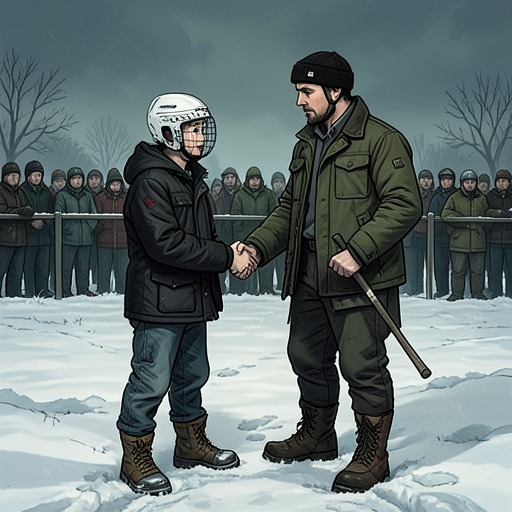
Six months before Mike's account of the household reaches a crisis point, Adam abruptly leaves hockey. He had begun skating at three, become a junior-hockey goalie, and appeared to Mike to have the ability to become a strong college prospect. Mike had passed his own love of the sport to his son; the hockey trophies remain in Adam's room, while the rusted goalpost and weather-torn net still stand in the driveway. These objects preserve the shape of a shared routine after Adam has put away his stick, pads, and mask and declared himself finished.
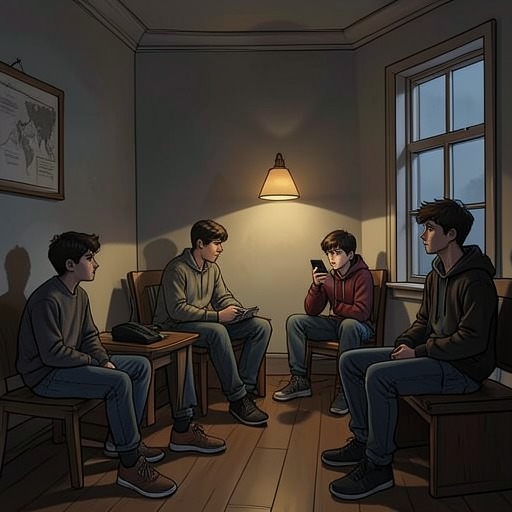
Mike wonders whether quitting was the first sign of Adam's decline, but he also recognizes that the decision hurt him personally. He tries not to become the kind of parent who equates athletic success with success in life, even as the end of their shared hockey life weighs on him. Tia is more alarmed. She sees Adam withdrawing after the suicide of his friend, growing moody and quiet, and spending nearly all his time in his room. He is absorbed in fantasy games and instant messages, speaks little to his parents, and often answers them only with grunts. Mike acknowledges the change but questions whether such behavior is unusual among teenagers, leaving the same signs open to sharply different readings.
Parental Concern and Surveillance
Tia interprets the growing distance as a danger to their connection with their son. Her fear that they are losing him motivates the decision to monitor his computer activity. The proposed software would record keystrokes and report on websites, emails, instant messages, and documents; it could also let the parents watch Adam live. The scale of the surveillance reflects how little access they feel they have to him through ordinary conversation.
Tia's professional experience helps explain her willingness to use it. A criminal attorney at Burton and Crimstein in Manhattan, she had worked on a case in which the FBI caught a money launderer named Pale Haley by eavesdropping on his internet correspondence. The precedent makes online activity seem legible and potentially consequential to her. Mike, however, sees the monitoring as an intrusion into Adam's private space. As Brett, the installer and a technology worker at Tia's firm, touches Adam's keyboard, Mike fixates on the fact that an outsider is handling his son's most prized possession. His discomfort sits beside his uncertainty: he is not as sure as Tia that Adam is being lost, but he cannot dismiss the changes she sees.
Attempts to Reach Adam
The disagreement over how to respond continues for a month. Mike tries direct, ordinary invitations, asking Adam to go to the mall, the arcade, or concerts. Adam refuses them. He stays out until late, disregards curfews, stops coming downstairs for dinner, and lets his grades slip. The deterioration is not confined to his room or computer: it reshapes the family's routines and makes even shared meals another point of absence.
At Tia and Mike's insistence, Adam sees a therapist once. The therapist considers the possibility of depression and suggests medication as a possibility, but wants another appointment before proceeding. Adam refuses to return. The account does not establish a diagnosis or show that medication is prescribed; instead, the proposed follow-up becomes another test of whether the parents can persuade him to accept help. Their effort to make him go back provokes a more dramatic refusal: Adam runs away for two days and does not answer his mobile phone.
Disappearance and Its Aftermath
Mike and Tia are frantic while Adam is gone. The immediate uncertainty ends when they learn he has been hiding at a friend's house, but his return does not resolve the conflict or explain the withdrawal. The episode shows how quickly parental concern can turn into fear when they have no response from him and do not know where he is. It also sharpens the pattern already established: pressure to intervene meets refusal, and refusal increases the parents' alarm.
Tia again says that they are losing him. This time Mike says nothing. His silence registers a change from his earlier effort to treat Adam's behavior as possibly ordinary adolescent moodiness. It does not establish that he has adopted Tia's interpretation; rather, the disagreement has reached a point where reassurance no longer answers the evidence before them. Adam's withdrawal remains unresolved, while the family's efforts to protect him have become entangled with the very distance they fear.