Carson Bledsoe
Hold TightCarson Bledsoe is a young man connected to the prescription-pad scheme that threatens Mike Baye’s medical career and later a gunman at Club Jaguar. The glimpses of him are brief but consequential: first, he appears as the injured kid whose name is on a payment; later, he waits armed as Mike and Adam reunite, interpreting their embrace through a bitter, detached gaze before deciding to kill them.
Identity and Introduction
Carson first enters the story indirectly, through a payment made out in his name. The person examining it points out the name and asks Mike whether he knows Carson. Mike is unsure, but the answer identifies Carson as the kid with the broken nose whom Mike had been jawing at when the others picked Mike up. The small exchange ties a financial clue to a face Mike has encountered, converting an unfamiliar name into a personal connection.
Mike immediately reads the payment as evidence of a calculated next step: gaining access to a doctor’s child, stealing prescription pads, and writing prescriptions. That is Mike’s interpretation of the scheme, rather than a detailed account of Carson’s own actions or intentions. The distinction matters: Carson is implicated by the payment and by his connection to the doctor, but the available scene does not show him stealing pads or writing prescriptions. What it does establish is that his name has become legible as part of a plan with serious professional consequences for Mike.
The Prescription Scheme and Its Stakes
The payment bearing Carson’s name changes the scale of Mike’s exposure. The warning he receives is stark: even in the best-case outcome, he could lose his medical license and never practice again. Carson’s introduction is therefore bound to a threat extending beyond a single suspicious transaction. The scheme’s apparent use of a doctor’s child would place Mike’s professional identity at risk, making the name on the payment both a practical lead and a sign of how far the danger could reach.
The evidence does not clarify what Carson knows about the payment, who arranged it, or whether he participates knowingly. Instead, the narrative holds him at the intersection of Mike’s inference and the consequences Mike is warned to expect. That limited perspective keeps Carson partly opaque: his importance is clear, but his understanding of the arrangement is not. The reader encounters him first as a name that helps Mike make sense of a scheme, not as someone explaining his own role.
Club Jaguar and the Return of the Broken Nose
At Club Jaguar, Carson’s injured face makes the earlier encounter physically present again. His broken nose is starting to ache while he watches Rosemary McDevitt put down the phone. The club has gone quiet: after a near-fight with Mike and his crew-cut companion, Rosemary has closed the place and sent everyone home. She and Carson are the only two left. The closed club provides a sharp contrast with the earlier commotion; the confrontation has ended, but Carson’s pain and Rosemary’s visible distress remain.
Carson notices that Rosemary, usually tough in appearance, seems close to crumbling and has wrapped her arms around herself. He also registers her beauty, but his attention does not make him her confidant or establish what she is feeling. The scene instead shows him watching her in the aftermath of the conflict, attentive to her exposed vulnerability while remaining separate from it. His aching nose similarly marks the encounter’s bodily residue: what had been a near-fight is over, yet its consequences have not disappeared.
The Armed Confrontation
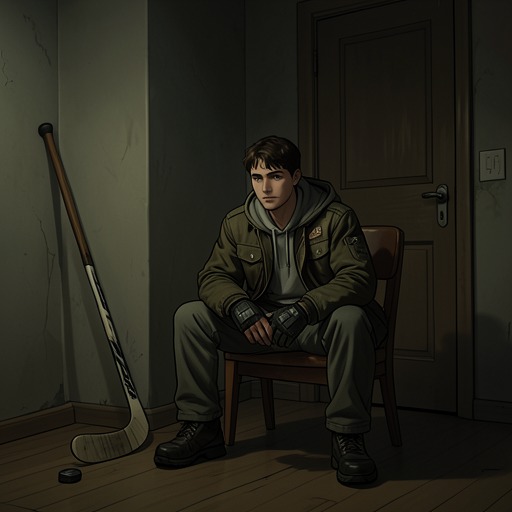
Later, Carson waits with a gun after saying that his employers will prevent the situation from being traced back to him and ensure it does not reach a certain level. The identity of those employers and the precise danger he is managing are not explained in the scene. What is clear is that he expects some protection from attribution, hangs up after delivering the message, and then stays armed. The call’s reassurance and the gun in his hand sit uneasily together: he claims the matter will be contained, yet prepares for violence himself.
The building’s door is locked from both sides, and entry or exit requires knowledge of the alarm code. When someone pounds at the door, Carson looks out and sees Adam with DJ Huff. He does not open the door in the excerpt; the locked entrance and the code make access a controlled threshold, while Carson’s armed vigil gives that threshold lethal significance. The scene does not establish what Adam and DJ know about the danger awaiting them.
When Mike turns the corner just as Adam arrives, father and son meet near the corridor and embrace. Carson watches the reunion and privately treats it as something almost sentimental, but his response is not tenderness. He grips the gun and raises it without calling out or warning them. His reasoning is presented as closed: there is no time to negotiate or make requests, and he needs to end the situation by killing them. The contrast between the embrace and Carson’s weapon makes the family reunion the immediate prelude to his intended violence.
Narrative Role and Ending
Carson links two kinds of danger in Mike’s story. His name on the payment helps expose the prescription scheme that could cost Mike his license; his later presence at Club Jaguar places him directly before Mike and Adam as an armed threat. Across these appearances, the broken nose recurs as a concrete trace of the earlier clash, while the gun marks a decisive escalation from confrontation to intended murder.
The available scenes end with Carson aiming at Mike and Adam, not with the outcome of his plan. His choice is nevertheless unequivocal: he does not call for help, issue a warning, or seek further negotiation, but prepares to kill. The narrative positions that choice against the vulnerability of the reunion he is watching. Carson’s brief role thus turns a personal connection established through injury into a final, immediate threat to the father and son.