Dolly Lewiston
Hold TightDolly Lewiston is an elementary-school teacher, Joe Lewiston’s wife, and the mother of three-year-old Allie. She is introduced through two forms of watchfulness: the webcam she uses to check on her daughter and the repeated car passes that make her fear for her household. When Guy Novak’s concern for his own daughter spills into intimidation at the Lewistons’ home, Dolly can understand his frustration without allowing sympathy to override her determination to protect her family.
Home, Work, and Watching Allie
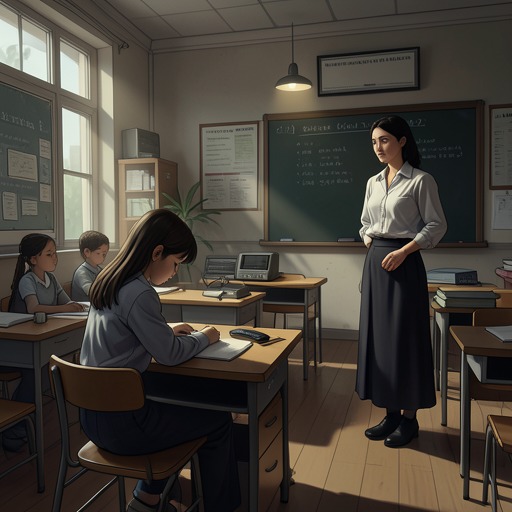
Dolly and Joe both work as elementary-school teachers; Joe teaches fifth grade at Hillside School, while Dolly teaches second graders in Paramus. She would like to leave her job, but the family needs both salaries. Her attachment to Allie shapes how she experiences that compromise: she would rather be checking that her daughter is safe than handling the work she has come to resent.
The K-Little Gym website gives her a way to check in on Allie through a webcam. Dolly can watch her daughter during snack time, building blocks, reading, independent work, and singing. She chose K-Little for precisely that access. The camera makes ordinary activities available for inspection, turning distance from her child into something she can manage, at least in part, by looking in on her.
This habit is not presented as an abstract interest in technology. For Dolly, remote viewing answers a personal need: she wants to know that Allie is safe while she and Joe are away at work. When Guy drives past the house, Dolly recognizes the difference between wanting reassurance about a child and acting on anger toward another family. She understands something of his frustration because he has not been able to watch his daughter, but she draws a firm boundary at the possibility that he might hurt her household.
Guy Novak’s Repeated Passes
Dolly notices a car drive past her home more than once. It slows each time, and she identifies Guy as the man behind the pattern. Joe later tells someone that Guy has been doing this for about a week and that he thinks the behavior is frightening Dolly and Allie. The repeated pass transforms a passing vehicle into an ongoing presence at the edge of the family’s home.
Dolly’s response is shaped by both empathy and opposition. She can understand why Guy, unable to watch over his daughter, might feel frustrated. But that understanding does not make his conduct acceptable to her. She regards the immediate choice as whether her own family will be allowed to remain safe; sympathy for Guy does not require her to leave Joe and Allie exposed to his anger.
Rather than simply wait for the situation to resolve, Dolly looks up Guy’s address online and gets directions. She tells Joe she will go to the store and then pick up Allie, but the next confrontation places her at Guy’s house. The contrast matters: the woman who relies on a screen to check on her child now leaves the domestic routine and goes directly to the person she believes is threatening it.
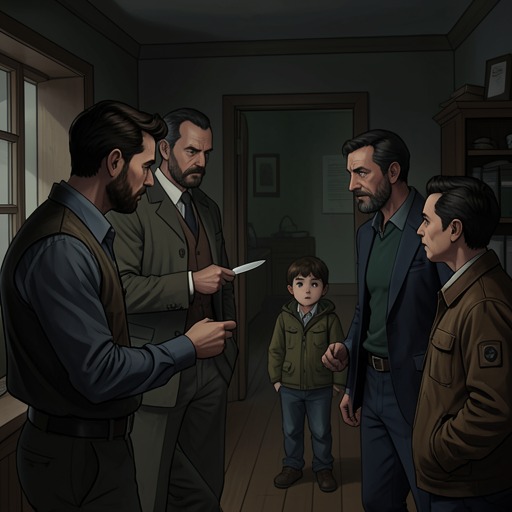
When Guy sees her getting out of her car, Dolly approaches him in anger. She asks whether he has ever been physically assaulted and warns that she could use her connections to bring people to his home. Her threat extends to the danger that could reach him and his daughter while they sleep. The exchange is a sharp escalation from observation to direct confrontation: Dolly acts to defend her family, but does so by making Guy fear for his own.
Marriage and Hidden Information
Dolly and Joe’s marriage is marked by tension, but also by familiar gestures of care. When Joe has his eyes closed and his head down, Dolly comes up behind him and places her hand on his shoulders. He winces at her touch, and she senses the strain he has carried for weeks. She keeps her hands there rather than withdrawing, rubs his shoulders, and waits until they begin to relax. Her reassurance is practical and intimate: she responds to his distress through touch and patience, not a demand that he explain himself immediately.
That closeness does not mean Joe is fully open with her. He secretly changes the password to Dolly’s school email account. Because she does not know much about computers or the Internet, Joe’s alteration leaves her unable to log in; she interprets the problem as her email not working. He later accesses the account himself and checks its messages, hoping not to find a particular sender but finding that address again. Dolly’s account has become a channel Joe can control without her knowledge, even as she uses the Internet herself to look up Guy’s address and directions.
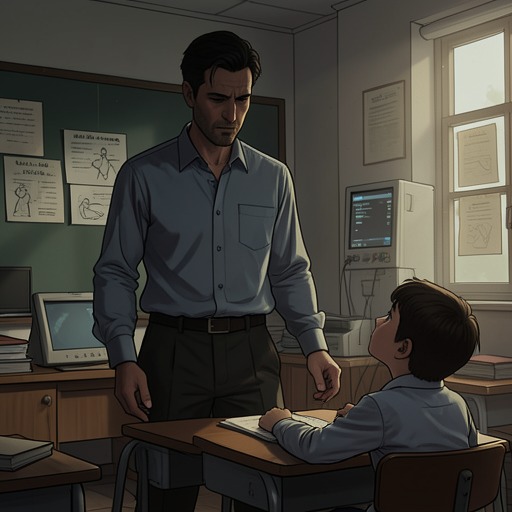
When Joe comes home and finds Dolly at the computer, she has an unusual expression that makes his stomach drop. Later, when he appears flushed and insists he is fine, Dolly recognizes that his reassurance is not convincing. He almost backs away as she approaches and asks what is wrong. She can read changes in his manner, but the story does not show her learning at that moment what he is concealing. Her alertness to his distress contrasts with the digital secrecy already present in their household.
Surveillance and the Limits of Protection
Dolly’s webcam use belongs to a wider pattern in which families and investigators turn to technology to reduce uncertainty. The Bayes install software that records Adam’s keystrokes and can report the websites he visits, messages he sends or receives, and documents he creates. A phone locator can place a device on a street map; Mike Baye uses it to discover that Adam is at the Huffs’ house. In another investigation, a working surveillance camera near the Jane Doe murder scene offers a possible record of the vehicle that transported the body, though investigators would have to sort it from potentially hundreds of vehicles.
These systems collect different kinds of information for different purposes, and their usefulness does not erase the question of who can see or control it. Dolly chooses a child-care service so she can check on Allie; Mike and Tia Baye monitor their son; Joe secretly takes control of Dolly’s access to her work email. Tia Baye even wonders whether the software’s installer might have a password that lets him read the family’s reports. Across these examples, monitoring promises knowledge and reassurance, but access to information can also become a form of power over someone who does not know what is being collected or who is reading it.
Dolly’s place in this pattern is personal rather than investigative. The webcam gives her a view of Allie’s day, but it cannot settle every fear about the child’s safety. When Guy’s car repeatedly slows by the house, Dolly moves from watching to intervention, choosing a direct confrontation that exposes her own family to further conflict. Her vigilance is protective, but it is not passive: she acts on what she sees, and the action carries its own risk.