Loren Muse
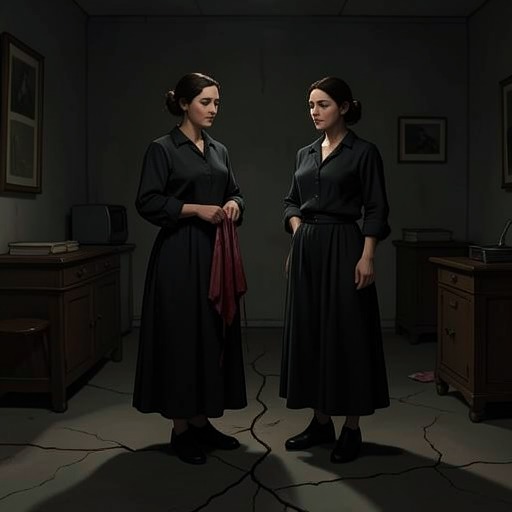
Hold TightLoren Muse is Essex County’s chief investigator, the first woman to hold the title and, while still in her thirties, a former homicide investigator who misses the work she has risen above. In the investigation of an unidentified woman whose body was found in Newark, she refuses to accept the assumption that the victim was a prostitute; as the case expands to include Reba Cordova’s disappearance, Muse joins forensic uncertainty to persistent attention to the people waiting for answers.
Office and Identity
Muse is the shortest person in the group gathered around the corpse by nearly a foot, and the only woman among two first-on-the-scene uniformed officers and homicide detective Frank Tremont. Tremont is technically in charge, but Muse’s presence makes clear that the investigation is not his alone. When he reacts to the damaged face, she studies the scene and later concludes that something about it is wrong. Her authority is institutional, but it is also practical: she still wants to be close to homicide work and steps into cases when she can, particularly when a detective such as Tremont is handling one.
She is candid with herself about the contradiction in her position. Muse loves being chief investigator and is proud of what the appointment represents, yet misses the direct work of homicide. The title has moved her away from the scenes that first drew her to police work without extinguishing her appetite for them. Her impatience with Tremont is not merely a dispute over rank; it reflects her sense that the investigation deserves closer attention than his world-weary approach suggests.
The office itself gives that tension a physical shape. The sign on her door identifies her as Essex County Chief Investigator, and she stops to read it whenever she opens the door. Her office is in a corner, with windows and an open door; the detectives’ desks are on the same floor. She wants to feel both part of the team and above it, and reserves the interrogation rooms for the privacy she rarely needs. The arrangement expresses a leader trying to remain accessible without pretending that her authority has disappeared.
The Jane Doe Investigation
At the unidentified woman’s scene, Muse’s sense that the evidence does not fit becomes a working principle. She tells Paul Copeland that she does not believe the victim was a prostitute. That judgment matters because it rejects a ready-made category for the dead woman rather than treating it as an adequate account of who she was. The investigation begins with the body’s uncertain identity, and Muse is alert to the possibility that the story attached to it is wrong as well.
The practical leads are frustratingly inconclusive. Newark police locate a working surveillance camera near the place where the body was dumped. If the body was transported by car, the vehicle might appear on the recording, but the number of vehicles makes identification difficult. Muse watches the tape: several dozen cars pass, none can be eliminated, and the recording yields no useful answer. She continues watching in the hope that something will emerge, then reaches the end with nothing to show for it. The video offers the possibility of evidence without the clarity that possibility seems to promise.
The victim’s fingerprints have been submitted to the NCIC, but Muse has no result when she checks. A call about Neil Cordova gives the case a possible name: his wife Reba is missing, and her description roughly matches the unidentified woman. The match is a lead, not yet an identification. Muse pursues the connection while remaining attentive to what the evidence can and cannot establish.
Reba Cordova and the Converging Cases
The disappearance of Reba Cordova brings Muse together with Neil, who has reported his wife missing. In a makeshift interrogation room, she studies the photographs he has brought: pictures of the couple on cruises, beaches, at formal events, parties, and in their backyard. They pose cheek to cheek and look happy in every image. Neil asks Muse to find Reba repeatedly. The photographs do not solve the case, but they give the missing woman a life beyond the description that may connect her to a body.
Muse later hands Neil a security-camera photograph from Target, where Reba shopped the day before. Neil recognizes her. The image establishes that Reba was at the store; it does not by itself explain what happened afterward. Muse lets him keep the picture in case it prompts a memory, then leaves him with the shock of identifying his wife in the evidence. Her handling of the moment gives the investigation room for Neil’s response without confusing that response with proof.
She also follows Reba’s disappearance through the circumstances surrounding it, telling Copeland about Reba’s role as a witness at Target, the van, and the parking lot at the Ramada in East Hanover. The information links the missing-person inquiry to the vehicle evidence and to a larger set of events, though it does not immediately produce a solution. Muse’s work proceeds by bringing such separate pieces into conversation rather than pretending that any one of them settles the case.
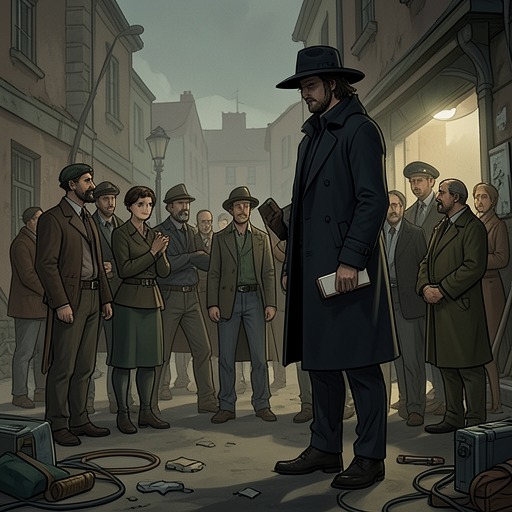
When Muse visits Guy Novak, she first takes in the household around him. Two little girls stand behind him, and a woman is present as well. Muse notes that the woman is not Reba and watches for any sign that she might be under duress. She tells Guy that Reba Cordova is missing and asks whether he thinks Marianne has something to do with it. When Guy is escorted away, Muse does not watch him leave; she goes into the kitchen, where the girls sit wide-eyed and pretend to eat popcorn. One asks who she is, and Muse gives her name and explains that she works for the county. The scene makes the family consequences of the investigation visible without displacing its urgent questions.
Judgment, Relationships, and the Case’s Resolution
Muse’s professional relationship with Copeland carries personal warmth, but she understands its limits. She has a harmless crush on him, describing it as appreciation rather than longing, and admits to having felt similarly about his predecessor. She knows about Copeland’s past and the painful revelations he has endured, and has helped him through them. His suffering, in her view, makes him more sympathetic as a prosecutor and less likely to accept excuses from the defense. Her attraction does not override her ability to assess him as a colleague or boss; it sits alongside her awareness of the political nature of his appointment and the damage he carries.
At the investigation’s end, Muse stands beside Copeland outside a U-Store-It unit on Route 15 on the cold Saturday morning of his wedding. The wedding is six hours away, but she has come with him. Pietra, after remaining silent, has begun to talk after Copeland lets Neil speak with her. With her boyfriend dead and a deal arranged through her lawyer, she breaks down and identifies where Reba’s body can be found. Muse asks whether Pietra might be lying; she and Copeland agree that the chance is small, not nonexistent. Her caution remains active even when a confession appears to settle the next step.
Muse then frames the murders as part of a specific chain of motive: Nash killed two women to help his brother-in-law, Joe Lewiston, find and destroy the tape of Lewiston’s infidelity. She presses Copeland on whether Lewiston will be prosecuted and also asks about Guy. Copeland replies that Guy sent an email, which is not against the law. Muse’s questions distinguish the killings from the conduct of the people around them, refusing to treat the explanation of a crime as an automatic resolution of every possible legal responsibility.
When officers emerge slowly from the storage unit, Muse recognizes what their pace means and says nothing that could soften it. Neil sees Copeland approaching, shakes his head, and then collapses against him, sobbing Reba’s name and begging for the reality to be undone. Copeland holds him. Muse is present for the confirmation and its human cost, not merely for the recovery of evidence. An hour later she attends Copeland’s wedding as a bridesmaid, elegant and composed; she congratulates him with a kiss on the cheek, and their conversation is limited to that exchange. The day places a recovered body beside a marriage ceremony, and Muse’s role moves between both without confusing their meanings: the investigation has found Reba, but it cannot return her to Neil or their children.
Narrative Role
Muse’s investigative arc repeatedly tests the distance between a plausible label and a person. She questions the classification of the unidentified woman as a prostitute, treats the surveillance recording as inconclusive rather than decisive, and follows the uncertain resemblance between the Jane Doe and Reba until Neil can identify her. Her authority does not make uncertainty disappear; it gives her responsibility for working within it.
She also serves as a point of connection between the procedural investigation and its intimate consequences. The photographs Neil brings, the children watching from the kitchen, and his collapse outside the storage unit keep the case anchored in relationships rather than reducing it to a sequence of clues. At the same time, Muse’s questions about Pietra’s reliability and the possible prosecution of Lewiston and Guy preserve the distinction between solving the murders and deciding what accountability can follow. Her trajectory is not a dramatic change of allegiance, but a sustained demonstration of the work her title requires: scrutiny, restraint, and attention to those left to live with the answer.