Marianne's murder and staged body
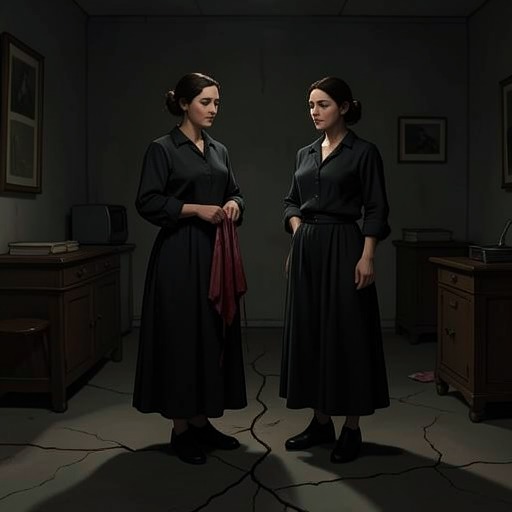
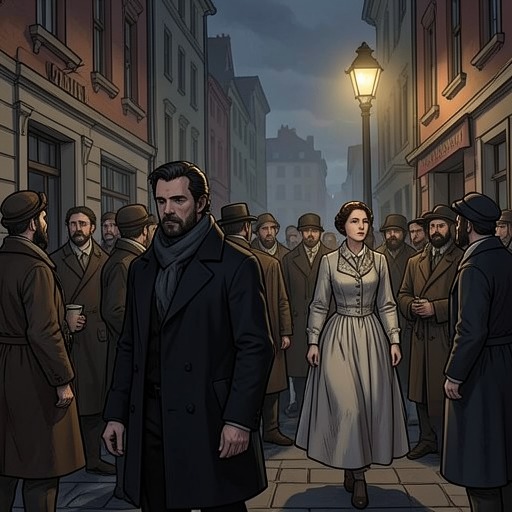
Hold TightMarianne's murder and staged body make the discovery of her remains part of the crime’s design. The killer leaves investigators with a false account of who she was, while the later recognition of her as Marianne overturns that presentation and gives the Jane Doe investigation a name. The staging also becomes a point of comparison with Reba Cordova’s disappearance, revealing how deception connects the cases even as Nash tries to keep them separate.
The unidentified victim
At the Essex County Chief Investigator's Office, Loren Muse is still waiting for the NCIC fingerprint results on the Jane Doe. She checks the homicide board and finds no new cases, but the absence of an identification leaves the woman’s identity unresolved. A working surveillance camera near the murder scene offers another possible route: if the body was transported by car, the vehicle might appear on the recording. The prospect is useful but daunting, since the tape could contain hundreds of vehicles and no obvious sign of which one matters.
That investigative uncertainty is the first consequence of the staging. The body is not simply evidence of a killing; the false identity attached to it threatens to direct the police toward an invented account of the victim’s life. Until the fingerprints or another clue establish who she is, investigators must work around the killer’s deception rather than from a known identity.
A false identity by design
Loren identifies deception and diversion as a connection between the Jane Doe case and Reba Cordova’s disappearance. The two missing women are described as well-to-do women in their forties who vanished within roughly a day of one another. The similarity draws attention, but the stronger link is the deliberate use of misleading clues in both cases.
In Marianne’s case, the killer has staged the scene to make investigators believe she was a sex worker. This is not an incidental misreading of the evidence in Loren’s account: it is an elaborate effort to steer the investigation toward a false understanding of the victim. The presentation of her body therefore acts as a planted explanation, one that obscures her identity and invites the police to interpret her through the role the killer has assigned her.
Nash’s contrasting strategy
Nash’s thoughts explain the practical logic behind the different treatment of the two women. He has beaten Marianne beyond recognition, but he has not damaged Reba’s face. He expects Reba’s husband to report her missing and reasons that a recently discovered body, even one showing violence, would likely be identified as hers. Rather than repeat the approach used with Marianne, he decides Reba’s body should not be found.
He leaves Reba’s car in a hotel parking lot, expecting investigators to interpret it as evidence of an affair and a voluntary departure. If they pursue that explanation, they may focus on whether Reba had a lover; if no body appears, Nash believes they may have little to investigate and could assume she ran away. The contrast is deliberate: Marianne’s body is left for discovery under a false identity, while Reba is meant to disappear entirely. Nash’s change of method is intended to prevent a connection between the cases, though the shared use of deception gives Loren a basis for suspecting one.
Recognition and reversal
The false identity finally collapses when Neil Cordova recognizes the Jane Doe. Asked by Loren Muse whether he knows who the woman is, he confirms that she is Marianne. His recognition supplies what the pending fingerprint search has not yet provided: a human identification that transforms an anonymous victim into a person known to the investigation.
The moment reverses the meaning of the staging. The killer’s effort to make Marianne appear to belong to a different life has delayed recognition, but it has not erased her identity. The case now joins the false clues surrounding the body to Marianne herself, and Loren’s comparison with Reba’s disappearance gains sharper significance: the killer has used different schemes, but in each, the misleading appearance is part of the crime’s concealment.
Narrative significance
The event links physical evidence, investigative inference, and recognition. At first, the body’s presentation encourages a false classification; the uncertain fingerprints and the search for a vehicle show how that misdirection shapes the work of identifying her. Loren’s attention to the pattern across two disappearances then shifts the inquiry from isolated clues toward a shared method of deception.
The contrast between the discovered body and the body Nash intends to hide marks the limits of his control. He calculates that the police will follow the clues he plants, yet the repeated use of false explanations becomes a clue in itself. Marianne’s identification does more than resolve the Jane Doe’s name: it exposes the staged account as an obstacle deliberately placed between the victim and the truth.