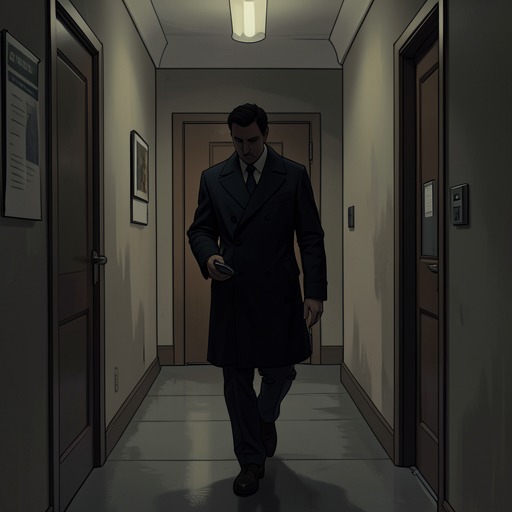
Mo
Hold TightMo is Mike Baye’s oldest and most dependable ally: a former college hockey teammate, a near-godfather to Adam, and the friend who repeatedly turns personal loyalty into practical action. His role moves from locker-room teasing to late-night emergency searches and, finally, a calculation that opens a locked door while Mike is in immediate danger.
Identity and Background
Mo and Mike have been friends since their Dartmouth College days, when they played on the same hockey team. Mike was the leading scorer at left wing; Mo was the tough goon at defenseman. Nearly a quarter century after graduation, their lives have changed—Mike is a transplant surgeon, and Mo does “murky work” for the CIA—but the old division of roles remains recognizable. The book presents their friendship as durable precisely because it does not require ceremony: familiarity, banter, and decisive help are its working language.
Hockey continues to give that friendship a recurring setting. In one locker-room scene, Mike is still wearing his skates when a text arrives, while Mo has already taken his off. The room stinks from sweat worked into the players’ pads, and an oscillating fan does little to clear the air. Mo notices Mike looking at his wife’s number and asks, “That Handcuffs?” When Mike admits that Tia has texted him, a teammate calls him whipped; Mike accepts the joke. The exchange places Mo inside the everyday rhythms of Mike’s marriage as well as his athletic past, and shows the ease with which the friends move between teasing and concern.
Friendship with Mike
The friendship’s intimacy is clearest when Mike’s family crisis pulls Mo beyond the usual boundaries of a visit or a game. When Tia advises Mike to go home, Mo answers that Adam is his godson and that he has the boy’s best interests at heart too. His claim is not a bid to replace Adam’s parents; it explains why he regards the boy’s welfare as a responsibility of his own. Later, Mo asks Mike how badly he wants to find Adam, recalling that he had previously asked to look at Mike’s cell phone. The question connects Mo’s knowledge of Mike’s habits and communications to the search without making their bond merely a matter of shared history.
Mo’s loyalty is reciprocal. When Tia calls because Mike has not returned, Mo’s first response is to ask what is wrong. She can hear fear in his voice. Though he has no wife or children, the narrative describes Mike as the person he has in many ways. Mo does not wait for a full account before acting: he says he is getting dressed, offers to drive over and check the house, and remembers the spare key concealed in a fake rock by the fence post. His familiarity with the hiding place turns concern into immediate, useful action.
That same readiness appears when Tia reaches Mike’s hospital room. Mo is already there; he crosses the room with his fists at his sides and tells her that Mike is fine and has fallen back asleep. His presence precedes her arrival, so the reassurance comes from someone already keeping watch. Tia’s shock at seeing Mike’s face makes the room a measure of how serious the situation is, while Mo’s presence confirms that the family crisis has become his too.
Place in Adam’s Search
The Bayes treat Mo as a trusted exception when asked whom they told about the monitoring program they had installed to watch Adam’s computer. Tia says that she and Mike were not proud of the spying, then remembers Mo; she insists that he would never hurt their son. She also describes him as almost Adam’s godfather. The detail matters because the parents’ surveillance raises questions of trust, yet Mo is someone they believe can be trusted with the secret and with Adam’s safety.
Mo supports Mike without pretending the search will be easy. When Mike plans to confront Captain Daniel Huff about lying, Mo checks that Huff is a police captain and observes that a cop will not be easily intimidated. The remark is dry rather than grandiose, but it recognizes the limits of Mike’s proposed approach and the authority of the person he means to confront. Later, Mike and Tia divide the work: Mike tells Tia what has happened, while he and Mo drive back toward the Bronx and Tia turns to the computer. Mo listens without demanding elaboration. Once Mike finishes, Mo focuses on a specific unresolved detail: an instant message from CeeJay8115.
Calculation and Crisis
Mo’s attention to that message becomes consequential during the confrontation at the locked entrance. Sitting in the car, he works through the numbers in CeeJay8115, testing conversions and patterns. He considers turning the letters in “Cee” and “Jay” into their alphabet positions, producing 3108115, and tries additions, divisions, and other combinations. He also brings Adam’s screen name, Hockey Adam1117, into the calculations. Mike had explained that 11 was Messier’s number and 17 was his old Dartmouth number, giving Mo further numbers to test. The passage shows not an effortless flash of genius but sustained, imperfect problem-solving: he tries possibilities until one fragment proves useful.
When Mo asks whether all those calculations were for “Eight-one-one-five,” he has isolated the code needed at the alarm pad. Anthony is pushing against a door that will not budge; Mo presses 8115, and the red light turns green. Anthony pulls the door open and the two men dive inside. On the other side, Carson has a gun aimed at Mike’s head and believes he is ready to fire. Mo’s numerical work therefore supplies the access the others need at a moment when delay carries immediate danger. The scene gives his old toughness a different form: the defenseman who once absorbed contact now helps clear a path into danger to reach his friend.
Narrative Role
Mo’s importance rests on repeated, concrete acts rather than a separate account of his private life. He is the friend who can tease Mike in the hockey locker room, claim a stake in Adam’s welfare, respond to Tia’s fear by driving to the house, and stay beside Mike in the hospital. During the search, he listens, identifies the message worth pursuing, and keeps testing its possible meaning. The shift from locker-room banter to the alarm keypad shows the range of the friendship without changing its foundation: Mo remains close enough to understand the people involved and committed enough to act when understanding alone is not enough.