Susan Loriman
Hold TightSusan Loriman is Lucas Loriman’s mother, and his urgent need for a kidney transplant turns a long-concealed trauma into a question with immediate medical and family consequences. She has treated Dante Loriman as Lucas’s father, and Dante has helped raise him, but compatibility testing brings the uncertainty of Lucas’s biological parentage to the surface. Susan’s arc moves between protecting her family from painful knowledge and doing whatever she can to keep her son alive.
Identity and Family
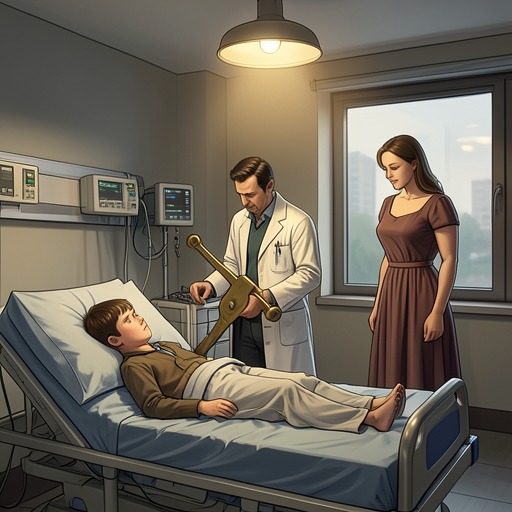
Susan is introduced through her connection to Lucas’s treatment. He is ten years old and has focal segmental glomerulosclerosis, a serious kidney disease for which he desperately needs a transplant. Mike Baye, a leading transplant surgeon who knows Lucas personally, has handed the case to his colleague Ilene Goldfarb, head of transplant surgery at NewYork-Presbyterian. Susan is among the parents waiting for news that might determine whether a family member can donate.
Her marriage to Dante is bound up with Lucas’s illness, but its history is not reduced to the medical problem. Susan remembers that when she contracted pneumonia shortly before Lucas’s birth, she was hospitalized and Dante stayed with her throughout. Later, when the family learned Lucas was ill, Dante presented a brave front at a family meeting and spoke of facing the crisis together; that night, he went outside and cried. These memories establish a history of care and shared fear that makes the question of biological fatherhood more than a matter of clinical classification.
Lucas’s Illness and the Medical Search
The transplant evaluation first makes the family’s biological relationships legible through compatibility testing. Ilene explains that Dante is not a good candidate based on his HLA typing. Susan is a better match, though not an ideal one. The medical discussion also outlines why a sibling can be a strong potential donor: siblings may be an identical match, a partial match, or no match. For Susan, these probabilities turn a technical process into a search for a viable path for Lucas.
The conflict sharpens when Mike concludes that Lucas’s biological father must also be tested. Susan reacts with shock when Mike says this directly. The comment exposes the gap between the father already tested and the biological father the medical team now needs to identify. In a separate conversation, Mike challenges Ilene about whether she would tell Dante if testing revealed a serious medical problem in him, such as lymphoma, even though Dante is not her patient. Ilene says she would. The exchange makes clear that the case raises questions not only about finding a donor, but also about what medical knowledge should be shared with someone whose relationship to the patient has become uncertain.
Susan later approaches Ilene herself because she does not want to discuss the donor search with Mike. She asks to meet that day rather than wait for Ilene’s regular office hours. Ilene is reluctant to help Susan personally, but recognizes that Lucas remains her patient and agrees. Susan’s request creates a separate channel for the conversation: she is seeking help for her son while trying to manage the consequences of a truth she has not yet fully disclosed.
Concealed Trauma and Uncertain Parentage
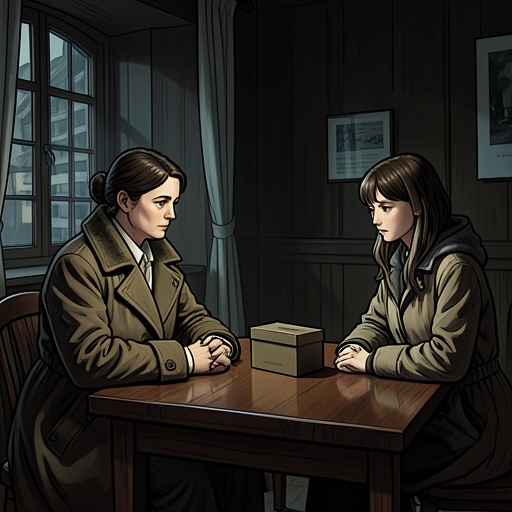
In their meeting, Ilene presses Susan to identify Lucas’s biological father so that potential donors can be tested. Susan first says she does not know. When Ilene assumes there may have been more than one lover, Susan rejects the assumption: she says she did not have a lover and reveals that she was raped. The disclosure changes the meaning of the search. The unknown donor is not the result of an affair she can simply reconstruct; Susan says the pregnancy followed an assault, and that she never told Dante.
Susan explains that, when she became pregnant, she hoped Lucas was Dante’s child. After Lucas was born, she came to believe the child’s appearance confirmed what she feared, but she blocked the thought and tried to move on. Her later admission that she does not know who the biological father is is therefore not a withheld name she can supply to the doctors. She had privately relied on the likelihood that Dante was the father, then on that hope as a way to live with the uncertainty. The transplant tests unsettle that fragile arrangement by making biological parentage clinically consequential.
The secret has remained inside her marriage for years. Susan says she never told Dante or anyone else, and describes having tried to leave the assault in the past. Her account also complicates her earlier confidence that she had moved on: she recalls trying to make conception by Dante more likely after the rape, then convincing herself of the conclusion she needed. At home, when Dante promises that the family will find donors and refuses to give up, Susan thinks of him as Lucas’s true father. The thought expresses the emotional truth of their family bond, even as the medical search distinguishes that bond from genetic parentage.
A Mother’s Donor Campaign
Susan does not let the search remain confined to clinic appointments. She asks Ilene whether there is any news from the donor banks. When there is none, she explains that she and Dante are organizing a major donor drive. She has visited Lucas’s elementary school, where Mike’s daughter Jill also attends, and spoken with teachers who support the idea. The plan is to recruit people to sign up for the donor bank, making the school community part of the effort to find a match.
The campaign continues through personal appeals. Joe Lewiston encounters another flyer and note from the Loriman family at the school, the third he has seen. This one says that a medical professional will come through the school the following Friday to take blood tests, and asks readers to help save Lucas. The repeated flyers show the search becoming public and practical: it calls for potential donors to take a specific step, rather than merely offering sympathy.
Later, Susan approaches Joe directly while a donor nurse is present and ready to take his blood. Joe initially sees no point in participating. Susan does not dismiss the difficulties in his own life; she points out that he called the police when he realized what his former brother-in-law was doing and urges him to think about rebuilding. She then asks him to help save Lucas. The appeal joins compassion for Joe’s situation to her determination to give her child another chance, without establishing whether Joe agrees to be tested.
Relationships and Narrative Significance
Susan’s relationship with Dante is shaped by the difference between the man who has raised Lucas and the biological father whose identity matters to donor testing. Her silence has protected their shared family life from a truth she could not bear to confront, but it also leaves the medical team without a clear route to another potential donor. Dante’s history of staying beside her through illness and grieving privately over Lucas’s diagnosis gives that conflict emotional weight: the man excluded by HLA results is not merely a name on a test form, but a husband and father in the family’s lived experience.
Her relationship with Ilene shifts from patient’s mother seeking news to a woman asking for help with a secret she has carried alone. Ilene’s response is firm and focused on Lucas’s health, but she makes room for Susan to disclose what the donor search has uncovered. Susan’s decision to speak does not resolve the uncertainty about Lucas’s biological father; instead, it makes the uncertainty explicit and allows the search to proceed without pretending that she can identify someone she does not know.
The novel places Susan’s private history beside public systems of medicine and community recruitment. HLA typing can distinguish biological compatibility, while the donor drive asks teachers, parents, and Joe to respond through an act of solidarity. Neither replaces the other: genetic information may affect the transplant search, but Lucas’s family is also sustained by care, memory, and people willing to be tested. Susan’s defining movement is from silence toward action—first asking Ilene for a private meeting, then organizing a school campaign, and finally making a direct appeal on her son’s behalf.