Target surveillance photo
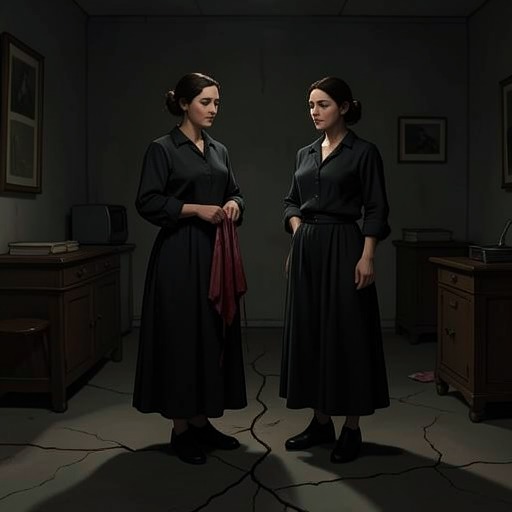
Hold TightThe Target surveillance photo is an investigative image from the store where Reba Cordova shopped the day before Loren Muse showed it to Reba’s husband, Neil Cordova. Its importance lies not in what it proves on its own, but in how investigators use it: a witness links the woman pictured to Reba’s missing Acura, and public circulation of the image brings in a tip identifying her as Pietra.
Origin and Investigative Use
Muse hands Neil a photograph of Reba and explains that it comes from a security camera at Target, where Reba had shopped the previous day. She then draws his attention to a woman in the image and gives him a second photograph. The exchange makes the picture a working investigative object: Muse is not merely asking Neil to confirm his wife’s identity, but asking him to help identify another person in the same store surveillance material.
Neil studies the second image, hoping to recognize someone who might offer a tangible lead. He cannot. His response is a limit on what the photograph can establish through family familiarity: the woman is not someone he knows, and the image does not immediately yield a name. Muse therefore turns to a different source of identification, the witness who had watched the surveillance tapes.
What the Image Is Used to Establish
The witness had seen Reba get into a van and another woman drive away in Reba’s Acura. After watching the tapes, the witness identified the woman in the Target photograph as the person who drove the Acura. The photograph thus contributes to a sequence of linked observations: Reba’s presence at the store, the witness’s account of the van and the car, and the recognition of the pictured woman as the driver.
That sequence makes the image consequential without making it conclusive. Neil does not recognize the woman, and the reported identification belongs to the witness, not to him. The photograph supports investigators’ effort to locate someone associated with Reba’s disappearance, but the scene does not establish the woman’s identity or explain her actions from the image alone. Its evidentiary force depends on comparison with a witness’s account and on the investigators’ ability to pursue the lead that account produces.
Public Circulation and the Pietra Tip
The image moves beyond the interview room when Paul Copeland asks the public for help finding Reba and locating the woman. At the press appearance, a photograph of Reba is shown first, accompanied by a phone number; the display then changes to the Target surveillance image. The woman is presented as a person of interest, and viewers are asked to call with information. The contrast between Reba’s personal photograph and the surveillance image makes the appeal serve two related purposes: finding the missing woman and identifying someone believed to be connected to the events around her disappearance.
The response arrives quickly. Frank Tremont tells Muse that a caller has identified the woman in the surveillance photo as Pietra. The caller is a widow formerly married to a Hawthorne police officer, who says the woman lives alone downstairs, is from overseas, and is named Pietra. The image has not, by itself, supplied those details; its public display has allowed a viewer to connect the pictured woman with information about where she lives and who she is. That tip turns the photograph from an investigative lead into the basis for a more specific search.
Surveillance and the Limits of Seeing
The photo belongs to a wider pattern in which recorded information promises to make hidden movement legible. In the investigation, a working camera near the Jane Doe murder scene may show a vehicle used to transport a body, though Muse recognizes that identifying it among hundreds of vehicles would be difficult. Elsewhere, the Bayes are told that monitoring software can record every keystroke and generate reports, while GPS service can place a phone on a street-level map. These systems gather different kinds of traces, but none interprets its own data: people must decide what a recording or location can establish and which lead deserves attention.
The Target image’s value is therefore inseparable from the people who view and interpret it. Neil looks and cannot name the woman; a witness recognizes her in relation to the Acura; the public appeal reaches a caller who supplies the name Pietra. At the same time, the wider story gives surveillance a more uneasy edge. Tia questions whether Brett might be able to access reports from the monitoring software he installed, making the control and reliability of recorded information a source of mistrust as well as protection. Against that background, the photograph is both practical evidence and an example of how an image becomes meaningful only through the uncertain chain of access, recognition, and human judgment.