Argent Hunter Code
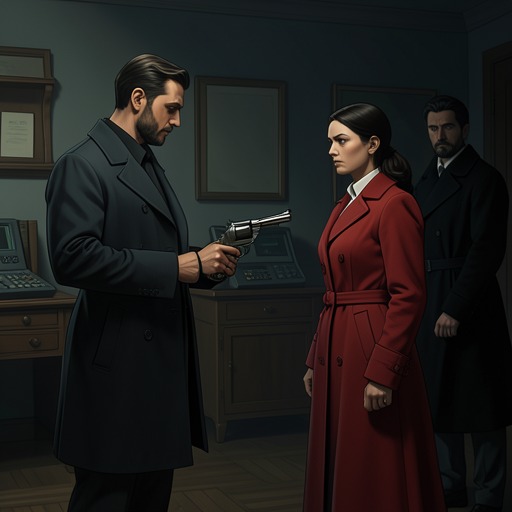
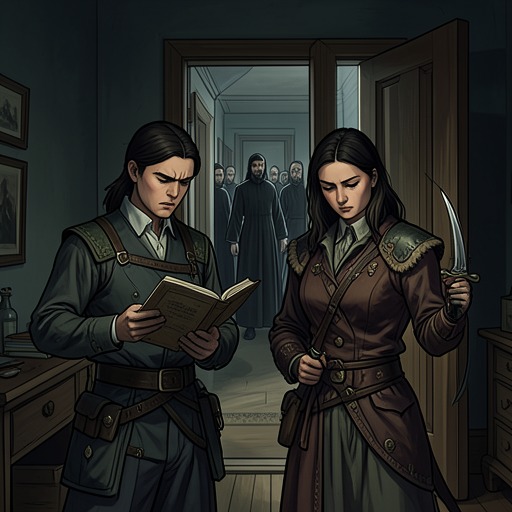
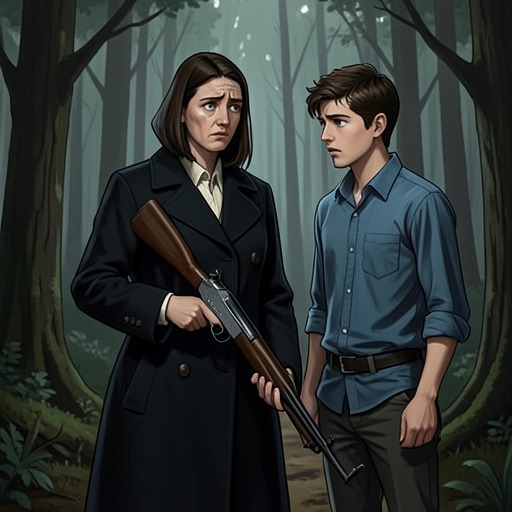
Holding Out for a Hero ▸ Stiles Stilinski (2)The Argent Hunter Code is the hereditary ethic associated with the Argent family’s campaign against werewolves and other supernatural threats. Its decisive principle is threat elimination: when the supernatural is unknown and potentially dangerous to humanity, the hunters treat destruction as a defensible response. The code therefore organizes both the family’s identity and the central conflict between hunters, werewolves, and the human friends caught between them.
Origins and Family Tradition
The code is presented through the Argent family rather than through a formal recitation of numbered laws. The family appears as a single hunting lineage whose traditions are passed down across generations. At Kate Argent’s funeral, the prospect of other relatives arriving immediately suggests not an isolated household but a wider network of Argents bound by the same inherited practice. Their family gathering carries the expectation that the hunters’ tradition will continue, making kinship and doctrine inseparable.
The code emerges from fear of the unknown. Supernatural beings are imagined as a possible danger to the human race, and that possibility is enough to activate the hunters’ response. This logic does not require every individual creature to have committed a crime before being classified as a threat. Instead, the existence of a supernatural capacity becomes evidence of potential danger. The result is a moral system that converts uncertainty into permission for preemptive violence.
Rules in Practice
The Argent Hunter Code is most visible in the family’s opposition to werewolves. Scott McCall’s transformation places him directly inside the code’s field of judgment, even though Scott remains connected to his human friends and is attempting to control the consequences of the werewolf bite. His relationship with Allison Argent intensifies the conflict because the family’s inherited duty stands against her relationship with him, creating the forbidden Romeo-and-Juliet structure that shapes the first major confrontation between the hunters and the werewolves.
The code also depends on secrecy and internal family control. Allison is told that her relatives will explain matters only after Kate’s funeral and after the others arrive, suggesting that knowledge about the family’s activities is managed collectively rather than openly shared. The withheld explanation reinforces the impression of a closed tradition in which younger members are brought into the truth through family authority. The Argent family’s communication problems are therefore not merely domestic; they help preserve a private system of power and obligation.
Human Consequences and Contradictions
The code’s greatest contradiction is that its language of protection can produce the very danger it claims to prevent. By treating supernatural identity as a sufficient reason for elimination, it collapses distinctions between hostile creatures and people who are frightened, newly transformed, or trying to resist violence. The hunters’ classification system makes the supernatural person legible first as a category and only afterward, if at all, as an individual.
The narrative repeatedly complicates that classification. The giant reptilian creature initially appears only as a terrifying body: reptilian eyes gleam in the darkness, scaly skin enters the light, a long tail lashes outward, and rows of sharp teeth suggest an inhuman predator. Later, the same threat is encountered through Jackson Whittemore, whose human identity has not disappeared completely. When Jackson says that the victims murdered him, his face and body begin to reveal the Kanima, showing that the monster is connected to a murdered or violated human self rather than existing as a wholly separate species of evil.
That reversal becomes especially clear when Lydia Martin holds out a key. The Kanima stops, recognizes the object, and begins to lose its reptilian features as Jackson returns before the others’ eyes. The key does not defeat the creature through the hunters’ logic of extermination; it recalls a person concealed within the monster. This moment exposes the limits of a code that responds to the visible threat while ignoring memory, injury, coercion, and the possibility of recovery.
Competing Forms of Belonging
The Argent Hunter Code is also a system of group identity. The family’s unity is defined against werewolves, while the werewolves form their own competing structure under Derek Hale. At school, these supernatural affiliations overlap with ordinary teenage groups, producing a world in which friendship, romance, family loyalty, and species identity continually conflict.
Carson Bradley’s offer of friendship to Boyd shows an alternative to inherited classification. Rather than treating Boyd as merely one more recruit in Derek’s brigade, Carson recognizes his loneliness and invites him to sit with the human friends while knowing about werewolves. The offer places relationship before category: Boyd is approached as a neglected person who can choose a community, not simply as a supernatural asset or threat.
The same contrast appears when Isaac Lahey is pardoned and allowed back into Beacon Hills High School despite his escape from custody. His return is treated as the arrival of another unstable werewolf in the school corridors, but the response around him is not identical to the Argent method. The narrative presents supernatural transformation as a condition requiring support, restraint, and difficult judgment rather than as an automatic sentence of death.
Narrative Significance
The Argent Hunter Code supplies the story’s clearest institutional explanation for the violence surrounding Beacon Hills. It gives the hunters a hereditary purpose, makes Allison’s romance with Scott dangerous, and turns family arrival and funeral gatherings into potential escalations of conflict. At the same time, the narrative tests the code against cases that resist simple moral sorting: Scott remains a friend and ally despite becoming a werewolf, Boyd’s isolation predates his transformation, and Jackson’s monstrous form can be interrupted by a remembered connection.
Its lasting significance lies in the tension between rules and recognition. The code offers certainty in a world full of shapeshifters, venom, altered bodies, and hidden identities, but that certainty is purchased by refusing to see the individual beneath the threat. Against it, the story places friendships, romantic loyalty, investigation, and acts of remembrance. The hunter tradition seeks safety by destroying the other; the counterargument is that survival may depend on learning when the apparent monster is still a person who can be known, restrained, or brought back.