Carson Bradley
Holding Out for a Hero ▸ Stiles Stilinski (2)Carson Bradley is the narrator and emotional center of the story, a high-school student whose life changes after a winter-break search for a dead body draws her into the supernatural world of Beacon Hills. She begins as Scott McCall and Stiles Stilinski’s lifelong best friend, expecting an interrupted reading night rather than a chain of deaths, transformations, and attacks. By the end, Carson is more cautious, older in experience, and hardened by what she has witnessed, but she has not surrendered her capacity for loyalty, affection, or moral judgment.
Identity and Background
Carson is introduced as an ordinary teenager whose sharp awareness makes the first signs of change difficult to ignore. Recent events have altered the atmosphere around her so noticeably that she can almost immediately tell that something is different. Her perspective is intimate rather than detached: the supernatural is not an abstract mythology but something she has personally seen, and she acknowledges that it has permanently affected her life.
Her name is formally given as Carson Mariella Bradley, a detail that carries particular force when her father shouts it in anger. The family history behind that confrontation is already fractured. Two years after Mrs. Stilinski’s death, Carson’s mother also disappeared from her life, but unlike Claudia Stilinski, Carson’s mother chose to leave. This abandonment helps explain why family subjects remain sensitive even when Carson can respond to other people’s pain with steadiness and insight.
Carson’s emotional world is also shaped by the friendships that predate the supernatural crisis. Her loyalty to Scott McCall and Stiles Stilinski is longstanding enough to define her social identity; even a boy who once saw her as a popular, inaccessible girl recognizes that she remained friends with those two outsiders throughout middle school and early high school. Her social position therefore contrasts with her priorities: popularity is visible around her, but it is not the standard by which she chooses her closest companions.
Life and Plot Trajectory
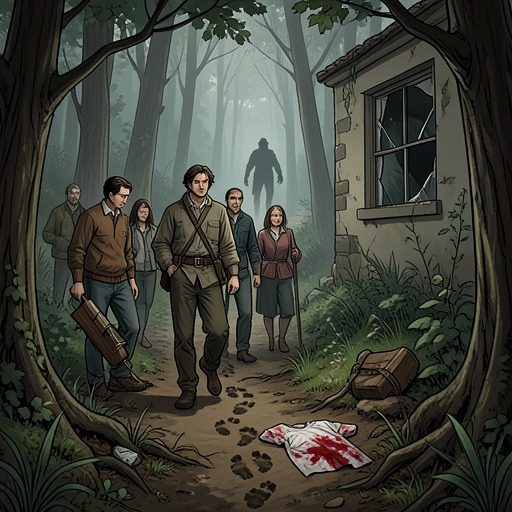
The story’s decisive beginning is Carson’s involvement in Stiles’s plan to search for a dead body in the woods on the last night of winter break. She would have preferred to spend the cold, rainy evening reading, but friendship pulls her into the investigation. That choice places her at the threshold between ordinary adolescent life and Beacon Hills’s supernatural danger, and the threshold never fully closes again.
Carson repeatedly occupies the dangerous space between witness and participant. At the sight of a murdered girl whose lip has been ripped away, her first impulse is to scream for help and summon Stiles, Sheriff Stilinski, and Scott. Yet she also recognizes that drawing them into immediate danger may be a bad idea, so she remains still and assesses the scene. Her dark self-awareness turns the moment into a grimly imagined horror story, but the humor does not cancel the terror; it is the method she uses to keep functioning while confronted with a dead body.
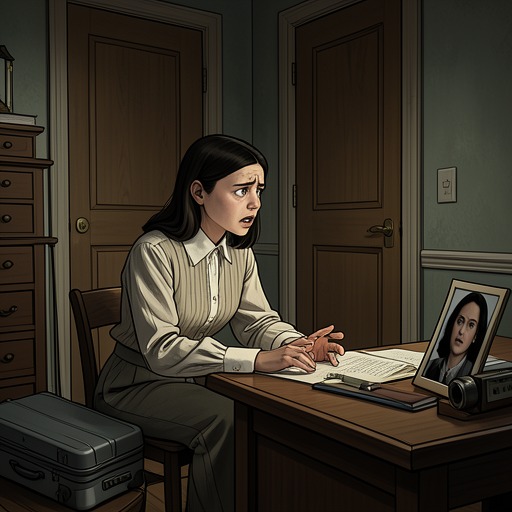
As the Kanima investigation develops, Carson contributes skepticism as well as determination. She searches for information about the creature under several descriptions, including the Kanima, a shape-shifter, and a giant lizard that cannot swim, but finds almost nothing online. Derek Hale has heard stories that the internet does not contain, while the bestiary open on Stiles’s laptop is filled with words Carson cannot understand. Her failed attempts to use an online translator, already unreliable for her French homework, emphasize the limits of ordinary knowledge when the threat belongs to a hidden supernatural tradition.
Carson is also placed directly in the mechanics of violence. Matt Daehler forces her into an office at gunpoint, pushing her through the doorway with the weapon pressed against her back. Stiles and Scott see her stumble in, and when Matt follows with the gun dangling between his fingers, Stiles pulls Carson behind himself and Scott. The scene clarifies her role within the group: she is endangered as a civilian, but she is not treated as disposable. Her presence changes the behavior of the people around her, converting investigation into immediate protection and making the danger personal for the entire group.
The aftermath of such events is not presented as a clean return to normality. Carson distracts herself by picking at the string on the bottom of a plaid shirt that actually belongs to Stiles. The small borrowed garment becomes a concrete sign of attachment amid fear, while the repetitive gesture gives her something manageable to control when the larger crisis cannot be controlled. Even after the immediate danger has passed, her body remains occupied by anxiety and her attention must be actively redirected.
Relationships and Conflict
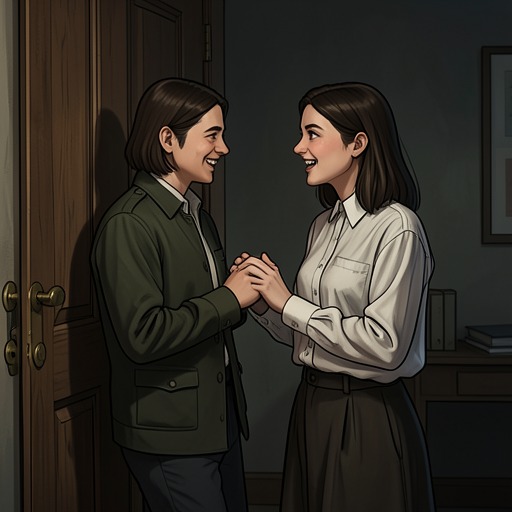
Carson’s central relationship is with Stiles. Their intimacy grows from a lifelong friendship into love, and the development is mutual even before Carson understands it. She reacts shyly when the possibility of being together forever is raised, revealing both desire and uncertainty. The relationship is not merely a romantic subplot: Stiles is one of the people who brought her into the supernatural crisis, one of the friends she repeatedly tries to protect, and the person whose clothing and physical presence become associated with safety.
The bond also carries the weight of shared danger. When Stiles tells Carson that there was nothing she could have done, his concern acknowledges her guilt and helplessness without diminishing her importance. Carson’s response to crisis is often to act, investigate, or summon help, so reassurance matters precisely because it confronts the limit of that strategy. Her relationship with Stiles is therefore built from both affection and mutual caretaking rather than romance detached from the plot.
Scott is Carson’s other foundational connection. Their friendship predates Scott’s supernatural transformation and remains part of the group’s operating structure after the world changes. Carson’s commitment to Scott is expressed through presence: she joins the investigations, remains near him and Stiles during escalating danger, and becomes part of the circle that must distinguish allies from threats. The friendship gives the supernatural narrative a human baseline, showing what Carson is trying to preserve while everything around her becomes unfamiliar.
Carson’s relationship with Jackson Whittemore is more conflicted but no less revealing. She admits that she has watched Jackson ruin lives, hurt people, and behave cruelly, yet she refuses to reduce him to that history. When Jackson openly acknowledges caring about someone, Carson identifies the goodness beneath his defensive exterior and describes the contrast between him and the person he cares about as ice and fire. Her judgment is neither naïve forgiveness nor simple condemnation. She recognizes harm, then insists that harm is not the whole of a person.
That capacity for divided judgment is especially important in a town where supernatural identities and moral identities continually overlap. Carson can fear the Kanima, distrust dangerous people, and still look for the human responsibility or vulnerability beneath a hostile surface. Her approach opposes the reflex to classify individuals as monsters once they have become frightening. It also makes her a counterweight to the hunters and authorities whose responses tend toward control, punishment, or elimination.
Change, Resilience, and Narrative Role
Carson’s growth is defined less by acquiring supernatural powers than by learning how to remain human in a supernatural conflict. She becomes more cautious, more grown up, and more hardened by death, but the narrative does not treat hardening as total emotional victory. Her continued attachment to Stiles, Scott, and the wider group shows that resilience for her means preserving connection under pressure rather than becoming invulnerable.
Her family history gives that resilience a personal cost. Carson has already experienced a form of disappearance before the supernatural plot begins: her mother left by choice, creating an absence that cannot be explained away as an accident. In contrast, Carson repeatedly chooses to remain present for friends who are endangered, transformed, abducted, or morally compromised. The pattern makes her loyalty an active answer to abandonment. She cannot prevent every loss, as Stiles reminds her, but she can refuse to become another person who leaves when others need her.
Carson’s narration combines fear, sarcasm, embarrassment, and close observation. She can imagine herself as the heroine of a real-life horror story while standing over a mutilated body, joke about the practical absurdity of Deaton serving as both veterinarian and supernatural guide, and still register the seriousness of the danger. This tonal range keeps her from becoming only a victim or only a commentator. Humor becomes a survival technique, while precise attention to gestures, clothing, family reactions, and social cruelty makes her an unusually grounded interpreter of events.
The story also frames Carson through an overtly mediated popular-culture identity: the opening credits identify Lucy Hale as Carson Bradley, and the accompanying playlist includes songs such as “Holding Out for a Hero,” “Castle Walls,” “Beside You,” “Save Me a Spark,” “Thousand Needles,” “Everlasting Love,” “The Love Club,” “Favorite Record,” “Let It Go,” “Blue,” “Cold Water,” and “Cliff’s Edge.” These materials place Carson within a distinctly teenage emotional register of danger, longing, separation, and endurance. They do not replace her characterization; they reinforce the contrast between the language of a young woman’s romantic and musical life and the violence that keeps invading it.
Carson’s decisive narrative function is to make the supernatural legible without making it ordinary. She begins as the friend who would rather read on a rainy night and ends as someone capable of investigating an impossible creature, surviving a hostage situation, confronting family wounds, and defending the possibility of goodness in a damaged person. Her significance lies in that continuity: the supernatural changes what Carson must do, but it does not erase the values that determine why she does it.