Concussion
Holding Out for a Hero ▸ Stiles Stilinski (2)Concussion is a medically recognized head-injury state that exposes the cost of the violence surrounding the Beacon Hills High School Lacrosse Team. In the story, it is not treated as an isolated accident: players are concussed by the giant lizard creature during a semifinal, yet the team’s shortage of available athletes leads Coach Finstock to send injured players back onto the field. Carson’s later mild concussion, sustained during the police-station hostage crisis, extends the pattern beyond sport and shows how supernatural emergencies leave ordinary neurological consequences in their wake.
Definition and Physical Signs
Concussion is presented through impaired attention, confusion, delayed responses, and the need to test a person’s orientation. Coach Finstock asks Danny Mahealani how many fingers he is holding up while Danny presses ice against his forehead. Danny answers four even though the coach is holding up two, then gives the expected answer only after being prompted. The exchange makes the injury visible without requiring a formal medical explanation: Danny is conscious, mobile, and able to speak, but his perception and judgment are unreliable.
The scene also links concussion to the body’s uncertain boundary between apparent recovery and actual safety. Danny’s ability to stand does not mean that he is fit to compete. His spaced-out response and tentative catch of the lacrosse stick indicate continuing impairment, while the pressure of the game encourages everyone around him to treat those signs as obstacles to be managed rather than reasons to stop.
The Semifinal and the Pressure to Continue
The most consequential concentration of concussions occurs during the semifinal, when the giant lizard creature attacks the players. One injured player after another goes down, and Carson openly worries about whether the team will be safe. As the match continues, Coach Finstock puts back into play every player whose injury can be overlooked, leaving half the team on the field with possible concussions; Jackson Whittemore and Scott McCall are among those absent. The shortage becomes a tactical crisis because a lacrosse team cannot function effectively with so many players suffering head injuries.
The coach’s response turns concussion into a conflict between medical caution and competitive necessity. When the referee announces that the team is still one player short, Finstock calls for Stiles Stilinski. The sequence is grimly comic in presentation, but the underlying value shift is severe: the game’s ordinary rules of performance absorb injuries produced by an extraordinary attack. Even the diagnostic test becomes part of the effort to restore the roster. Finstock tells Danny to get back out there, pushes him toward the field, and throws him a stick, despite Carson’s hesitation about whether that is safe.
This treatment makes the concussion state an institutional problem as much as a physical one. The players are not merely injured individuals; they are also bodies counted against a team’s required number. The competition’s demand for completeness overrides the body’s demand for recovery, revealing how authority can convert visible impairment into a logistical inconvenience.
Concussion Beyond the Playing Field
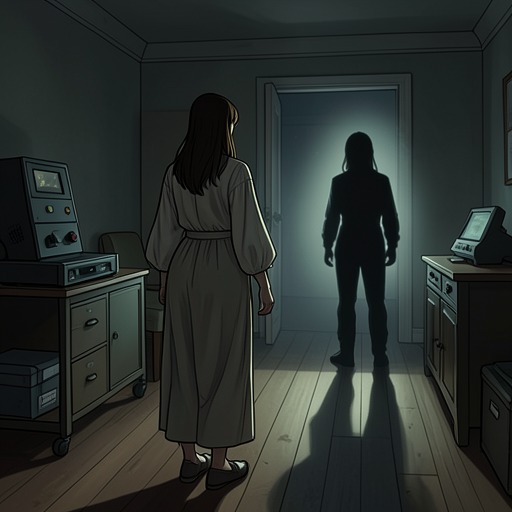
The condition reappears after the police-station hostage crisis, where Carson is rendered unconscious after Matt Daehler attacks her and Sheriff Stilinski. When she finally regains consciousness, a paramedic checks her for a concussion and determines that it is mild enough that she does not need to remain overnight at Beacon Hills Hospital. The diagnosis limits the immediate medical response but does not erase the seriousness of what happened: Carson had been unconscious for at least half an hour and had no knowledge of events during that interval.
Carson’s recovery is therefore marked by both information and absence. She knows that Matt took out Mr. Stilinski after she went down, but the blackout has cut her off from the scene itself. The concussion becomes a bodily record of the hostage crisis, while simultaneously preventing complete access to it. Her later attendance at a school guidance meeting, arranged because she had been held hostage, shows that the institution recognizes a psychological and educational aftermath as well as a physical injury.
The morning after the crisis is described as somewhat better because Carson wakes without crying and her eyes are less sore, yet this improvement does not amount to a return to normality. She remains emotionally affected, and the fact that she is back in her own room with Stiles Stilinski holding her reflects reliance on intimate support during recovery. The body may be cleared of the need for overnight hospitalization, but the surrounding relationships still have to contain the event’s consequences.
Medical Knowledge Amid Supernatural Violence
Concussion exists within a wider field of bodily states that the characters struggle to interpret. Lydia Martin’s coma and later recovery, Erica Reyes’s epileptic seizure during rock-wall training, wolfsbane poisoning, paralysis from Kanima venom, and Scott McCall’s gunshot all force the group to move between ordinary medical language and supernatural explanations. In that context, concussion is distinctive because it remains legible within conventional medicine even while the injuries that produce it come from an impossible creature or a hostage crisis tied to the supernatural world.
The story repeatedly asks who has the authority to name a damaged body. Doctors and paramedics identify coma and concussion; supernatural researchers identify wolfsbane and Kanima venom; friends and witnesses often notice the first signs before professionals do. This overlap prevents concussion from becoming merely a metaphor. Danny’s wrong answer, Carson’s blackout, the ice against Danny’s forehead, and the paramedic’s examination all insist on the concrete experience of neurological disruption.
Narrative and Thematic Significance
Concussion embodies the story’s collision between the demand to keep functioning and the body’s refusal to pretend that nothing has happened. On the lacrosse field, injured players are pressed into service because the team is short-handed. At the police station, Carson survives a hostage crisis but loses part of the event to unconsciousness. In both settings, injury interrupts knowledge and control: Danny cannot accurately read what is in front of him, while Carson cannot remember what occurred while she was unconscious.
The condition also complicates the idea of recovery. A player can be upright yet unsafe; a hostage can leave the hospital yet remain psychologically unsettled. By placing concussion alongside supernatural transformation and other extreme bodily states, the narrative gives ordinary injury a persistent importance. The supernatural may explain the attack, but it does not cancel the medical reality afterward. Concussion is the residue that remains when spectacle ends: a damaged body, incomplete memory, compromised judgment, and a community forced to decide whether survival is enough to justify returning to the game.