Ms. Morrell
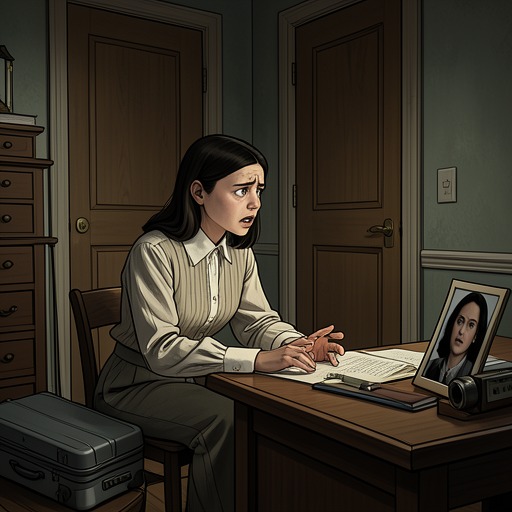
Holding Out for a Hero ▸ Stiles Stilinski (2)Ms. Morrell is a French teacher at Beacon Hills High School whose role expands beyond ordinary classroom instruction when the school arranges a counseling meeting for Carson Bradley after the police-station hostage crisis. She presents herself as qualified to help, but her importance lies less in institutional authority than in the way she gives Carson a language for surviving what has happened. Her conversation turns professional intervention into a moral challenge: trauma may constrict a person’s world, but it does not have to determine whether that person keeps resisting.
Identity and Introduction
Ms. Morrell is introduced in the aftermath of severe violence, when Carson is sitting outside the guidance office in a plastic chair and waiting for an impromptu meeting. The school has placed her in the position of counselor because Carson was held hostage at the police station, lost consciousness, and sustained a mild concussion. The arrangement is immediately uneasy. Carson does not regard herself as needing the meeting and resents being directed toward it, while Ms. Morrell’s identity as a French teacher makes Carson question whether she is truly a professional capable of addressing the crisis.
Ms. Morrell does not answer Carson’s resistance with defensiveness or force. She smiles lightly, closes the door, sits at her desk, and waits for Carson to begin. When Carson admits that she has no idea why she is there, Ms. Morrell explains that both the school and she believe it is in the best interest of those involved in the police-station situation to speak with a professional. Her calm manner contrasts with Carson’s anger, skepticism, and exhaustion, establishing Ms. Morrell as a composed adult presence inside a school system that otherwise treats trauma through procedures and appointments.
Counseling Carson Through Trauma
The meeting becomes more revealing when Carson describes her emotional state as suffocating. She imagines herself trapped in a room that keeps shrinking, with her worst nightmares drawing nearer as the walls close in. Ms. Morrell first tests the image by asking whether Carson means claustrophobia, but she does not reduce the metaphor to a simple diagnosis. Carson clarifies that the central sensation is not merely being enclosed but drowning, a word connected to the hostage crisis and to Matt Daehler’s voluntary apnea.
Ms. Morrell responds by converting the drowning image into a question of agency. She asks what would happen if someone chose not to open their mouth while underwater. Carson recognizes that holding one’s breath is a reflexive bodily act and insists that instinct cannot simply be fought. Ms. Morrell accepts the force of instinct while redirecting its meaning: survival requires trusting those instincts rather than surrendering to the terror surrounding them. Her method is not to deny Carson’s fear but to locate a remaining capacity for choice inside it.
This exchange gives the counseling scene its distinctive structure. Carson begins with the sense that circumstances are closing around her and that she is being carried by forces she cannot control. Ms. Morrell does not claim that the supernatural violence in Beacon Hills is ordinary teenage stress, nor does she know the full reality Carson is concealing. Instead, she works through an image Carson herself has supplied, allowing the metaphor to expose both vulnerability and endurance. The result is a limited but meaningful form of psychological intervention: Carson is not declared healed, yet her experience is made speakable.
The Language of Fighting Back
Ms. Morrell’s most direct guidance is that there is always a reason to fight back and that life’s problems should not prevent resistance. She invokes Winston Churchill’s saying about going through hell and is met by Carson’s completion of the phrase, “Keep going.” The exchange briefly sounds like conventional encouragement, but its context makes it harsher and more complicated. Ms. Morrell believes she is addressing ordinary personal difficulties, while Carson understands that Beacon Hills has become literal hell for the people caught in its supernatural violence.
That gap in knowledge does not make Ms. Morrell’s words irrelevant. Carson privately rejects the idea that the group can simply keep going or keep fighting, yet the scene places Ms. Morrell’s counsel beside the pressure of the larger story. Her advice becomes a threshold between institutional reassurance and the concealed truth of the town. She cannot name the werewolves, the Kanima, the deaths, or the hostage crisis’s full implications, but she still identifies the central ethical problem facing Carson: whether repeated danger will reduce survival to passive endurance or provoke deliberate resistance.
Ms. Morrell therefore functions as a mentor figure in a narrow, grounded sense. She does not possess the supernatural knowledge held by the hunters or the werewolves, and she does not solve the crisis. Her contribution is verbal and interpretive. By asking Carson to examine drowning, instinct, and continued movement through hell, she supplies a framework that allows Carson to understand fighting back not as the absence of fear but as action taken while fear remains.
Connections to Beacon Hills High School’s Power Structures
Ms. Morrell’s meeting also belongs to a broader network of school surveillance and institutional control. Carson enters a school filled with cameras watching hallways, classrooms, the cafeteria, the pool, and the gym, while the guidance office processes the aftermath of a police-station hostage event through formal professional language. The school’s response offers protection, but it also places Carson within systems that observe, classify, and manage her trauma.
Her position is consequently ambivalent. She represents the institution that has required Carson to talk, yet she does not behave like a punitive authority. Her quiet smile, patience, and willingness to follow Carson’s metaphor distinguish her from the more coercive forces surrounding the students. Against the cameras and police restraints, the closed office becomes a temporary space in which Carson can articulate what public surveillance cannot detect: fear, drowning, exhaustion, and the feeling that continued resistance may no longer be possible.
Narrative Role and Significance
Ms. Morrell appears in a concentrated sequence rather than through a long personal arc, but that limited presence gives her scenes structural importance. She enters after Carson has been exposed to captivity and physical injury, when ordinary school life has become difficult to resume. The conversation does not erase the mild concussion, the blackout, or the wider violence; instead, it demonstrates how recovery begins through interpretation, connection, and the recovery of a will to act.
Her most important dramatic function is to place everyday psychological language beside supernatural horror. Ms. Morrell speaks of professional help, claustrophobia, instinct, and perseverance. Carson hears those terms through the knowledge that people are dying and that Beacon Hills is not merely a difficult environment but a supernatural battleground. The mismatch creates irony, but it also gives the scene emotional precision: even incomplete understanding can offer a lifeline.
Ms. Morrell’s significance ultimately rests on restraint. She does not claim mastery over Carson’s experience, expose the hidden supernatural world, or force a premature resolution. She listens, reframes, and insists that the existence of hell does not eliminate the possibility of movement. In a story crowded with hunters, monsters, surveillance, captivity, and bodily transformation, her ordinary professional role becomes a quiet counterforce: the effort to preserve a person’s capacity to speak and choose after violence has tried to take both away.