Normality
Holding Out for a Hero ▸ Stiles Stilinski (2)Normality is the fragile recovery of ordinary life after a season of supernatural violence, disappearance, paralysis, captivity, and fear. In the story, it is never a permanent condition or a denial of what happened. It is a temporary achievement: the characters survive long enough to hold one another, resume familiar routines, joke about impossible dangers, and imagine that happiness can coexist with the knowledge that the supernatural world has not vanished.
Definition and Emotional Function
Normality appears most clearly as a value that must be rebuilt rather than a state that the characters simply regain. After Jackson Whittemore's transformation and the violence surrounding Kanima, the characters cannot return to innocence. Carson Bradley has encountered a creature that looked like an oversized lizard, with reptilian eyes, a whipping tail, and rows of sharp teeth. She and Stiles Stilinski have also been exposed to paralysis, attacks, and the danger of death. Against that background, ordinary gestures acquire unusual force. When Carson finds herself held by Stiles, with his arms around her and the quiet beat of his heart against her back, physical closeness becomes evidence that she is safe for the moment.
The concept therefore carries both comfort and limitation. Carson's recognition that everything is going to be okay is explicitly qualified by the phrase “for right now.” The qualification matters: normality is not a restored world in which the supernatural threat has been erased, but a brief interval in which the survivors can stop reacting to it. The story treats that interval as emotionally real even though it remains vulnerable.
Normality After Supernatural Crisis
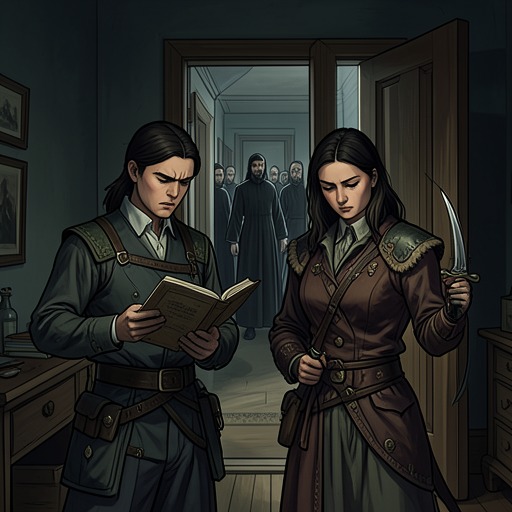
The contrast between ordinary life and supernatural crisis is established through repeated shocks. Lydia Martin's disappearance from a hospital bathroom leaves the group staring at a running shower and an impossible absence: there is nowhere else for her to have gone, yet she is simply gone. Carson later encounters the giant lizard creature in the hallway of her home, discovering that the danger has crossed into the place that should offer shelter. At another confrontation, the creature climbs an indoor balcony, shrieks, leaps down, and knocks Erica Reyes unconscious with its tail while Derek Hale orders the others to run.
These episodes make normal domestic and institutional spaces unstable. A hospital, a house, and an indoor gathering place can all become sites of pursuit. The threat also resists easy explanation. Carson searches for Kanima legends and descriptions of a giant lizard that cannot swim, but finds almost nothing useful online; even the bestiary's strange words remain inaccessible to her. The lack of information prevents the characters from controlling the crisis through ordinary knowledge. Their eventual reliance on Deaton at the Beacon Hills veterinary office reinforces this contrast. Deaton is trusted as a guide because he repeatedly helps Scott McCall, yet his role combines veterinary work with supernatural counsel, making the boundary between everyday services and occult expertise absurdly thin.
Reclaiming Routine and Community
Normality begins to return through collective rather than solitary action. After a police and ambulance response, Carson sits on the tailgate of the ambulance with Stiles Stilinski and Sheriff Stilinski while rain pours down and emergency lights flash around the parking lot. Stiles has regained feeling in his body, and the two insist on a mundane explanation for what happened, even as Sheriff Stilinski remains unconvinced. The scene contains no genuine resolution to the larger danger, but it gives the survivors a shared place to sit, speak, and remain together after terror.
The same recovery is visible in Carson's next morning. She wakes in her own room, with the door shut and likely locked, while Stiles lies beside her and holds her. The details of the closed room, joined hands, and steady heartbeat turn private safety into a material experience. Yet trauma remains present in her body: the previous night's crying has left her eyes sore, and she expects her face to be red and blotchy. Recovery is consequently shown as uneven. She is not untouched by what happened; she is simply able to wake, recognize her surroundings, and accept companionship.
At school, the attempt to restore routine becomes more complicated. Carson sits outside the guidance office, picking at the string on Stiles's plaid shirt while waiting for an impromptu meeting arranged by Ms. Morrell. The meeting follows her recent hostage experience, and she has also suffered a mild concussion after blacking out at the police station. The school responds through an ordinary institutional procedure, but that procedure is shaped by extraordinary harm. Normality here does not mean pretending the crisis never occurred. It means placing the aftermath inside recognizable structures such as school support, medical observation, and personal care.
The Return to Summer
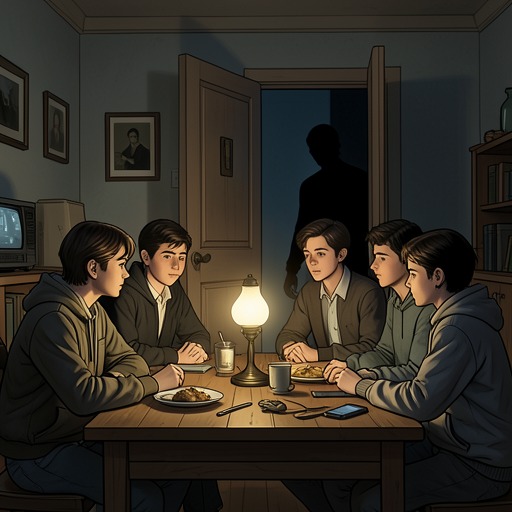
The strongest image of normality arrives after school ends and summer begins. Carson, Stiles, and Scott McCall gather at the lacrosse field, where Stiles has driven his Jeep and parked near the goal. Their activity is deliberately modest: Scott and Stiles prepare for an impromptu game, while Carson sits on the hood and listens to Stiles claim that he may finally develop the skills to become team captain. His boast recalls the previous summer, making the scene feel cyclical and familiar rather than heroic.
Scott's perspective briefly complicates the apparent return. He says that he is right back where he started, without lacrosse, popularity, or a girlfriend. The statement shows that ordinary life is not restored equally for everyone. Scott has survived a werewolf transformation and the collapse of his former social identity, while his relationship with Allison Argent is uncertain. Even so, the group can still gather around the sport that once represented Scott's place in school life. The field becomes a meeting point between what has been lost and what can still be practiced.
The game also depends on rules that connect normality to self-restraint. Stiles insists that Scott use no wolf powers, but Scott's eyes glow like embers while he catches the ball with unnatural ease. The violation is comic rather than catastrophic, and Carson laughs as Stiles protests. The humor does not erase lycanthropy; instead, it places supernatural ability inside a familiar friendship ritual. The characters know the rules of ordinary play, know that Scott can break them, and are able to laugh when the boundary between the two worlds briefly collapses.
Provisional Hope and Narrative Significance
The final movement toward normality is inseparable from the resolution of Jackson's Kanima identity. Lydia holds out the key that Jackson recognizes, and the reptilian features begin to disappear as Jackson returns before the group, still marked by scales and claws but no longer wholly presented as the creature. That change allows the group to perceive the monster as a person again. Normality therefore depends not only on surviving attacks but also on recovering identity from the bodies and labels imposed by supernatural transformation.
The story's closing mood is consequently hopeful without being absolute. Carson laughs while Scott and Stiles play, and the narration identifies happiness and normality as precisely what their lives need. The repeated qualification that everything may be okay “for now” preserves the tension between relief and continued danger. Summer offers time to move on and reflect, but not a guarantee that the supernatural will stay away. Normality is the story's form of return: not a restoration of the old world, but a chosen pattern of affection, friendship, school life, sport, and humor rebuilt after the characters have learned how quickly those things can disappear.