Rave warehouse
Holding Out for a Hero ▸ Stiles Stilinski (2)Rave warehouse is the temporary entertainment venue that becomes the setting for a decisive supernatural confrontation. Introduced as the site of an expensive rave that Jackson Whittemore is expected to attend, it first appears to be a social distraction; once Scott McCall detects the Kanima, however, the warehouse becomes a hazardous enclosure in which an improvised plan, dwindling supplies, and a breach of the building's wall expose the limits of the group's control.
Setting and Purpose
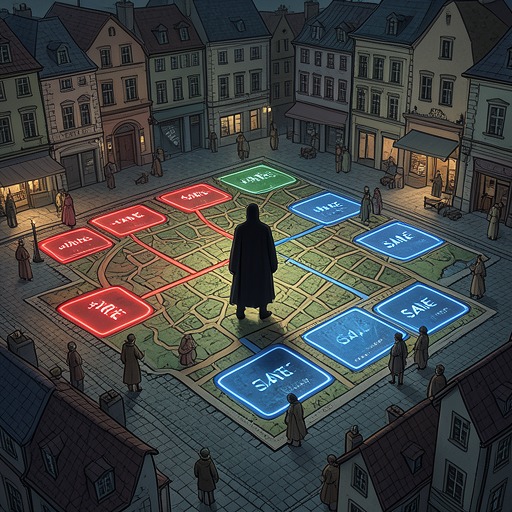
The warehouse is associated with the rave that draws Jackson Whittemore and potentially his master into the same place as Scott McCall, Stiles Stilinski, and Carson Bradley. Scott explains that tickets cost seventy-five dollars each, making entry difficult even before the supernatural stakes are considered. The ordinary economics of the event contrast sharply with the investigation surrounding it: the venue is a public gathering place, but the group approaches it as a field of surveillance and capture.
The location also extends the broader investigation into the Kanima. Earlier research had shown that the supposed bestiary was only a collection of recipes, while the actual Argent bestiary was stored on Gerard Argent's flash drive. The laptop material contains strange non-English words and apparently Latin writing, yet it offers no clear entry for the Kanima. The warehouse therefore becomes the practical testing ground for a threat that remains poorly understood in theory.
Preparation and Arrival
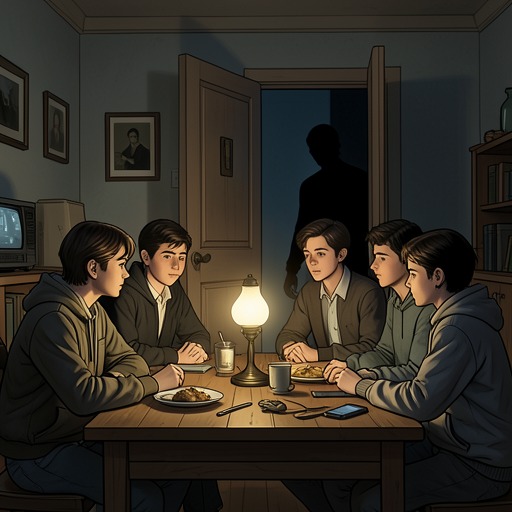
Before the rave, Scott McCall, Stiles Stilinski, and Carson Bradley gather in the back room of Beacon Hills veterinary office, where Deaton provides equipment intended to restrain the Kanima: a small bottle and a syringe-like device with a spring mechanism. The preparations are deliberately improvised. The group trusts Deaton because he repeatedly helps Scott McCall, but even that trust does not remove the uncertainty surrounding the plan or the creature they intend to confront.
The intended containment method depends on mountain ash. As the group approaches the warehouse, Scott McCall suddenly senses that the danger is already present and runs toward the entrance, leaving Stiles Stilinski and Carson Bradley with a trash bag of mountain ash. Their plan is immediately divided between the urgent supernatural response inside and the slower attempt to complete a protective boundary outside.
Failed Containment
The warehouse undermines the group's expectations through its physical scale. Stiles Stilinski and Carson Bradley believe they are nearing the final stretch while circling the building, but Deaton has underestimated how many feet the perimeter requires. The mountain ash begins to run out, changing from a substantial stream to a light spill. When Stiles Stilinski checks the bag, the remaining powder barely fills his hand.
This shortage converts the warehouse from a space that might be secured into a space that cannot be reliably sealed. The group has reached what seems like the decisive moment, yet the material needed to finish the barrier disappears before the route is complete. The result is not a controlled trap but an exposed position, with the characters forced to rely on one another rather than on the supernatural boundary they had planned to establish.
The Kanima Breach
Inside or at the edge of the warehouse confrontation, the Kanima's identity is tied to a stated code of vengeance. When asked whether the group is killing people, the response is that they are killing murderers and that every victim so far deserved it. This assertion reframes the violence as punishment rather than random predation, while also revealing the danger of a creature or master imposing private judgment through murder.
The attempted barrier fails in the most literal possible way: the Kanima bursts through the wall and charges forward. The creature does not merely evade the plan or appear beyond the group's reach; it physically tears through the warehouse's structure. That breach collapses the distinction between refuge and threat, turning the building itself into evidence that the protagonists' preparations are inadequate. The warehouse rave thus ends as a capture attempt in which the intended hunters lose control of the scene and face the monster directly.