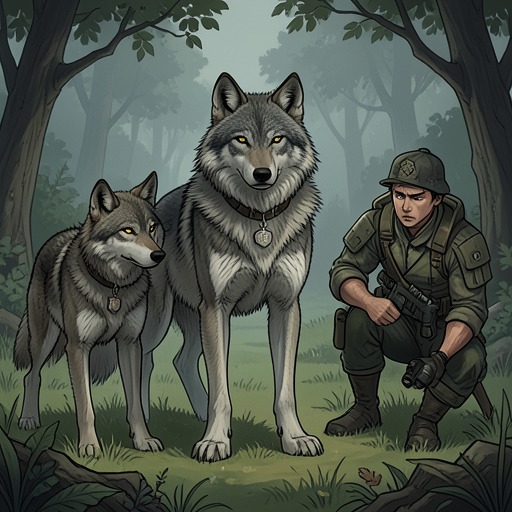
Scott–Stiles friendship
Holding Out for a Hero ▸ Stiles Stilinski (2)Scott–Stiles friendship is the long-standing bond between Scott McCall and Stiles Stilinski, a relationship that turns childhood familiarity into the emotional structure of their survival in Beacon Hills. Their friendship is not merely a background connection: it is the stable “we” that remains when Scott loses his ordinary life, when supernatural threats divide the town, and when the boys’ place at school becomes uncertain. By the end of the period covered here, friendship itself has become their answer to the question of what can still be kept after everything else changes.
Origins and Shared History
Scott McCall and Stiles Stilinski have known each other since childhood, and Carson Bradley describes being drawn into Stiles’ adventures with Scott from an early age. Their closeness is therefore older than the werewolf crisis and more durable than any single investigation. Stiles’ access to information through his father, Sheriff Stilinski, repeatedly pulls the group toward danger, while Scott’s willingness to follow gives those investigations their practical force. The friendship is built on shared curiosity, habitual movement, and the assumption that the three friends will face disturbing discoveries together rather than separately.
That inherited familiarity also explains why the supernatural revelation becomes a collective problem. Stiles overhears a sheriff’s call, leading the group into the woods, where Scott is bitten and begins to display greater strength, speed, and heightened senses. Stiles’ knowledge of movie monsters and lore helps the friends identify Scott as a werewolf, and the first proposed solution is communal and improvised: chain Scott up during the full moon so that nobody gets hurt. Even before they understand the danger, Scott and Stiles respond to it as a shared crisis rather than treating Scott’s transformation as a private burden.
Friendship Under Supernatural Pressure
The bond is tested by a conflict larger than the boys’ own choices. The Argents appear as a family of hunters determined to eliminate threats to humanity, while Scott’s relationship with Allison Argent creates a forbidden Romeo-and-Juliet pattern between a werewolf and the youngest member of a hunting family. The danger is intensified by the arrival of other Argents for Kate Argent’s funeral, since their family gathering signals that the hunting tradition is broader and more organized than Scott’s friends had first encountered. Against werewolves, hunters, and the unpredictable presence of Derek Hale, Scott and Stiles remain part of the original trio that makes it out alive together.
Their survival changes the friendship without breaking it. The group emerges more cautious, more grown up, and more hardened by death. The friendship is consequently neither innocent nor untouched; it carries the knowledge that ordinary investigation can lead to bodily transformation, family violence, and irreversible loss. Yet the three friends still have one another’s backs. Their continuity matters precisely because the surrounding world no longer offers continuity: supernatural identities, family roles, and school life can all be overturned, while the friendship remains an active choice.
The relationship also develops an inclusive dimension when Boyd becomes visible to the group as a lonely person rather than merely a quiet student or a member of Derek Hale’s pack. Carson Bradley offers Boyd a place among the friends, insisting that he can sit with them and know about werewolves instead of remaining with Derek’s “brigade.” Scott and Stiles are present within that offer, and the scene shows how their friendship can function as a social refuge as well as an investigative alliance. It defines belonging by recognition and companionship, not by supernatural status or school popularity.
School, Conflict, and the Expanding Pack
The friendship operates amid repeated reversals of social order. Isaac Lahey is suddenly pardoned and returned to school despite having escaped his cell and been treated as a fugitive, leaving Scott and Stiles uneasy about another volatile werewolf moving through the corridors of Beacon Hills High School. Scott, Stiles, and Carson have already discussed their Kanima research, but Scott rejects parts of their interpretation and instead believes that the creature’s attack means it will continue trying to kill them. Their disagreement reveals a characteristic tension within the friendship: Scott’s direct fear and protective instinct contrast with Stiles’ and Carson’s attempts to reason from incomplete supernatural knowledge.
Even when their theories diverge, the trio remains collaborative. Research, argument, sarcasm, and shared alarm all become forms of attachment. Stiles’ tendency to drag his friends into danger can cause the crisis, but it also creates the circumstances in which Scott and the others refuse to abandon him. Scott’s transformation similarly threatens to isolate him, yet the friendship repeatedly resists that isolation by treating the werewolf as still belonging to the same social unit. The emerging “wolf pack” is therefore both literal and emotional: it includes supernatural danger, but its defining principle is mutual loyalty.
Summer and the Promise of Continuity
After school ends, Scott and Stiles drive onto the lacrosse field in Stiles’ Jeep, with Carson following them to the goal. The scene deliberately returns the friendship to an ordinary setting: a net, a lacrosse stick, a scattered collection of balls, and an improvised attempt to help Stiles become team captain as Scott promised. Scott remains preoccupied with whether Allison will return, but the conversation gradually shifts from romance and status to the less glamorous certainty of friendship.
Scott says that he is back where he started, without lacrosse, popularity, or a girlfriend. Stiles answers that Scott still has the two of them, and Carson reinforces the point: he had them before, and he will always have them. The phrase “We’re the wolf pack, remember?” gives their friendship a name that joins supernatural identity to emotional permanence. Stiles completes the reassurance by treating the conclusion as a life fulfilled. Scott’s losses are not denied, but they are placed beside a relationship that has survived the transformation.
The final lacrosse exchange makes that promise playful rather than solemn. Stiles orders Scott not to use wolf powers, but Scott catches a ball with glowing eyes, provoking Stiles’ outrage and shared laughter. The rule is broken almost immediately, yet the violation produces comedy instead of catastrophe because the friends are briefly safe together. Their laughter marks a temporary restoration of normality: not a return to the life they had before Scott was bitten, but a new normal in which supernatural knowledge, romance, school, and friendship coexist.
Narrative and Thematic Significance
Scott–Stiles friendship gives the story a durable measure of identity. Scott can lose athletic success, popularity, and his relationship with Allison, while Stiles can remain sarcastic, intrusive, and socially disruptive; neither character is reduced to those changing circumstances because the other continues to recognize him. The friendship therefore counters the threat of classification by outside groups. The Argents define people as hunters or threats, Derek Hale’s pack organizes belonging through werewolf power, and school life sorts students by status. Scott and Stiles’ bond instead makes room for vulnerability, disagreement, and the possibility of returning to one another.
Its emotional force comes from repetition. They investigate together, face danger together, argue over what danger means, invite the isolated into their circle, and return to the lacrosse field together. Each recurrence turns companionship into evidence. By the closing summer scene, the friendship is not presented as a sentimental substitute for everything Scott has lost; it is the surviving structure through which those losses can be endured. The world remains dangerous, and normality is temporary, but Scott and Stiles have made their mutual presence the one certainty they can carry forward.