The werewolf bite
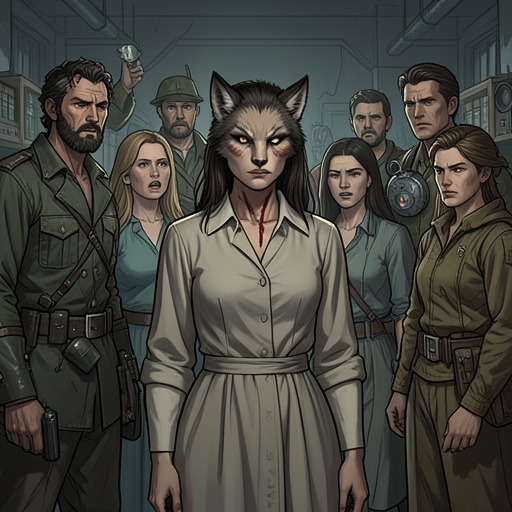
Holding Out for a Hero ▸ Stiles Stilinski (2)The werewolf bite is the mechanism that transforms an ordinary person into a supernatural threat or survivor, and its importance lies in the uncertainty surrounding its outcome. In the account of Beacon Hills, the bite does not merely create physical powers: it reorganizes friendship, romance, family, law, and danger. Scott McCall’s bite begins the central supernatural crisis, while Lydia Martin’s apparently incomplete response turns the bite itself into a problem that the characters cannot explain through established rules.
Definition and First Consequences
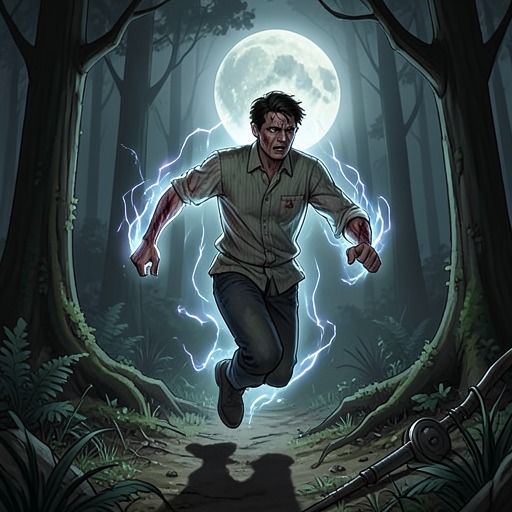
The bite enters the narrative through the last night of winter break, when Carson Bradley, Scott McCall, and Stiles Stilinski go into the woods after Stiles overhears information about a dead body. Scott is bitten during that excursion. The immediate evidence is bodily rather than abstract: he becomes stronger and faster, and his senses grow unusually acute. Because Stiles Stilinski knows the language of movie monsters and supernatural lore, the three friends identify the change as lycanthropy rather than an ordinary injury or illness.
The bite therefore functions as both wound and revelation. Before it, the friends can treat the woods as the setting for an irresponsible adventure; afterward, Scott McCall’s body makes the supernatural impossible to dismiss. The friends initially try to manage the transformation as though it were a dangerous but solvable routine, imagining that Scott could be chained up during the full moon so that no one would be harmed. That plan shows how quickly the bite converts fear into rules: the characters search for a schedule, a restraint, and a practical method of preserving ordinary life.
The Bite’s Life-or-Death Rule
The established rule is starkly expressed through Peter Hale’s explanation that the bite either takes the victim or the victim dies. Scott McCall’s experience appears to confirm the rule when his wound heals within a day, returning to naturally smooth skin, alongside the strength, speed, and heightened senses that mark his transformation. The bite is thus presented as a forced choice rather than a gradual invitation into the supernatural. Survival means alteration, while rejection means death.
That apparent certainty becomes unstable when Lydia Martin survives Peter Hale’s bite without becoming a conventional werewolf. After spending almost two weeks in the hospital and emerging from a coma, Lydia Martin begins healing in a way that resembles an ordinary human recovery. Her wound is scabbing over rather than killing her, yet she does not display the expected transformation. Her survival does not disprove the rule so much as expose its limits: the characters know what the bite is supposed to do, but Lydia’s body refuses to follow the known pattern.
Lydia Martin and the Failure of Expected Transformation
Lydia Martin’s response makes the bite an investigative mystery. Although she is physically recovering and can get out of bed to shower, her condition is accompanied by events that ordinary healing cannot explain. She escapes from a second-story hospital room, moves through a fugue state for two days, and later sees something beneath the ice before clawing at it and screaming. Her physical recovery and psychological disturbance develop together, producing a contrast between a body that appears normal and behavior that suggests an unresolved supernatural consequence.
Carson Bradley connects these events to Peter Hale’s bite. The reasoning is sequential: Lydia Martin is bitten; doctors describe her condition as an allergic reaction; she appears immune to the expected werewolf transformation; afterward, she vanishes from the hospital and experiences visions. The conclusion is not that Lydia Martin is simply a werewolf, but that she has become something else. The bite remains the initiating cause even when the result is no longer recognizable within the established category.
The mystery is sharpened by the discovery of a clawed hand in the graveyard. Isaac Lahey’s account leads Carson Bradley to infer that a werewolf was present near the body and that someone capable of eating a liver may be active in Beacon Hills. Lydia Martin’s disappearance immediately before the graveyard incident makes her a possible suspect, but her still-visible wound seems to contradict that possibility. The unresolved relationship between the wound, the disappearance, and the creature’s behavior shows how the bite generates suspicion before it generates understanding.
Social and Emotional Fallout
Scott McCall’s bite also triggers a wider conflict because supernatural alteration is treated as a threat that must be eliminated. The Argent family responds according to its hunter tradition, placing Scott McCall in danger even as he begins a forbidden romance with Allison Argent, the youngest member of that family. The bite therefore entangles bodily change with intimacy: Scott McCall’s new identity threatens Allison Argent’s family loyalties, while their relationship makes the danger personal rather than merely ideological.
The bite’s effects extend into the friendships that surround Scott McCall. Carson Bradley, Stiles Stilinski, and Scott McCall try to interpret the transformation together, and their loyalty survives the emergence of hunters, the presence of Derek Hale, and the pressures of the supernatural world. The bite changes what the friends must do for one another without destroying the original trio. Their continued solidarity becomes a counterforce to the social logic that treats the bitten person as a disposable threat.
The concept also resonates with Carson Bradley’s understanding of relationships and loss. Carson Bradley’s mother disappeared without a note while Carson Bradley was away at Stiles Stilinski’s house, leaving behind only the cookies she had been baking. That earlier disappearance is not itself a supernatural bite, but it gives Carson Bradley a personal vocabulary for sudden, unexplained changes and absences. The bite belongs to the same larger pattern of ordinary life being broken without warning, though its consequences are visible in the body rather than only in the family.
Rules, Knowledge, and Narrative Significance
The characters repeatedly approach the bite as a rule system that must be tested against evidence. They compare Scott McCall’s rapid healing with Lydia Martin’s scabbing wound, distinguish ordinary human recovery from supernatural transformation, and use observed behavior to determine whether a person has crossed the boundary into another state. This process resembles investigation, but it is also a struggle over language: the characters can name a werewolf, yet they lack an adequate name for what Lydia Martin may be.
That shortage of knowledge recurs when the group searches online for information about the Kanima. Their searches for a Kanima, a Kanima legend, a Kanima shape-shifter, or a giant lizard that cannot swim produce almost nothing useful. The bestiary remains open on Stiles Stilinski’s laptop, but its strange words are unreadable, and online translation offers no dependable solution. The same epistemic difficulty surrounds the werewolf bite: folklore supplies a starting point, while direct bodily evidence forces the characters to revise what they thought they knew.
Deaton becomes a trusted guide within this uncertain system. Although the group knows little about him, Deaton is repeatedly relied upon because he helps Scott McCall in moments of supernatural danger. His role as a veterinarian and a source of riddling practical assistance places the bite within a broader ecology of bodies, creatures, remedies, and containment. Even school life reflects the pressure of competing systems: Coach Finstock insists that Scott McCall must improve his grades to remain on the lacrosse team, reminding him that the supernatural crisis has not erased the ordinary obligations of adolescence.
The werewolf bite is consequently more than a transformation device. It is the story’s test of whether identity can be imposed by biology, recognized through behavior, or preserved through relationships. Scott McCall survives by learning to live with the altered body, while Lydia Martin reveals that survival does not guarantee a known result. The bite opens the door to the supernatural, but the narrative’s deeper question is what each person becomes after crossing that threshold—and whether friends, lovers, and communities will respond with protection, suspicion, or violence.