Werewolf transformation
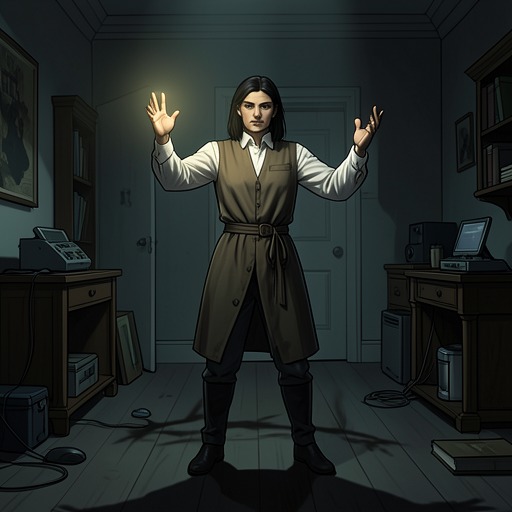
Holding Out for a Hero ▸ Stiles Stilinski (2)Werewolf transformation is the book’s central image of power made visible in the body. It gives characters claws, speed, heightened senses, and the ability to fight supernatural threats, but it also exposes how fragile identity becomes when a person’s body no longer obeys ordinary human limits. Across the plot, transformation shifts from a frightening loss of control to a condition that can be recognized, resisted, and—at least in Jackson Whittemore’s case—joined to a return of human consciousness.
The State and Its Physical Signs
Werewolf transformation is repeatedly identified through concrete bodily changes rather than abstract explanation. Scott McCall enters “full out wolf mode” while confronting the giant lizard creature at the Beacon Hills High School swimming pool. His snarl matches the creature’s, and after being thrown through a mirror he rises, takes up a shard, and uses its reflection against the Kanima. The scene makes the wolf body both weapon and evidence: Scott’s transformed strength allows him to face the creature, while the mirror reveals that the Kanima fears its own image.
The same transformation can also be partial or preparatory. At The Jungle, Scott tells Carson Bradley and Stiles Stilinski to get Danny Mahealani while his claws grow out with a soft slicing sound. The gesture is small compared with a full transformation, but it signals an immediate change in the balance of power. Scott is no longer merely part of the crowd or a vulnerable teenager; he is preparing to use the body of a wolf in a public, dangerous space. The transformation thus operates on a spectrum, from visible claws to a complete wolf form.
Power, Pack, and Resistance
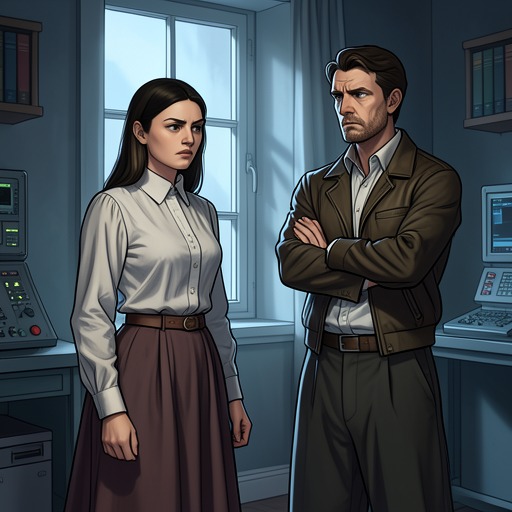
Derek Hale treats werewolf transformation as a basis for hierarchy. When Scott McCall arrives after taking out Isaac Lahey and throwing both Isaac and Erica Reyes onto the lawn, Derek identifies Scott as more than an omega: Scott is already an Alpha with a pack of his own. Derek still insists that Scott cannot defeat him, even though Carson Bradley points out that Scott’s side has managed to hold Derek’s group off until the police arrive. Transformation consequently produces competing claims to authority. The wolf body matters, but so do allegiance, organization, and the ability to resist another transformed person’s command.
Derek’s use of paralysis against Jackson Whittemore exposes the coercive side of that hierarchy. Jackson reports that Derek paralyzed him from the neck down while claiming to be “testing” him, and the exchange connects the werewolf state to bodily helplessness as well as physical superiority. A werewolf may be powerful enough to dominate another supernatural being, yet the same supernatural world can turn that power into an instrument of control. Transformation is therefore never only an enhancement; it is also part of a system in which stronger figures test, recruit, restrain, or threaten the transformed.
The book repeatedly places this power beside ordinary social rules. Coach Finstock tells Scott that he needs to raise his grades if he wants to remain on the Beacon Hills High School Lacrosse Team. Scott’s supernatural identity does not erase his student identity, and his athletic future still depends on school performance. After the final crisis, Stiles orders Scott to play without wolf powers: no superfast reflexes, no super eyesight, and no enhanced hearing. The instruction converts transformation into a rule-bound ability that must be deliberately withheld. Scott’s agreement shows that control is not merely a private virtue; it is a condition of returning to shared life.
Jackson Whittemore and the Reversal of the Monster
Jackson’s transformation is the book’s most dramatic reversal because it begins with the Kanima, a reptilian form associated with paralysis, violence, and an unknown identity, and ends with a wolf body that can coexist with recovered human recognition. The creature first appears as an overgrown lizard with reptilian eyes, scales, a long tail, and rows of teeth. Later, the group learns that the Kanima’s victimization is tied to Jackson’s own statement that those responsible for the murders killed him. His human identity and monstrous identity are not cleanly separate; the Kanima is the distorted expression of a person who has been lost to himself.
The transition back from Kanima form depends on recognition rather than force alone. Lydia Martin holds out a key, and Jackson stops to stare at it as though he remembers the object. His reptilian features begin to disappear, although scales and claws remain. The key becomes a bridge between the monster’s present body and the relationship that still connects Jackson to Lydia. The change does not erase the violence or make the body instantly ordinary, but it reopens the possibility that Jackson can be addressed as a person rather than treated only as a threat.
That recovery is followed by a second transformation. Jackson appears to die, then rises under the light of Stiles Stilinski’s Jeep, arches his back, and becomes fully wolf-like, with brilliantly blue eyes. His claws retract, and his human face returns. Lydia runs into his arms, while the others watch the new werewolf and the restored relationship. The sequence gives werewolf transformation an unusual consequence: it is not the final loss of humanity but the form through which Jackson’s humanity becomes visible again. His body remains supernatural, yet his movement toward Lydia and his ability to embrace her establish a continuity between the transformed figure and the person she knows.
Identity, Relationships, and Ordinary Life
The werewolf state intensifies existing relationships because every transformation changes what others can safely expect from a person. Carson Bradley recognizes that Jackson has hurt people and ruined relationships, but she also tells him that he is good underneath the ice of his public exterior. She connects that hidden goodness to Lydia, the one person Jackson has truly cared about, and refuses to assume that Kanima form has made him incapable of attachment. Her judgment separates moral identity from monstrous appearance without denying the harm Jackson has caused.
The state also develops against a background of adolescent uncertainty. Carson Bradley’s memories of her mother’s disappearance, Stiles Stilinski’s sensitivity around his own mother, and Carson’s shy response when Stiles imagines them together forever all place supernatural transformation beside ordinary fears of abandonment and uncertain futures. The werewolf body externalizes a crisis that the characters already face in less visible forms: who they are, whom they belong to, and whether the future can be chosen rather than imposed. Jackson’s earlier belief that Carson had been different since seventh grade likewise shows how identity is shaped through other people’s projections before the supernatural ever makes those projections physical.
By the ending, Scott’s statement that he is back where he started—without lacrosse, popularity, or a girlfriend—frames transformation against the possibility of normality. The return is incomplete: the characters remain changed, and Jackson is now a werewolf. Yet the final improvised lacrosse game insists that ordinary rituals can survive supernatural alteration. Scott remains in wolf form as a fact of his life, but he agrees to play without using its advantages. The transformation state therefore ends not in simple cure or disappearance, but in negotiated coexistence: power remains, relationships remain, and restraint becomes the practice that makes a shared future possible.