Boyd
Holding Out for a Hero ▸ Stiles Stilinski (2)Boyd is a quiet, physically imposing student at Beacon Hills High School whose importance lies in the contrast between his intimidating appearance and the loneliness that governs his choices. He first appears as a reluctant intermediary who controls access to the Beacon Hills Ice Rink, but his guarded behavior eventually reveals a teenager desperate not for power or violence, but for ordinary companionship. His isolation makes him vulnerable to Derek Hale's offer of belonging and places him within the supernatural conflict surrounding the Kanima, yet it also gives the character a distinctly human center: Boyd is not simply a dangerous new werewolf, but a neglected boy trying to stop eating lunch alone.
Identity and Introduction
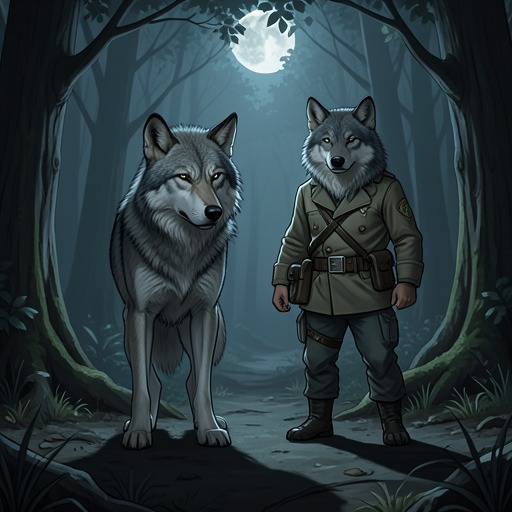
Boyd is presented as a student of roughly Carson Bradley's age who sits near her in geometry, though she initially struggles to place his name. He has a dark complexion, a frown usually aimed at Stiles Stilinski, and a muscular build strong enough to resist Stiles's attempt to take a set of rink keys from him. The description establishes him visually as formidable, but his first significant action is transactional rather than violent. When Stiles tries to obtain the keys, Boyd insists that the exchange is not a favor but a transaction, demanding fifty dollars instead of the twenty-dollar bill Stiles offers. His insistence on terms makes him appear hard-edged and self-contained, while the scene also shows that he possesses practical knowledge and control over a place the others need to enter.
Boyd's reserve is initially easy for Carson to misread. He rides the bus, sits alone, and does not volunteer much conversation; after seeing his terse exchange with Stiles, Carson assumes that he simply dislikes people. The later revelation reverses that judgment. Boyd explains that he wants not to eat lunch alone every day, exposing the social wound beneath the silence. Carson recognizes that he has not freely chosen exclusion: other students have chosen to ignore him, and he has learned to cope by pushing the hurt away. His introduction therefore functions as a correction to the group's assumptions. The supposedly unfriendly outsider is instead someone whose loneliness has hardened into defensive behavior.
Belonging and the Werewolf Pack
Boyd's isolation makes Derek Hale's pack significant because it offers the kind of recognition the school has denied him. When Scott McCall and Carson approach him at the ice rink, they try to persuade him to reconsider his involvement with Derek after learning that Derek has told him about the hunters. Boyd's response is not framed around abstract loyalty or a desire for supernatural strength. He states that he only wants to stop eating lunch alone. That admission reduces the apparent distance between Boyd and the people trying to stop Derek: the conflict is not merely between rival supernatural factions, but also between competing promises of belonging.
The ice-rink encounter gives Boyd a brief but revealing moment of direct speech. Scott attempts a gentler appeal, suggesting that Boyd can get what he wants in other ways, while Carson presses him more sharply. Neither argument immediately changes his position because neither can erase the social abandonment that made Derek's offer meaningful. Carson's realization that coping is not healing becomes central to Boyd's characterization. He has survived exclusion, but survival has not given him a community; the pack fills that absence even while exposing him to the dangers of the full moon, hunters, and Derek's increasingly unstable decisions.
Boyd is subsequently drawn into the group's supernatural confrontations. During a lacrosse practice, Coach Finstock notices him and recruits him onto the field after seeing his physique, responding with excitement at the discovery of a new player. His appearance on the lacrosse field matters because it places him inside an ordinary school institution at the same time that the supernatural crisis is escalating. Scott and Carson remain visibly worried while Boyd is absorbed into the team, and his participation becomes another possible route toward recognition. Yet it is also precarious: the same boy who has been overlooked in the cafeteria is suddenly valued for his body and athletic usefulness.
Conflict with the Kanima
Boyd is present when Derek's group encounters the giant reptilian creature inside the school facility. The Kanima climbs along the indoor balcony, emits a shrill cry, and drops down among Derek, Carson, Stiles, and the pack. Derek confronts it with a roar, but the creature's tail strikes Erica Reyes and knocks her unconscious before Derek orders everyone to run. Boyd belongs to the endangered group in this scene, but his position is not simply that of a passive bystander. He is one of Derek's betas and is expected to move when his Alpha commands it, making the encounter a test of pack organization under pressure.
Later, when the Kanima appears above Scott's roof, Derek sees the creature, his fallen betas, and Boyd before ordering Boyd to get the injured members out of danger. Boyd does not move immediately. His hesitation suggests the pressure placed on him by Derek's authority and the confusion created by a threat that no longer fits the pack's assumptions about its enemies. The command also reveals that Derek relies on Boyd as a functional member of the group, not merely as a new recruit. Boyd is trusted with responsibility during a crisis even though the same belonging that gives him purpose has placed him in the path of the Kanima.
The wider investigation shows how difficult it is for the group to understand the creature Boyd has been drawn into fighting. Carson searches for information about the Kanima and finds almost nothing online, while the bestiary contains words she cannot interpret. The lack of accessible knowledge leaves the teenagers dependent on fragmentary supernatural accounts and on Deaton's guidance. In that environment, Boyd's experience is shaped by rules that the group is still learning: the Kanima is a shape-shifter, cannot swim, and is afraid of its own identity. Boyd's role is therefore embedded in a conflict whose categories remain unstable. The apparent monster is also connected to a human student, Jackson Whittemore, and the distinction between enemy and victim keeps changing.
Relationships and Recognition
Boyd's connection with Carson is initially defined by distance and misrecognition. Carson knows him as a classmate but does not know the extent of his isolation until he states it plainly at the rink. That moment changes her understanding of him from an unfriendly boy to a neglected one. The recognition is ethically important because it makes Boyd visible without requiring him to perform strength, supernatural ability, or athletic talent. Carson's response also places responsibility on the wider school community: any one of them might have made a difference, but none had done so.
His relationship with Stiles is more openly adversarial and practical. Stiles approaches Boyd for the rink keys, tries to bargain him down, and is forced to accept that Boyd will not treat access as a casual favor. Boyd's larger arms and muscular build allow him to win the brief struggle over the keys, but the scene does not turn him into a bully; his position is one of guarded self-protection. The transaction shows that he can resist Stiles's impulsive methods, while his later confession about eating lunch alone shows what the defensive posture conceals.
Boyd's place within Derek's pack also contrasts with the relationships among Scott, Stiles, and Carson. Scott and his friends are connected through long-standing friendship and mutual investigation, whereas Boyd enters the supernatural world through a promise of inclusion. Derek's authority supplies structure, but it does not necessarily provide healing. Boyd's silence, hesitation, and continued involvement show how a group can satisfy the need to belong without resolving the pain that made belonging urgent in the first place.
Change and Narrative Significance
The evidence does not give Boyd a separate final resolution, but it establishes a clear movement in how the story and Carson understand him. He begins as a vaguely familiar student, an intimidating figure with rink keys and a willingness to demand payment. He becomes a lonely teenager whose choices can be understood through the need for companionship, then a lacrosse player newly visible to Coach Finstock, and finally a beta relied upon during encounters with the Kanima. Each stage adds a different form of recognition, but none fully replaces the original wound of exclusion.
Boyd's narrative significance lies in the way he complicates the division between ordinary teenager and supernatural threat. The Kanima is repeatedly described through its reptilian eyes, scales, claws, tail, and paralytic venom, while Boyd is described through his muscles, frown, and silence. Both forms of appearance can make others see danger before they see a person. Against that pattern, Carson's realization that she misjudged Boyd becomes a small but consequential act of rehumanization. His story argues that the need for belonging can be as powerful as any supernatural force, and that a teenager who looks difficult may be carrying loneliness rather than hostility.