Carson Bradley–Stiles Stilinski relationship
Holding Out for a Hero ▸ Stiles Stilinski (2)The Carson Bradley–Stiles Stilinski relationship develops from lifelong friendship into a deeply committed romance, making it one of the book’s most important sources of emotional stability amid supernatural violence. Carson and Stiles Stilinski face disappearances, paralysis, physical attacks, jealousy, family abandonment, and the strain of being unable to protect one another. Their bond is not presented as effortless; it is repeatedly forced to prove itself through bodily danger, frightened confession, possessiveness, and reconciliation. By the end of the documented arc, their relationship survives not because the crisis has become manageable, but because both recognize that fear and helplessness have threatened the connection they most need to preserve.
From Lifelong Friendship to Romance
Carson and Stiles begin from an unusually durable foundation. Carson identifies Stiles and Scott McCall as her best friends, and the friendship predates the supernatural events that begin on the last night of winter break, when Stiles persuades the group to search the woods for a dead body instead of allowing Carson the quiet evening she had wanted for reading. Their shared history gives their later romance a sense of accumulated trust rather than sudden attraction. It also places romance inside an already established three-person friendship, so every danger affects both Carson and the larger bond connecting her to Stiles and Scott.
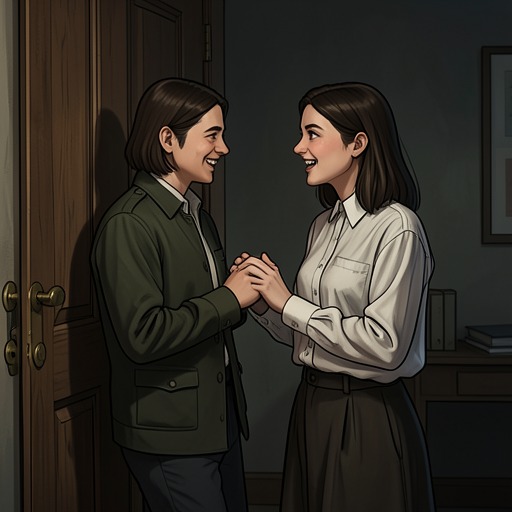
The relationship becomes explicit through Carson’s uncertainty about permanence. When she shyly says, "You make it sound like we're going to be together forever," the remark exposes both happiness and apprehension: being loved is not the same as feeling secure that love will remain. Stiles answers that insecurity with an absolute declaration. He says that he has been in love with Carson since second grade and insists that she is important, worthy of love, and indispensable to him. His language turns their romance into a promise against the forms of abandonment that have shaped Carson’s life.
That promise matters because Carson’s family history makes intimacy precarious. She explains that, two years after Claudia Stilinski died, Carson’s own mother left her by choice. Stiles responds not with detached reassurance but with fierce personal investment, arguing that Carson’s parents failed to understand her worth and that leaving her would be unthinkable. The scene establishes a central pattern in the relationship: Carson tests whether she can be kept, while Stiles answers by making his attachment unmistakable.
Care in the Supernatural Crisis
The romance is lived under conditions that make ordinary adolescent intimacy inseparable from emergency. Carson sees Stiles waiting outside a door, pacing and visibly affected by what Erica Reyes has done to him. Even when he is physically compromised, his presence becomes a form of reassurance; Carson is so unsteady that she cannot easily let go of the handle, while Stiles notices her and waves. Their bodies register the danger before either can turn it into calm conversation.
After Stiles Stilinski regains feeling in his body, Carson clings to him on the tailgate of an ambulance while rain, police lights, and ambulance lights fill the parking lot. Scott’s bike remains alone in the corner, a small visual reminder that their private relationship exists within a wider emergency. Carson’s embrace is not decorative romance. It is a response to paralysis, fear, and the possibility that the people around them may not come back intact.
Stiles gives that caretaking impulse verbal form when Carson questions his concern. He tells her, "I will always worry about you. I love you!" and describes her well-being as inseparable from his own world. His confession reveals an attachment that is protective but also vulnerable: Carson’s danger does not remain external to him. It destabilizes his sense of safety, making her survival the condition under which his own world continues to feel coherent.
The relationship also retains humor and physical ease amid the fear. In Stiles’s Jeep, the familiar seat that Carson considers technically hers offers comfort before Stiles pulls her into his lap. He later grins and tells her, "You're a genius and I love you," while Carson and Allison Argent can still exchange teasing affection in the margins of the crisis. These gestures keep the relationship connected to school life, joking, flirtation, and touch rather than allowing supernatural danger to erase the ordinary world entirely.
Jealousy, Threat, and the Wider Social World
Carson and Stiles’s relationship is not insulated from competition. A rival explains that he had watched Carson from seventh grade through eighth grade and freshman year, seeing her as popular but unusually indifferent to status. His account makes Carson’s desirability and social position part of the relationship’s pressure: Stiles has long feared that someone else might receive the chance he believes he was denied. The confession also clarifies that Carson’s choice of Stiles represents a rejection of conventional school hierarchy in favor of the friendship she has maintained with Stiles and Scott.
Stiles voices that possessive anxiety during the larger supernatural conflict. He complains that a werewolf is trying to make advances toward Carson, while other dangers threaten Scott’s relationship with Allison and the group’s ability to survive. His speech links romantic jealousy to genuine crisis rather than treating them as separate plots. The fear of losing Carson is intensified by the fact that threats in Beacon Hills are physical, predatory, and sometimes impossible to identify in time.
The relationship therefore moves between tenderness and sharp emotional intensity. Carson can become so angry that she feels blood boiling beneath her skin, expects to cause a scene, and physically yanks Stiles back by the shoulder outside. The incident shows that her attachment does not make her passive. Love gives her something to defend, but it also raises the emotional stakes of every perceived betrayal or failure. Stiles, for his part, is not merely the reassuring boy who makes promises; he is also frightened, reactive, and capable of withdrawing when he believes he has failed her.
Separation and Reconciliation
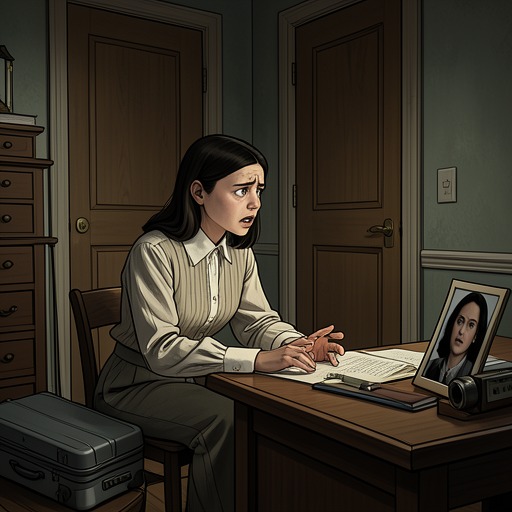
The most serious rupture comes after Stiles witnesses Matt Daehler take Carson down and feels unable to intervene. When he later apologizes, he explains that he could do nothing to help or save her and lay there believing he was going to lose her. His guilt transforms the relationship’s protective ideal into a painful contradiction: Stiles’s love makes Carson’s danger unbearable, but his inability to prevent that danger makes him question his place beside her.
Carson’s response is immediate and physical. She launches herself at Stiles, wraps her arms around his neck, and leaves no space between them. The embrace precedes explanation, suggesting that the body recognizes the relationship’s continuing reality before language can repair it. Once they sit side by side on Stiles’s bed, he begins by saying he is sorry, while Carson rejects evasions and asks him to tell her what happened between them. Her demand is for truth rather than a comforting formula; she will not accept a vague explanation for a rupture that has altered both of them.
Stiles’s account makes the separation a crisis of helplessness rather than a loss of love. He did not withdraw because Carson became unimportant. He withdrew because seeing her attacked confronted him with the possibility that his devotion could not protect her. The reconciliation consequently depends on naming fear, accepting vulnerability, and allowing Carson to answer the guilt that has pushed Stiles away. Their recovery is not a return to an untouched earlier state; it is an effort to rebuild closeness after both have learned how easily danger can turn care into panic.
Emotional and Narrative Significance
Carson and Stiles function as each other’s primary counterweight to abandonment. Carson carries the wound of a mother who chose to leave, while Stiles repeatedly insists that she is worthy of staying for and that he needs her. Stiles’s own family grief also creates a point of recognition between them: Carson notices his weak, pitiful smile when his mother becomes a touchy subject, connecting his pain over Claudia Stilinski with her pain over her absent mother. Their romance grows through this mutual knowledge of loss, not through an illusion that either has an uncomplicated home life.
Their relationship also gives the supernatural plot a human measure. The woods, the dead body, paralysis, ambulance lights, Matt’s attack, and the broader threats surrounding Scott and Allison matter not only as dangers to the group but as tests of whether Carson and Stiles can remain emotionally present. Carson’s plaid shirt, which is actually Stiles’s, becomes a modest material trace of that closeness when she picks at its string to distract herself from everything happening around her. The borrowed garment is ordinary, but its ordinariness is precisely its significance: amid monsters and violence, their bond is carried through familiar objects, private jokes, embraces, and repeated declarations of care.
The relationship’s decisive movement is from assumed permanence, through fear of loss, to consciously chosen repair. Stiles’s confession that he has loved Carson since second grade supplies the history; his panic after Matt attacks her supplies the fracture; Carson’s embrace and insistence on an honest explanation supply the beginning of reconciliation. Together, these moments make the Carson Bradley–Stiles Stilinski relationship more than a romantic subplot. It is the story’s recurring demonstration that survival requires not only fighting supernatural enemies, but also refusing to let helplessness, shame, or abandonment decide who is allowed to remain beside whom.