Mrs. Argent
Holding Out for a Hero ▸ Stiles Stilinski (2)Mrs. Argent is Allison Argent’s mother and part of the Argent family’s inherited hunter tradition. She occupies the story’s boundary between ordinary family life and organized supernatural violence: to Allison, she is a parent asking for private conversations, but to Carson Bradley, she is one of the adults who has already tried to kill a friend. Her limited appearances therefore carry disproportionate tension, because every domestic gesture is shadowed by the family’s campaign against werewolves.
Identity and Family Position
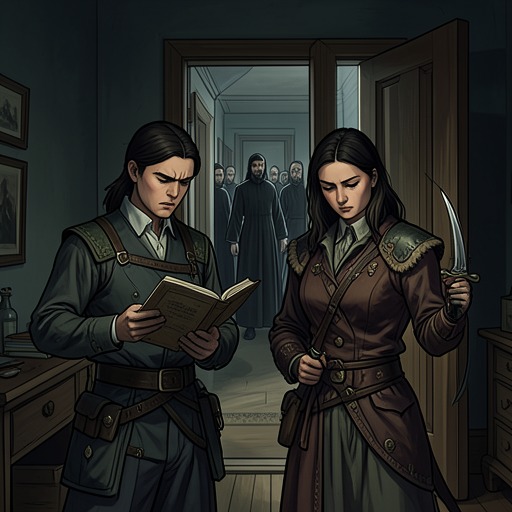
Mrs. Argent appears within a family that treats hunting as a tradition passed down across generations. The Argent family’s arrival around Kate Argent’s funeral is understood as dangerous precisely because the family is associated with hunting, and the prospect of more relatives gathering suggests that the threat facing Scott McCall and his friends is larger than the immediate household. Mrs. Argent is consequently not presented as an isolated individual but as part of a powerful family network whose private loyalties have public supernatural consequences.
Her maternal identity also connects her to Allison’s divided position. Allison is romantically involved with Scott McCall, who is a werewolf, while her family regards werewolves as threats to be eliminated. Mrs. Argent therefore stands on the family side of a forbidden relationship that resembles a conflict between inherited duty and personal attachment. The evidence does not establish that she accepts Allison and Scott’s relationship; instead, it shows the pressure created by her family’s beliefs and by Allison’s position within them.
Conduct and Threat
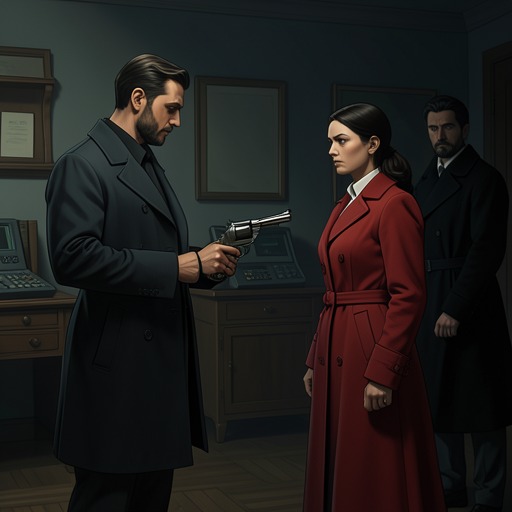
Carson’s hostility toward Mrs. Argent is direct and grounded in remembered action. When Mrs. Argent enters Lydia Martin’s room during preparations involving Allison, Carson immediately glares at her because she believes Mrs. Argent tried to kill her best friend. Carson’s refusal to treat her with warmth is not a general dislike of the Argent family; it is a response to an act that has made Mrs. Argent personally dangerous. The encounter turns an apparently ordinary social moment into a confrontation between teenage friendship and adult hunter authority.
The scene also places Mrs. Argent behind a cautious smile and controlled speech. She quickly praises the dress Lydia is holding, then asks Allison to speak with her privately. Her words are polite, but her tone carries urgency, and Carson senses that the request may concern life or death even though Allison does not immediately recognize the seriousness. This contrast between social composure and concealed alarm gives Mrs. Argent a guarded presence: she communicates through restraint, selective disclosure, and private access to her daughter rather than through open explanation.
Relationship with Allison and the Wider Conflict
Mrs. Argent’s relationship with Allison is defined by simultaneous intimacy and secrecy. She seeks Allison out as her daughter, asks to separate her from Lydia Martin and Carson, and appears troubled enough to insist on a private conversation. Yet the family is characterized by serious communication problems, with Allison unable to say what the arriving relatives intend or why they will explain matters only after Kate Argent’s funeral. Mrs. Argent belongs to that same structure of withheld information, making motherhood inseparable from the family’s concealment.
Her role is also measured against the younger characters’ attempts to build alternative forms of belonging. Carson offers Boyd friendship after recognizing that his isolation is imposed by others, and she prefers that he remain connected to friends who know about werewolves rather than join Derek Hale’s group. Against this ethic of chosen loyalty, the Argent family represents inherited affiliation: membership determines obligation, and the family’s identity as hunters shapes how its members respond to supernatural people. Mrs. Argent’s maternal concern may be genuine, but it operates within a system that has already made violence appear like protection.
Narrative Significance
Mrs. Argent’s importance lies less in the amount of narrative time she receives than in the tension condensed into her appearances. She is a mother, a hunter, and a member of the family whose tradition places Allison in conflict with Scott McCall. Her cautious entrance, urgent private request, and Carson’s immediate anger reveal how the supernatural conflict has entered domestic spaces, including bedrooms, family conversations, and preparations for a funeral.
The evidence does not provide a complete independent arc or a definitive ending for Mrs. Argent. What it does establish is a sharply ambivalent figure: a parent who approaches Allison with urgency, yet also an adult whom Carson regards as capable of lethal violence. That unresolved mixture of care and threat is central to the Argent family’s narrative function. Mrs. Argent embodies the story’s refusal to make family loyalty automatically virtuous, especially when inherited rules turn protection into persecution.