Scott McCall is bitten by Peter Hale
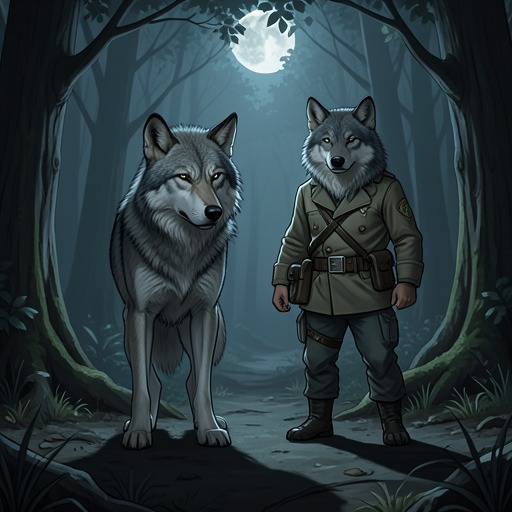
Holding Out for a Hero ▸ Stiles Stilinski (2)Scott McCall is bitten by Peter Hale during the last night of winter break, after Carson Bradley, Scott, and Stiles Stilinski enter Beacon Hills Woods in search of a reported dead body. The bite is the decisive rupture between ordinary suburban life and the supernatural world: Scott’s altered body becomes the first unmistakable proof that Beacon Hills is a supernatural beacon, while the consequences place his friendships, romance, safety, and future under pressure.
Causes and Background
The event begins with an apparently ordinary town concealing an extraordinary danger. Beacon Hills presents itself as picturesque and suburban, with good schools, low crime, white picket fences, and carefully maintained homes, yet beneath that polished surface lies a dark underground. The town is described as a beacon for the supernatural, especially werewolves. Carson’s involvement starts on the last night of winter break, when the cold, rainy evening that might otherwise have been spent reading is redirected by Stiles’s decision to hunt for a corpse in the woods.
Stiles’s access to his father’s work makes the expedition possible. Because his father is the sheriff of Beacon Hills, Stiles can listen in on local calls, and the report he overhears supplies the immediate reason for entering the woods. Carson has known Stiles since she was three and is accustomed to being pulled into his reckless adventures with Scott, so a search for a dead body has become, in her experience, another escalation of his usual behavior rather than an obviously supernatural threshold.
The causal chain is therefore sharply defined: Stiles overhears the call, the three friends go into Beacon Hills Woods, Scott encounters the supernatural threat, and Peter Hale bites him. Carson later identifies the bite as the central mistake in retrospect, reasoning that if Stiles had never learned about the body, the group would never have entered the woods and Scott would not have been bitten. The event is both an accident produced by youthful curiosity and the first link in the larger conflict between werewolves and hunters.
The Bite and Its Immediate Meaning
After the night in the woods, Scott is visibly different. He becomes stronger and faster, and his senses are heightened. These physical changes turn a frightening suspicion into a conclusion the friends can name: Scott McCall is a werewolf. The discovery is filtered through Stiles’s knowledge of movie monsters and supernatural lore, showing how familiar cultural stories become an improvised diagnostic system when the friends confront something they cannot explain through ordinary science.
At first, Carson, Scott, and Stiles attempt to treat lycanthropy as a problem that can be managed. They consider chaining Scott up during full moons so that no one will be harmed. Their proposed solution is crude but revealing: they still imagine that the supernatural can be contained by friendship, preparation, and a practical rule. The bite has changed Scott’s body, but the friends initially try to preserve the structure of their old lives by placing limits around the transformation.
The bite also creates an immediate contrast between bodily change and personal continuity. Scott remains the friend they knew, yet his increased strength, speed, and senses expose him to dangers and responsibilities that the others cannot simply share. The event consequently turns private friendship into a form of protection and investigation. Carson and Stiles must learn what has happened to Scott while Scott must learn how to inhabit a body that no longer obeys the assumptions of ordinary adolescence.
Expansion into a Supernatural Conflict
Scott’s transformation attracts the attention of people who regard supernatural beings as threats that must be eliminated. The danger soon takes the form of the Argent family, a family of hunters committed to wiping out perceived supernatural threats. Scott’s new romantic interest, Allison Argent, is the youngest member of that family, making the bite inseparable from a forbidden romance. Scott’s condition threatens not only his physical safety but also his relationship with Allison and the possibility of trust between their opposing communities.
The event also introduces Derek Hale, whose mysterious presence makes him another force in the developing supernatural landscape. Carson’s account places the original trio—Carson, Scott, and Stiles—between werewolves, hunters, Allison’s forbidden connection to Scott, and Derek’s uncertain involvement. The bite thus widens from a single attack into a network of rival loyalties, concealed identities, and competing ideas about whether supernatural beings are monsters, victims, or people capable of choosing how to act.
Later supernatural incidents confirm that Scott’s bite is not an isolated disturbance. Carson encounters a lethal lizard-like creature and sits with Stiles and Sheriff Stilinski beside an ambulance in pouring rain after a deadly confrontation, while the flashing ambulance and police lights and Scott’s abandoned bicycle make the danger materially visible. The friends recognize that people are dying while they remain unable to explain or stop the violence. In this environment, Scott’s bite functions as the opening of a continuing investigation rather than a completed transformation scene.
Relationships, Knowledge, and Consequences
The bite changes the meaning of Carson and Stiles’s friendship with Scott. Their bond survives the discovery, but their shared childhood adventures become more cautious and hardened by death. Carson later describes the three friends as having remained together and having each other’s backs, while acknowledging that they are no longer the same people who entered the woods. Their loyalty is not abstract: it develops through repeated exposure to supernatural danger, concealed information, and the necessity of acting before adults or institutions can provide reliable protection.
The transformation also unfolds alongside Carson’s relationship with Stiles. Carson eventually realizes that she has fallen for him and that Stiles had already fallen for her. Their relationship becomes part of the emotional aftermath of the supernatural crisis, giving the original trio a second kind of change: the friends move from childhood intimacy toward romantic and adult commitments while facing threats that force them to mature quickly. Stiles later imagines a future in which he and Carson remain together forever, a vision of permanence that stands in tension with the instability introduced by Scott’s bite and the violence surrounding them.
The wider supernatural investigation repeatedly depends on incomplete knowledge. When Carson searches online for information about the Kanima, she finds almost nothing useful: no sightings, stories, or legends that match the giant lizard creature, despite Derek’s claim that he has heard stories elsewhere. The bestiary on Stiles’s laptop contains unfamiliar words that Carson cannot understand, and even a search for a creature that cannot swim yields only an irrelevant were-jaguar account. This later uncertainty echoes the original bite: the friends must build knowledge from fragments, testimony, lore, and observation because ordinary sources cannot explain Beacon Hills.
Trusted guidance comes from Deaton, whose veterinary office becomes a working point for supernatural planning. Carson describes him as a strange, riddle-speaking veterinary guide who repeatedly helps Scott in moments of need. His practical assistance includes presenting a bottle and a spring-loaded syringe intended to help with the Kanima problem. The contrast clarifies how far the consequences of Scott’s bite extend: what begins with one werewolf transformation eventually requires specialized knowledge, improvised equipment, and alliances among people who have different reasons for opposing the supernatural threat.
Change and Narrative Significance
Scott’s bite is the foundational transformation of the story’s supernatural arc. It converts a sheriff’s call and a teenage excursion into a conflict involving werewolves, hunters, shapeshifters, and repeated threats to the friends’ lives. It also establishes the narrative’s recurring tension between secrecy and disclosure: Scott’s condition must be understood, concealed, and controlled, while every new supernatural event threatens to expose the truth.
The event’s importance is measured by its continuing effects on ordinary institutions. Scott’s supernatural identity intersects with school, athletics, grades, family relationships, and team membership. Even after the crisis has become broader than Scott’s original transformation, Coach Finstock insists that Scott must raise his grades to remain on the team, reminding him that the old expectations of high-school life have not disappeared simply because the supernatural has invaded them. The bite therefore does not erase normality; it forces Scott and his friends to carry extraordinary danger through ordinary obligations.
For Carson, the bite marks the beginning of a life permanently altered by what she has seen. The friends survive the first cycle of danger, but they emerge more cautious, more mature, and more hardened by death. Scott’s transformation is consequently both an origin event and a test of continuity: it asks whether friendship can endure radical bodily change, whether love can cross a hunter–werewolf divide, and whether a seemingly perfect town can preserve its normal façade after its hidden world has been revealed.