Wolfsbane poisoning and hallucinations
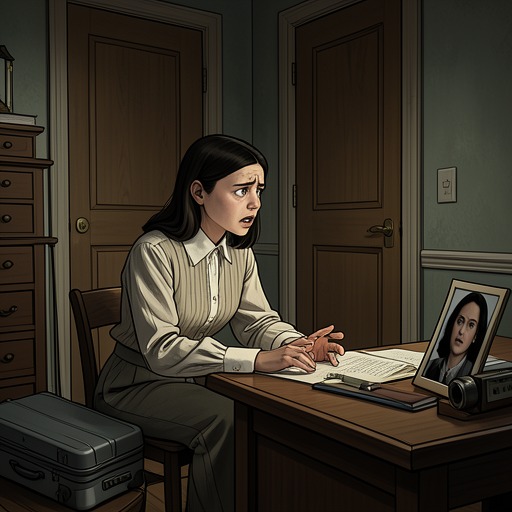
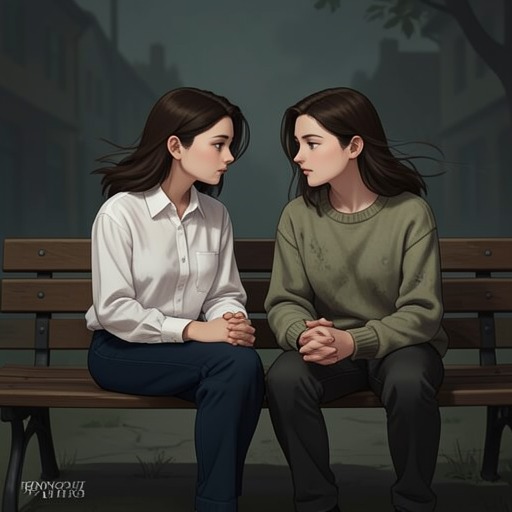
Holding Out for a Hero ▸ Stiles Stilinski (2)Wolfsbane poisoning and hallucinations is the intoxication state that overtakes Carson Bradley, Stiles Stilinski, and Scott McCall during Lydia Martin’s party. Wolfsbane concealed in Lydia’s punch transforms an ordinary drink into a supernatural weapon, producing nausea, dizziness, warped perception, and emotionally precise visions. Its decisive significance lies in the way it makes private fears look physically present while also providing the group with a concrete clue: the hallucinations are not random, and the purple wolfsbane petals in the punch reveal deliberate poisoning.
Definition and Trigger
Wolfsbane poisoning begins at Lydia Martin’s house during a full-moon party. Carson Bradley notices that the punch has an unusually sweet smell mixed with something resembling vodka, and at first finds the drink acceptable. The full moon already makes the gathering feel dangerous to her, but the immediate threat is hidden in the glass rather than in the sky. Later, the drink begins to taste bitter, prompting Carson to search Lydia’s kitchen for water or soda while the crowded house remains saturated with alcohol, physical entanglements, and confusion.
The poisoning is confirmed when Carson, beside the punch bowl with Stiles Stilinski, sees small purple flower petals floating in the drink. She identifies them as wolfsbane petals and realizes that the punch has been contaminated. Her discovery changes the situation from an unsettling personal experience into a shared emergency. She pulls Stiles toward the house to find Scott McCall and demands an explanation for how Lydia Martin could know about wolfsbane, while the supernatural danger becomes visible in an otherwise festive object.
Symptoms and Hallucinatory Experience
The first symptoms are bodily and perceptual. As Carson Bradley follows a petite dark-haired figure through the party, the room seems to warp around her; nausea and dizziness cloud her vision, and she must seize the wall to keep steady. When the figure disappears upstairs, Carson pushes through the crowd and runs after her despite her blurred sight. The episode therefore does not present hallucination as a detached image alone. It begins as a loss of bodily control, with the architecture and crowd becoming unreliable along with the mind.
Upstairs, Carson encounters the figure as her mother, although the recognition is immediately bound to disbelief. The apparition speaks with the hostile familiarity of someone who knows Carson’s insecurities, claiming that Stiles could find another girl and that Carson would be left alone while Stiles went elsewhere and Scott stayed with Allison Argent. The vision becomes especially revealing when Carson notices that the apparition knows about Allison Argent even though Carson’s mother had left years before Allison Argent’s family would have considered moving to Beacon Hills. The impossible knowledge exposes the figure as a construction of Carson’s poisoned perception.
The hallucination then visibly glitches, making Carson’s mother appear like a failing hologram before returning to a perfectly formed, sneering image. Carson understands that the encounter is not real and says that the woman is not present, but the recognition does not immediately free her from the vision’s emotional force. She cries, questions whether Stiles has been lying to her, and is forced to confront fears of abandonment and isolation through an image that seems to possess external authority. Wolfsbane thus weaponizes intimate knowledge: the poison does not merely distort space, but gives personal anxieties a face and a voice.
Shared Crisis and Recognition
Carson’s experience becomes more dangerous when she returns downstairs and sees Stiles Stilinski across the pool. He is staring at something Carson cannot see, visibly uncomfortable and close to tears. His reaction confirms that the poisoning is affecting more than one person. Carson recognizes that Stiles is hallucinating too and crosses the pool area to reach him, moving through the drunken crowd in a state of cold sweat and visibly feral-looking distress. The parallel between their reactions creates a frightening contrast: each person is trapped inside a separate vision, yet the physical signs of the poisoning remain mutually observable.
The group then shifts from confusion to investigation. Carson and Stiles search the outside area while Scott McCall works through the house, and the wolfsbane petals provide the material evidence that links the visions to the punch. When a scream rises from the teenagers jumping in Lydia Martin’s pool, the danger of the party is no longer merely psychological. Carson again identifies the wolfsbane in the drink and asks how Lydia Martin could know about it, forcing Scott and Stiles to confront the possibility that the poisoning is connected to the larger supernatural conflict.
Place in the Supernatural Investigation
The wolfsbane incident occurs within a broader effort to understand the Kanima. Earlier investigation has already shown how little reliable information is available: searches for the Kanima, its legends, its shape-shifting nature, and its inability to swim produce almost nothing online. The bestiary remains open on Stiles Stilinski’s laptop, but its strange words are unintelligible to Carson Bradley, and even online translation seems inadequate. A search result about a were-jaguar offers only a possible starting point rather than a genuine explanation. This informational vacuum makes wolfsbane especially important: unlike the creature’s uncertain mythology, the petals offer a tangible, testable substance.
The group also relies on Deaton, whose veterinary office functions as an informal supernatural guidepost. Although Carson Bradley admits that none of them truly knows much about Deaton, his repeated assistance to Scott McCall has established him as someone the group trusts. Before the planned attempt to rein in Jackson Whittemore at the rave, Deaton presents a small bottle and a spring-loaded syringe, saying that they will help with the Kanima problem. Against that background, the wolfsbane poisoning illustrates the group’s growing need to distinguish among supernatural mechanisms rather than treat every crisis as the same threat: creature lore, paralytic substances, wolf transformation, and hunter knowledge all require different forms of investigation.
Consequences and Significance
The immediate consequence of the poisoning is the collapse of the party’s apparent normality. The punch, initially treated as a drink to be sampled, becomes evidence of a planned supernatural assault. Carson’s pursuit of her mother’s apparition also reveals how hallucination can create false relational conclusions before the physical cause is known. The poison temporarily makes deception feel like knowledge, and then the visible petals reverse that certainty by offering a material explanation for the impossible encounter.
The incident further establishes a recurring pattern in the group’s supernatural life: ordinary teenage settings become dangerous when hidden rules are introduced into familiar objects and activities. A lunch-table surprise can lead to an unexpected meeting with Boyd, an online search can expose the limits of available knowledge, and a veterinary office can become a command center for confronting a mass-murdering lizard. At Lydia Martin’s party, the same transformation occurs through the punch. The full moon supplies an ominous backdrop, but the wolfsbane supplies the active mechanism, turning celebration into hallucination and private fear into collective evidence.