
Science and Institutional Pressure
HomunculusThe Royal Academy tries to turn St. Ives and Keeble’s discoveries into institutional property, while events resist its tidy explanations.
increasing Bearing strength in each event
 decreasing
Bearing strength in each eventdecreasingThe Academy’s Invitation
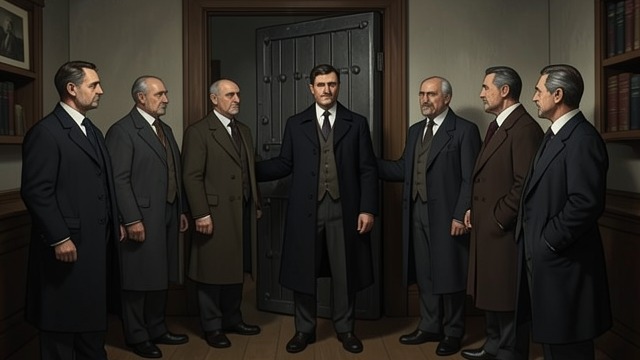
Recognition with Conditions
A scientist is recruited
The Royal Academy approaches St. Ives because he knows Birdlip and works with Keeble. It wants him to use that relationship to secure access to the engine and the dirigible.
Prestige as pressure
The offer promises recognition but also expects St. Ives to subordinate his own work. He resents being treated as a means to an institutional end, particularly while other dangers demand his attention.
The Lunch with Parsons

Rationality as a Bargain
A meeting about control
Parsons presses St. Ives to persuade Keeble to cooperate, arguing that the Academy must manage the blimp and its public consequences. St. Ives hears more concern for the Academy’s reputation than for the people involved.
Uneasy agreement
St. Ives promises only to speak to Keeble. He refuses to surrender his judgment, revealing the conflict between independent inquiry and institutional authority.
The Landing Defies Ownership

Discovery Beyond the Academy
A spectacle no report can contain
The Royal Academy reaches the Heath expecting to study Birdlip’s craft, but the Homunculus and the alien spacecraft transform observation into bewilderment. Parsons witnesses more than his scientific categories can explain.
A changed measure of success
The craft departs, leaving the Academy without the engine or a controlled experiment. St. Ives is less concerned with institutional approval than with the journey and the people who made it possible.
After Birdlip is reported over the Denmark Strait
After St. Ives returns from Harrogate
The final gathering on Hampstead Heath
