
The Corpse Experiments
HomunculusNarbondo’s attempts to animate the dead create a disturbing alternative to the Homunculus’s power and unleash consequences he cannot control.
increasing Bearing strength in each event
 decreasing
Bearing strength in each eventdecreasingA Method of Reanimation
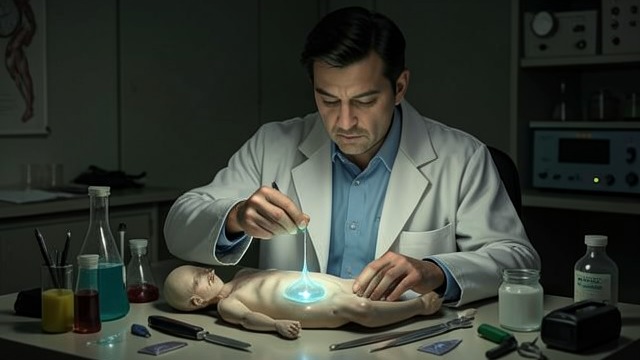
Life Reduced to Procedure
Materials and technique
Narbondo uses carp glands, chemical fluids, and specialized apparatus to make corpses move. His work treats bodies as components in a technical process rather than as people with histories.
A limited achievement
The results are often damaged and confused. Reanimation gives the appearance of restored life, but not the person, judgment, or dignity that death has taken away.
Joanna’s Failed Restoration
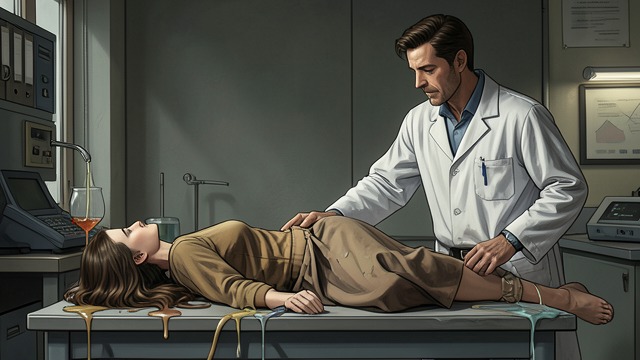
A Mother Reduced to Parts
Shiloh’s hope
Shiloh wants Joanna restored as his mother and as proof of his divine story. Narbondo’s experiment instead produces a brief, grotesque movement from a body that remains broken.
The cost of instrumental faith
The scene makes the difference between animation and renewal unmistakable. Joanna becomes material for two men’s competing ambitions, and neither religious fervor nor technical skill can return her as she was.
The Dead Break Loose
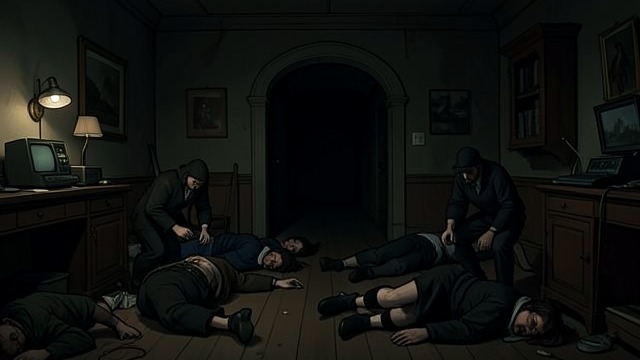
Consequences Escape the Lab
A hidden passage opens
Corpses stored beneath Narbondo’s laboratory stir amid the conflict and pour into the house. The dead become a physical threat to the conspirators and anyone caught nearby.
Order proves temporary
The outbreak shows that animation is not the same as command. Narbondo’s bodies can disrupt his own plans, while the living struggle to distinguish science, violence, and horror.
Before and during the 1875 London events
During Shiloh’s second experiment at the laboratory
During the Pratlow Street outbreak
