
Immortality and Decay
HomunculusThe novel tests the promise of arrested decay against Sebastian’s corruption and the bodies left behind by the experiments.
increasing Bearing strength in each event
 decreasing
Bearing strength in each eventdecreasingThe Promise of the Homunculus
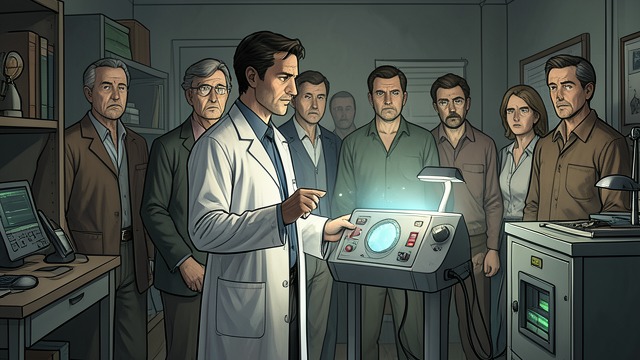
The Dream of Defeating Time
A power over decay
Sebastian believes the Homunculus can arrest entropy and perhaps extend life. This promise gives his experiments an ambition far beyond ordinary scientific discovery.
A dangerous bargain
The possibility of overcoming death feeds Sebastian’s obsession and weakens his moral judgment. The novel suggests that the pursuit of permanence can become destructive when it treats limits as enemies to be conquered at any cost.
Sebastian’s Decline
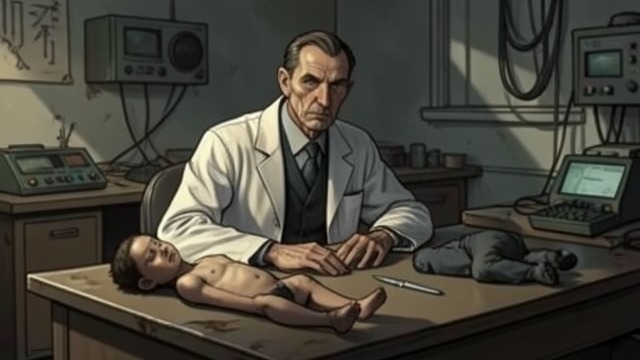
The Experimenter Deteriorates
Moral collapse
Sebastian’s notes describe increasingly violent experiments, including the murder of a child for a bodily gland. His scientific ambition no longer offers a meaningful distinction between discovery and atrocity.
Death is not the worst loss
Sebastian recognizes his own corruption and begs Nell to kill him. His fate makes the pursuit of longevity tragic: the attempt to preserve life destroys the character that gives life value.
The Dirigible’s Decline
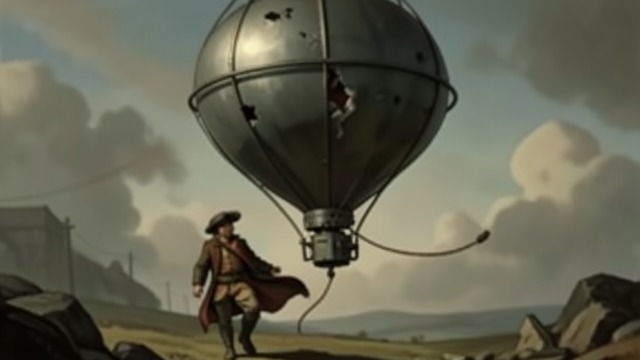
A Wonder Near Its End
An engine runs down
Keeble suspects that Birdlip’s perpetual-motion engine is failing after years aloft. The dirigible’s return may be less a controlled landing than the final stage of its decline.
Fragility within the marvelous
The craft’s extraordinary endurance does not make it eternal. Its collapse after Birdlip departs mirrors the story’s repeated distinction between an impressive mechanism and an unending life.
During Sebastian’s years of experimentation
Late May 1861, before Sebastian’s death
As Birdlip’s return to London approaches
