“My love for my mother is like an axe”
Hot Milk“My love for my mother is like an axe” names the force and ambivalence of Sofia Papastergiadis’s bond with Rose Papastergiadis. The image begins as a declaration of deep attachment, then recurs when Rose’s threatened amputation leaves Sofia feeling that her mother’s bodily fate and her own identity have become inseparable. Its final movement is toward separation: the crisis helps propel Sofia to apply to finish her doctorate in America.
First Appearance and the Image
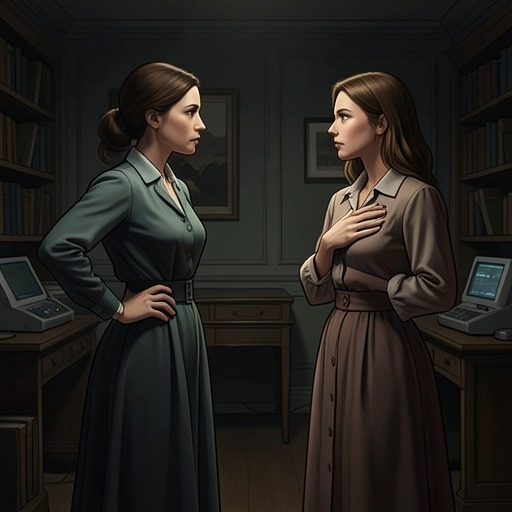
The phrase arises as Sofia watches Rose sitting in her chair. From behind, Rose seems vulnerable: her hair is pinned up and thinning, with a few curls at her neck. Sofia notices the cardigan Rose has draped over her shoulders despite the heat in Almería, and imagines that the habit came from Rose’s own mother. The small, inherited gesture makes the scene tender, but the tenderness does not soften the metaphor. Sofia describes her love as an axe that cuts deeply, giving attachment both emotional depth and a capacity to wound.
The image follows Sofia’s long-established role as the person who asks whether Rose is all right. When Rose asks Sofia the same question, Sofia recognizes that the familiar direction of care may have changed: Rose’s cross, bewildered tone suggests she may not want to hear the answer. The passage links the metaphor to their kinship, where concern, dependence, and unanswered questions are difficult to disentangle.
Recurrence Amid the Amputation Crisis
The axe image returns as Rose’s wish for amputation intensifies the connection Sofia feels between their bodies and pains. Sofia casts them in parallel, describing Rose’s legs and pains as her own and calling each other the only person either has. This repetition transforms the original image of love into a statement of identification: Rose’s decision seems to reach beyond Rose herself and threaten Sofia’s own footing.
That identification does not mean Sofia accepts Rose’s intention. After bringing her mother water boiled in a kettle but not chilled in the fridge, Sofia finds that even this adjustment is still wrong. She stops speaking to Rose, shocked by the amputation wish and unable to live with the violence she perceives in it. The axe metaphor now suggests an attachment that Rose can seize and turn against Sofia, rather than a bond Sofia can simply offer or control. Sofia also says she no longer knows what is real or feels firmly grounded, conveying how the crisis unsettles her sense of reality as well as their conversation.
Separation and Consequence
The expression’s last recurrence accompanies a decisive turn toward distance. Sofia is awake through the night making an application to complete her doctorate in America because she wants to be as far from Rose as possible. She types beneath the desert stars, watches the sun rise, and presses Send. The application is a concrete act of separation, set against the repeated language of being bound to her mother.
Across these scenes, the axe changes in significance without losing its central tension. It first figures the depth of Sofia’s love, then the painful closeness through which Rose’s crisis becomes Sofia’s own, and finally the need to move away. The metaphor does not resolve their bond; it makes visible the cost of a love experienced as both sustaining attachment and a force that can cut into the self.