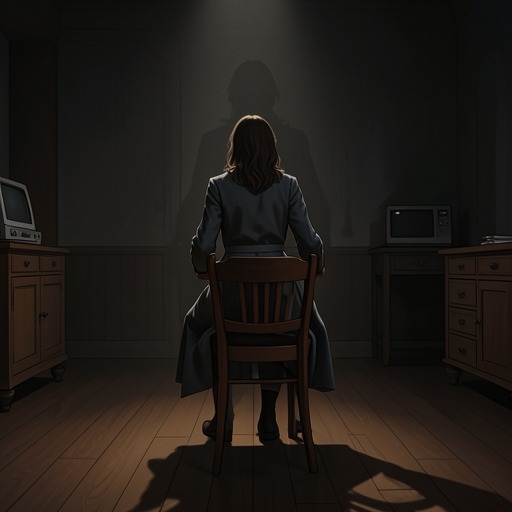
Hannah
Hot MilkHannah is Ingrid Bauer’s younger sister, whose childhood brain injury shapes Ingrid’s painful recollections of responsibility and loss. She is known through what happened to her and through the questions Ingrid continues to ask about her mind and memory; the narrative also marks her absence from the family’s displayed photographs as a conspicuous absence in Ingrid’s account of kinship.
Identity and Background
Hannah was three years old when she fell from a garden swing that her five-year-old sister, Ingrid, had been pushing. Ingrid says she pushed too hard without understanding her own strength. Hannah had been screaming and wanted to come down, but Ingrid kept pushing her higher. She fell out of the swing, breaking an arm and cracking three ribs. The accident was more serious than Ingrid’s initial account suggests: an X-ray revealed that Hannah’s skull was cracked and her brain damaged. Ingrid recounts this history in a subdued voice, then leaves the beach to be alone.
Ingrid’s Guilt and Hannah’s Uncertain Inner Life
Hannah’s injury remains bound to Ingrid’s memory not only as a childhood accident but as a question about what life is like for her sister now. While sewing, Ingrid asks whether Hannah can be happy without a mind, then wonders whether her mind is still like a leaf and whether she remembers. The questions expose the limits of what Ingrid knows: Hannah’s damaged brain is established, but the narrative does not supply answers about her present awareness or happiness. Sofia Papastergiadis answers that a leaf is never still, offering an image of movement rather than a verdict about Hannah’s condition.
The questions surface amid visible signs of what Ingrid cannot bring herself to represent directly. A noticeboard displaying the families Ingrid and Matthew had assembled included no photographs of Hannah. Sofia notices the missing sister, and Ingrid sees her looking for someone absent while she pierces cloth with her needle. The gesture links the family’s curated display to Ingrid’s continuing labor of remembering: Hannah is missing from the photographs, but not from the pattern of questions that interrupts the sewing.
Ingrid’s uncertainty also returns through the yellow silk top she had given Sofia, embroidered with the word “Beheaded.” When Sofia asks whether Ingrid means Hannah, Ingrid looks startled, as if she had forgotten naming her sister on the night she gave the top away. The needle, like the remembered word, seems to retain what Ingrid wants to forget. Hannah is therefore present in the story both as a person whose inner life remains unknown and as the absent sister around whom Ingrid’s guilt, silence, and acts of remembrance gather.
Narrative Limits and Embodied Evidence
Hannah is never given a direct voice in the supplied scenes: the reader encounters her through Ingrid Bauer’s account of the accident and through questions about her present mind. The account distinguishes what can be stated from what remains unknown. The childhood injuries have a concrete sequence, culminating in an X-ray that showed a cracked skull and brain damage; Hannah’s present thoughts, memories, and happiness, by contrast, are not independently described. The narrative preserves that gap rather than turning the diagnosis into a complete portrait of her life.
That restraint becomes more apparent beside the book’s depictions of bodily movement elsewhere. Sofia Papastergiadis walks in step with Rose Papastergiadis, saying, “My legs are her legs,” and later finds herself limping as though her body remembers their shared pace. Rose, meanwhile, is seen walking alone to the local shop without a stick and, later, walking along the shore. These are observed changes and acts of movement, not evidence about Hannah’s condition; their contrast shows how differently the narrative can make bodily experience available. Hannah’s injury is established through a remembered medical finding, while the question of her inner life remains unresolved.
Memory Without a Verdict
Hannah’s unresolved experience also sits beside the book’s wider uncertainty about what memory can establish. Sofia Papastergiadis reflects, “Memory is not always reliable. It is not the whole truth,” after noticing that she sometimes limps as though her body remembers walking in step with Rose Papastergiadis. That bodily echo is observable, but it does not make memory a complete account; by contrast, Ingrid Bauer’s questions about Hannah’s remembering remain unanswered. The parallel does not equate Hannah’s brain injury with Sofia’s involuntary habit. It instead marks the distance between an outward sign that can be noticed and another person’s inner life, which cannot be inferred from it. Hannah’s portrayal holds to that limit rather than treating an injury as proof of what she thinks, feels, or remembers.