Ingrid Bauer
Hot MilkIngrid Bauer enters Sofia Papastergiadis’s life as a poised stranger whose clothes and manner challenge the assumptions of those around her. She becomes both a source of practical support and Sofia Papastergiadis’s lover, but their closeness is shadowed by Ingrid Bauer’s divided loyalties and by her fear of her own desire. Her arc moves from being watched and misread in public to acknowledging a love that she has tried to treat as monstrous.
Identity and First Encounter
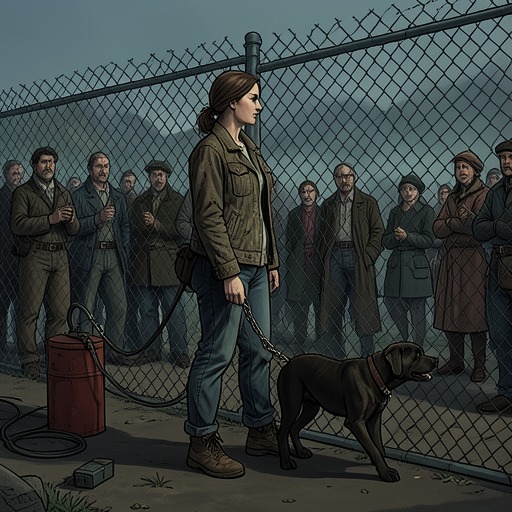
Ingrid Bauer is first seen in a women’s restroom, where a waiter is searching for a man. She wears tight blue velvet shorts, her blond hair in a thick plait, and the men’s black leather shoes with gold buckles that Sofia Papastergiadis has noticed elsewhere. When the waiter suggests that he has not found the man, Ingrid Bauer points out that the only man present is the waiter himself. Her response exposes the absurdity of his search, while Sofia Papastergiadis’s embarrassment shows how easily the encounter unsettles her.
The next time Sofia Papastergiadis sees her, Ingrid Bauer stands near the tables on the beach, watching the boats, children, and tourists. She introduces herself by name. Sofia Papastergiadis gives both the name she uses and her Greek name, making their first exchange also a moment of self-presentation. The beach around them is busy and ordinary, but their attention narrows toward one another; the contrast gives their meeting the quality of an opening that neither has yet explained.
Attraction, Withdrawal, and Practical Care
After walking together along the beach, the two lie side by side near the rocks. A phone rings in the back pocket of Ingrid Bauer’s shorts. They move closer and kiss as the incoming tide reaches them. During the kiss, Ingrid Bauer presses the purple welts left by Sofia Papastergiadis’s jellyfish sting. The pain does not stop Sofia Papastergiadis from staying close, but Ingrid Bauer breaks away to answer the call. She speaks to Matthew and indicates that she is late, while looking toward Sofia Papastergiadis; confused, Sofia Papastergiadis stands and walks away. The scene establishes the relationship’s recurring tension: intimacy is real, yet Ingrid Bauer remains connected to another life that can interrupt it.
That other life includes Matthew, with whom Ingrid Bauer discusses Sofia Papastergiadis’s lack of transport. She arrives at Sofia Papastergiadis’s home wearing silver Roman sandals and says she has been knocking for a long time. She explains that Matthew has suggested collecting the car from the Gómez Clinic for Sofia Papastergiadis the following day. The offer is practical rather than romantic, but it shows Ingrid Bauer taking an interest in Sofia Papastergiadis’s circumstances and acting with Matthew to address them. Her role in Sofia Papastergiadis’s life is therefore not confined to desire: she also offers help in the difficult logistics of living in the desert without transport.
Work, Home, and the Gift of Beloved
Ingrid Bauer and Sofia Papastergiadis eventually become lovers. Their intimacy takes place in a country house near San José, in the Cabo de Gata Natural Park. The room in which they spend time is also Ingrid Bauer’s workroom: three sewing machines and rolls of fabric share the space with clothes she redesigns for markets in Europe and Asia. The room’s mixed purpose connects her livelihood and domestic life with the relationship developing there. Even its furnishings register her own history: the white sheets were brought from Berlin to Spain.
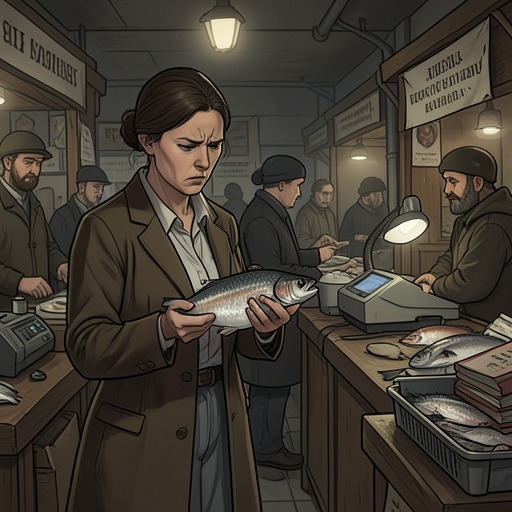
Ingrid Bauer’s skill with sewing also shapes how she expresses affection. After Sofia Papastergiadis steals a fish, Ingrid Bauer gives her a yellow silk halter-neck top, saying that the silk will soothe the jellyfish stings. She has sewn Sofia Papastergiadis’s initials, SP, into one corner and embroidered Beloved beneath them. The gift turns a private feeling into something made and wearable. Yet the word does not produce an easy declaration between them: neither discusses the embroidery, although both know it is there. The gesture gives affection a material form while leaving its meaning suspended between them.
Earlier Guilt and Fear of Desire
Ingrid Bauer’s reserve is connected to an old source of guilt. When she was five and her younger sister was three, Ingrid Bauer pushed her on a garden swing too hard. Her sister fell and suffered a broken arm and three cracked ribs. Ingrid Bauer recalls that her sister had wanted to come down, but she kept pushing. The account gives a specific childhood accident and Ingrid Bauer’s continuing sense of responsibility for it; it does not establish what became of her sister, and Ingrid Bauer stops speaking after recounting the injury.
Later, the absence of her sister’s photograph among the family pictures displayed at Ingrid Bauer and Matthew’s home draws attention to the missing place in that family record. Ingrid Bauer asks whether someone can be happy without a mind, without naming the person in that moment. The exchange and the missing photograph place silence and absence alongside her recollection of the accident, but the evidence does not resolve the circumstances behind either. Her past is present less as a complete explanation than as a set of unresolved losses and questions.
Sofia Papastergiadis comes to understand that Ingrid Bauer does not literally wish to harm her. Instead, Ingrid Bauer wants to sever herself from her own desire for Sofia Papastergiadis, which feels monstrous to her. In this account, Ingrid Bauer has made Sofia Papastergiadis into the monster she fears herself to be. Her pattern of watching and waiting is recast as the outward form of a desire she cannot readily acknowledge: it is both attraction and concealment, intimacy approached from a distance.
Change and Narrative Significance
The relationship’s final significance is stated through mutual recognition. Sofia Papastergiadis understands that she is in love with Ingrid Bauer and that Ingrid Bauer loves her in return. She also regards Ingrid Bauer as unsafe to love, yet is prepared to take the risk. This is not a resolution that removes the relationship’s instability; it is a change in what can be admitted. What began with an unsettled glance and a kiss interrupted by Matthew’s phone call becomes a love recognized as reciprocal, even while its dangers remain.
Ingrid Bauer’s importance lies in the way her acts of care coexist with evasion. She helps arrange transport, gives Sofia Papastergiadis a garment marked with Beloved, and shares a home and a working space with her; at the same time, her desire is entangled with Matthew and with a fear that turns longing into monstrosity. The sewn word, the interrupted kiss, and the remembered swing each give a different shape to attachment: something offered, something broken off, and something from the past that cannot be undone. Through Ingrid Bauer, the narrative presents love not as safety or simple fulfillment, but as a risk that becomes more bearable once both women acknowledge it.