Rose tells Sofia the endoscopy results
Hot MilkRose Papastergiadis tells Sofia Papastergiadis the results of an endoscopy in a seaside conversation whose decisive fact is also its silence: the passage records the disclosure and Sofia’s shock, but does not name the result. The scene gathers years of unresolved illness into a moment that sounds like a confrontation with death, while leaving readers unable to convert that fear into a definite diagnosis. Its emotional force lies in the gap between the gravity of the reaction and the information withheld.
Background of an Unresolved Illness
The disclosure arrives after a long period in which Rose’s symptoms have resisted any settled explanation. Sofia describes her investigation as having occupied roughly twenty years of her twenty-five-year life, perhaps longer. Her earliest remembered act of interpretation came when she was four and asked what a headache meant. Rose described it as a door slamming in her head; Sofia says she learned to read her mother’s mind, as though Rose’s head had become her own and she had become the main witness to its repeated impacts. The metaphor makes care a form of listening, but also shows how thoroughly Rose’s pain has entered Sofia’s understanding of herself.
That self-appointed investigation has not delivered the certainty Sofia wants. She imagines the illness as an unsolved crime, with a detective seeking justice, but cannot determine who is villain or victim. Each apparent lead gives way to a new symptom and another unfamiliar prescription. In Britain, Rose had been prescribed antidepressants for her feet, which she said were intended for the nerves there. The medical language offers explanations and treatments, yet the pattern of unexplained symptoms keeps reopening the case rather than closing it.
The strain had also acquired a concrete financial cost. Rose’s house was remortgaged to pay for treatment at the Gómez Clinic, at a total cost of twenty-five thousand euros. By the time of the endoscopy disclosure, Dr Gómez is refunding the money. That refund does not itself reveal the result of the examination, but it becomes part of the conversation’s emotional and ethical setting: Rose calls Dr Gómez a very good doctor and says he does not have to return the money, even as the news she is about to share unsettles her daughter.
The Disclosure and Sofia’s Response
Rose begins by telling Sofia that there is something else. Sofia answers that Dr Gómez has already told her he is refunding the money, showing that she initially takes the announcement to concern the payment. Rose’s response redirects the conversation. She continues speaking, but Sofia first hears the word as Sophocles. After Rose repeats it several times, Sofia recognizes that she is saying “oesophageal.” Only then does Rose tell her the endoscopy results. The brief mishearing delays comprehension by a few seconds and makes the movement from ordinary conversation to medical revelation audible: a familiar name from Greek literature gives way to a clinical term.
The text does not supply the results themselves. It does not name a disease, describe a prognosis, or establish that Rose is dying. Instead, it gives Sofia’s immediate reaction: after a long pause, she rests her head on Rose’s shoulder and says, “It can’t be true, Mum.” She then wonders whether it is easier to surrender to death than to life. The question communicates the scale of her fear without confirming what the examination has found. The distinction matters: the scene offers a daughter’s response to news, not a clinical account that would allow the reader to settle the diagnosis independently.
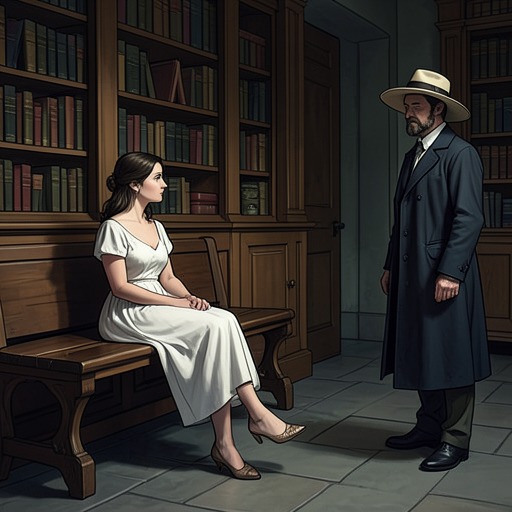
The pause is marked by two sounds and presences: Rose’s watch ticking and the waves breaking on the sand. Time seems to lengthen between the report and Sofia’s words. Her response is physical as well as verbal; she leans against her mother, then turns to look at her. Rose holds her gaze for a long time, and her eyes are dry. Their stillness makes the exchange less a dramatic outburst than an effort to remain together while the meaning of the news is being absorbed.
The Gaze Between Mother and Daughter
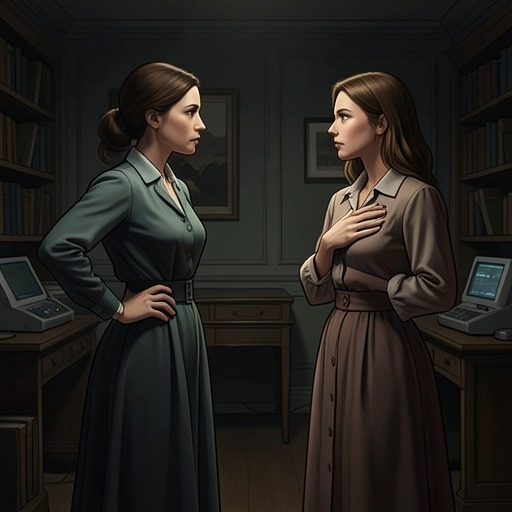
Rose answers Sofia’s stare by saying, “You have such a blatant stare,” and reminding her that she has watched Sofia just as closely. She describes watching children as something mothers do, adding that mothers know their gaze is powerful and pretend not to look. The observation reverses the scene’s usual direction of attention. Sofia has long treated herself as the witness to Rose’s symptoms, the interpreter who watches and tries to make a history out of pain; Rose now insists that she, too, has been watching her daughter.
This exchange complicates the idea that care runs only from daughter to mother. Sofia’s account of becoming Rose’s main witness presents vigilance as an almost involuntary inheritance, but Rose’s words disclose a reciprocal attention that Sofia may not have fully recognized. Their long look holds both kinds of knowledge together: the daughter’s close scrutiny of the illness and the mother’s sustained awareness of the daughter who has been scrutinizing it. The scene does not resolve the imbalance or erase the burden of care. It gives that burden a second perspective.
The contrast between their gazes also echoes the limits of Sofia’s investigation. Watching closely has taught her to recognize patterns and to hear significance in Rose’s accounts, yet it has not guaranteed that she can master what the endoscopy means. The mother’s eyes are dry; the daughter’s question invokes death. Neither gesture translates the test result into a complete explanation. Their attention can register the magnitude of the moment without making its medical content fully available.
The Sea, the Future, and What Remains Unsaid
Before Rose speaks, Sofia imagines a different version of their shared life: Rose in smart shoes strapped over her ankles, pointing to a watch and urging Sofia to walk faster so they will not miss the cinema trailers. In this imagined scene, Rose has booked the tickets, chosen the seats, and sets the pace. The vision gives her mobility, initiative, and an ordinary future organized around a small shared pleasure. It stands in painful contrast to the actual conversation, where a test result has brought Sofia’s thoughts to death and the two women pause together beside the water.
After Rose’s gaze, the passage turns outward to the incoming tide and the Medusas floating in its turbulence. Their tendrils are compared to things cut loose: a placenta, a parachute, a refugee severed from a place of origin. The images do not explain the endoscopy or establish a literal connection between the jellyfish and Rose’s diagnosis. Instead, they extend the scene’s unsettled feeling into the landscape: bodies and attachments appear suspended, displaced, or exposed to forces they cannot control. The sea is not a resolution to the conversation but its charged, unresolved setting.
The event’s narrative restraint is central to its significance. Readers learn that Rose has received the results, hear the term that Sofia initially mistakes for Sophocles, and witness a reaction that makes the news seem devastating. But the result itself remains unnamed in this passage. That withholding recalls the earlier history of symptoms that multiplied faster than explanations and makes the event a new threshold in the family’s attempt to understand Rose’s illness: the examination has produced news, yet the account stops at the instant when its emotional consequence becomes unmistakable.