The instruction to stop all medication to continue treatment
Hot MilkThe instruction to stop all medication to continue treatment is the condition Dr Gómez sets for Rose Papastergiadis if she wishes to keep working with him. It turns a medication review into a stark choice: every pill must go, not just those the doctor considers unnecessary. Its significance extends beyond Rose’s prescriptions, because Sofia Papastergiadis has helped administer them and Dr Gómez describes that care as a ritual shaping both their lives.
Clinical Context
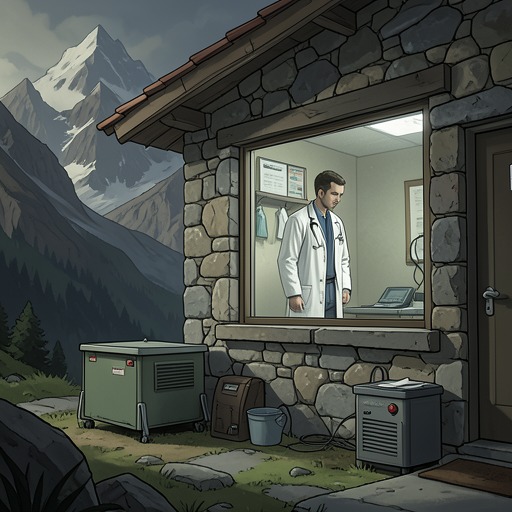
At an early consultation, Dr Gómez asks Rose which medications she feels most attached to and which she could let go, making her own account of the prescriptions part of the review. He also examines her feet, identifies small, mildly infected ulcers, asks whether she has been tested for diabetes, and says they must be addressed promptly. The consultations thus attend both to specific findings and to the larger medication regimen, though the evidence does not establish that the foot examination directly causes the later demand to stop all medication.
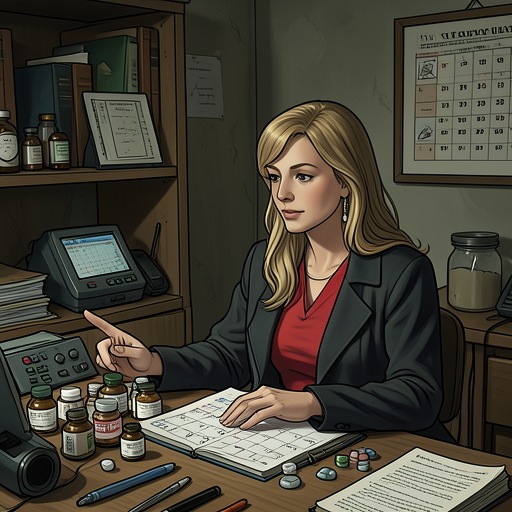
Later, Dr Gómez assesses an X-ray and says Rose is losing bone density, while describing the change as normal for women over fifty and not a significant loss of bone material. He recommends that she walk home. He then states that continuing treatment requires her to give up every medication: those for cholesterol, sleep, heart palpitations, indigestion, migraines, back pain, blood-pressure regulation, and pain relief. The breadth of the list makes the instruction a comprehensive break, rather than an adjustment to one prescription.
Rose’s Agreement and Sofia’s Concern
Rose looks Dr Gómez in the eyes and agrees to the condition, saying she is ready to start working with him. The agreement is a turning point in the consultation, but it does not resolve the uncertainty surrounding the decision. Sofia wants reassurance that it is safe for her mother to stop all medication, yet is not bold enough to ask. The scene therefore places Rose’s assent beside her daughter’s unvoiced concern, leaving the clinical risk unsettled rather than supplying an answer.
A New Routine for Both Women
Dr Gómez interprets the change in prescriptions as a change in the household’s habits. He tells Sofia that she has become accustomed to administering her mother’s medication and suggests that, as Rose comes off medication, Sofia may feel as though she is doing so too. He says she has been using her mother as a shield against making a life of her own, and that the medication ritual has now been erased from both their lives; Sofia will have to invent another one. This is Dr Gómez’s interpretation, not a conclusion the narrative confirms, but it makes clear that the instruction addresses the caregiver’s routines as well as the patient’s treatment.
That interpretation resonates with Sofia’s physical accommodation to Rose. At the clinic, she limps alongside her mother to keep pace, describing herself as Rose’s legs; later, she notices that she sometimes limps even when alone, as though her body remembers their shared gait. These details do not establish that stopping medication changes Rose’s mobility. Instead, they show how care has become embodied and habitual, and why the removal of one established routine leaves an open question about what will replace it.
Later Complication and Significance
At a later review, Dr Gómez recalls that Rose was dehydrated and received intravenous saline at a hospital in Almería. He explains that she has difficulty swallowing water, and therefore difficulty swallowing medication. When asked whether she has been taken off all medication, Rose replies that she is back on track and adds that the hospital doctor was concerned too. The exchange complicates any impression that the earlier instruction produced a settled or lasting outcome: the evidence records a subsequent medical concern and Rose’s report, without specifying exactly which medications she resumed or how her treatment proceeded.
Rose is later seen walking along the beach, an image that contrasts with earlier scenes of shared limping and dependence. The narrative does not attribute that walk to the instruction or to medication cessation. Read together, the episodes keep treatment, caregiving, and bodily capacity in tension rather than offering a simple cure: Dr Gómez’s demand tries to break a prescription-based ritual, but the later account shows that medication remains bound to practical difficulties and further medical judgment.