Cat
House of LeavesCats are among the book’s most persistent and unsettling nonhuman presences. They gather around Zampanò in the courtyard, disappear from the Navidson house, become the object of Johnny Truant’s drunken meditation on memory and loss, and recur in images of roadside death and nocturnal watchfulness. Their significance lies not in a single symbolic meaning but in their resistance to human explanation: cats move at the edge of domestic life, register the presence of something threatening, and vanish before the story can turn them into reliable evidence.
Zampanò’s Courtyard
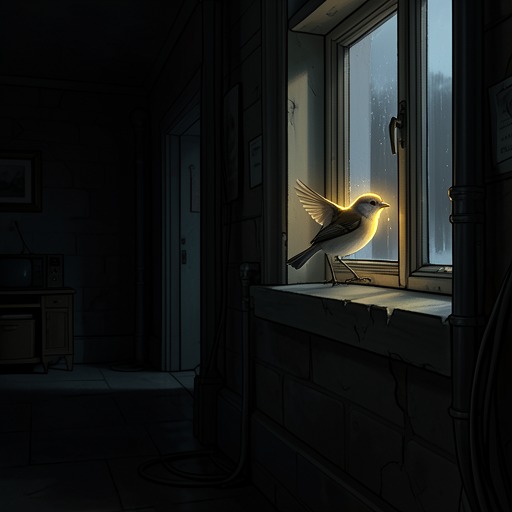
Lude described Zampanò as having lived in the building for many years while keeping mostly to himself. Every morning and evening, Zampanò walked around the courtyard, a neglected space filled with knee-high weeds and, at that time, more than eighty stray cats. The cats seemed to like the old man without being lured by food or any other obvious inducement. They repeatedly rubbed against his legs before darting back toward the dusty center of the courtyard, making his daily circuit a quiet ritual of contact between an isolated human being and a loose animal community.
The cats also helped make Zampanò’s routine legible to his neighbors. Lude, who often returned home early, habitually saw the old man working his way around the perimeter, sometimes pausing on a sun-beaten bench before beginning another circuit. When Zampanò failed to appear one morning, Lude noticed the absence despite a severe hangover; a single mother who rose at six also recognized that something was wrong. Their concern eventually led them to alert Flaze, the building manager, and then to enter the apartment after Flaze’s initial hesitation.
The cats’ disappearance had preceded Zampanò’s death. In the months before he was found dead, they began to vanish one by one. Lude saw one cat with its head ripped off and another with its entrails scattered across the sidewalk, but most simply disappeared. By the time of Zampanò’s death, none remained. The sequence gives the courtyard an ominous retrospective pattern: the animals that had surrounded the old man were removed before the old man himself was found dead.
Animals and the Navidson House
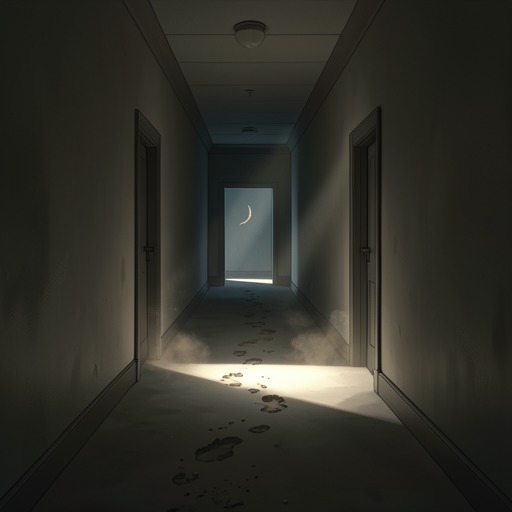
The book connects cats to the strange limits imposed by the house on Ash Tree Lane. On August 11, 1990, a week after Will Navidson’s secret exploration of the hallway, Mallory, the tabby cat, and Hillary, the Siberian husky, became involved in one of the house’s seemingly ordinary disturbances. After a sudden yowl and bark, Mallory raced into the living room with Hillary nipping at his tail. The two animals ran over the sofa and entered the hallway, disappearing into its darkness.
The moment was immediately interrupted by contradictory evidence. Barks came from outside, followed by Karen Green shouting at Will Navidson for letting the animals out, even though they were supposed to remain inside that day. Hillary and Mallory were then found in the backyard, with Mallory up a tree and Hillary howling beneath him. The episode therefore makes the hallway appear to contain and not contain the animals at once, turning a chase between pets into an incident that unsettles ordinary spatial continuity.
Despite its implications, the event receives almost no sustained attention within the documentary’s critical record. Bernard Porch’s lengthy study of The Navidson Record gives it only a fragmentary remark about the house’s inability to support animals, while Mary Widmunt reduces the issue to a terse question about the pets. Will Navidson, although characterized by his investigative persistence, never returns to the matter. Holloway Roberts arrives soon afterward, and whatever might have been learned from studying the relationship between animals and the house is displaced by the human decision to explore the space directly.
Mallory ultimately vanishes completely, with no explanation of what happened to him. Hillary survives to appear at the end of The Navidson Record, no longer a puppy after several years have passed. The dog remains playful with familiar people but growls at strangers who approach too closely, the sound rising from his throat like distant thunder. His altered watchfulness suggests that the animals have not simply been incidental occupants of the house’s history. They have registered an experience that the human investigators either overlook or cannot translate.
Johnny Truant’s Cat Imagery
Johnny’s recollection of the cats becomes increasingly entangled with his response to Zampanò’s death. After an unsuccessful encounter with Thumper and while drinking alone, Johnny declares that he feels dead and imagines that both Will Navidson and Zampanò may have envied Hillary and Mallory. He remembers Zampanò speaking about the animals that surrounded him in the courtyard, especially at dawn and at night, and turns their movements into a figure for the return of lost years and memories.
In Johnny’s meditation, the cats slip out from under the shadows like disconnected but still vital announcements that the past remains present. Their paws, pauses, sudden darting, and rubbing against human legs become a language that does not explain itself. He recognizes that cats have little apparent concern for a human-style past or future, yet their intense attention to play, pursuit, fear, light, and movement gives them a form of immediate existence that Johnny envies. Their animal perception becomes a contrast to the human need to reconstruct experience through stories, lists, and interpretation.
Johnny repeatedly insists on the cats’ smallness and ordinariness even as his prose enlarges them into carriers of memory. They are only cats, he says in effect, yet they are also beings to talk to, creatures that appear from nowhere and return to nowhere. Their disappearance becomes part of an imagined fullness in which age, memory, and understanding might one day be complete, only for that imagining itself to be forgotten. The cats thus embody both the persistence of recollection and its instability: they return as images, but no human observer can recover the whole story from them.
This meditation leads back to Zampanò’s body. Johnny imagines the dusty courtyard and its many cats, then recalls the old man lying face down on his unswept floor after Christmas. The paramedics attributed the death to old age and found no physical trauma, but gouges near the body cut six or seven inches into the hardwood, approximately half an inch deep. Johnny had seen the marks near the trunk, touched them, and taken splinters into his fingertips. The cats do not explain the marks, but their disappearance and the unexplained scratches occupy the same zone of evidence: both indicate a presence that the available account cannot name.
Strays, Violence, and Witnessing
Cats recur outside the central houses as vulnerable strays and as silent witnesses to death. On May 1, 1998, Johnny saw a tabby beside route 636 with its head completely gone and a smear of red nearby, probably killed by a motorist. A large gray cat watched from close by and fled when Johnny approached. Later, after driving through Alliance, California Crossroads, Highgate, and Conham Wharf, Johnny returned to the same place and found the gray cat still there. This time it refused to leave. Johnny cannot determine whether it was grieving or simply waiting for the tabby to wake.
The scene refuses the easy comfort of assigning a human emotion to the surviving animal. The gray cat’s stillness may be grief, confusion, attachment, or mere waiting, but the narrative leaves those possibilities unresolved. Its presence nevertheless gives the dead tabby a witness when no human community claims knowledge of Zampanò or the Navidsons. The cat does not speak, interpret, or rescue; it remains beside the body, making its refusal to leave more eloquent than any confirmed explanation.
Cats are also placed beside the abandoned Pekinese that Johnny encounters with Johnnie on Vine. The dog is rescued and then violently thrown from Johnnie’s truck, while Johnny stands over the crushed body unable to name it or decide what should be done. The episode belongs to the book’s broader pattern in which stray animals expose the limits of human care: an impulse toward protection can be followed by abandonment, cruelty, paralysis, or belated remorse. Cats are not identical to the dog in this sequence, but their recurring presence establishes a shared field of vulnerable creatures moving through streets, courtyards, and houses where human responsibility repeatedly fails.
Recurrence and Narrative Significance
The book’s treatment of cats repeatedly places them at the boundary between companion and omen. Zampanò’s cats create a daily community around a man who otherwise lives in obscurity; the cats connected with the Navidson house reveal a nonhuman incompatibility with its corridors; Johnny’s recollection transforms them into figures for memory, absence, and the return of what has been lost; and the roadside gray cat remains beside death without supplying an interpretation. Across these contexts, cats are active presences rather than decorative symbols, but their activity cannot be fully translated into human narrative.
Their disappearances are especially important. The courtyard cats vanish before Zampanò’s death, Mallory disappears from the documentary record, and Johnny’s imagined cats repeatedly emerge from and retreat into nowhere. This recurrence makes disappearance itself a kind of animal behavior within the book’s form. The narrative records traces—missing bodies, scratches in a floor, a cat waiting beside a corpse, a watchful animal growling at strangers—then admits that the traces do not add up to knowledge.
The cats therefore challenge the human-centered investigation that dominates The Navidson Record and Johnny’s commentary on it. Humans enter the dark corridors seeking answers, while the animals appear to sense rules that the investigators do not understand. Yet the book does not grant the cats a transparent alternative wisdom. They remain partly inaccessible, governed by needs and perceptions that cannot be reduced to human testimony. Their lasting force comes from that double status: they are intimate enough to touch, mourn, and speak to, but alien enough to remain beyond the final reach of explanation.