Johnny Truant–Pelafina Lièvre relationship
House of LeavesThe Johnny Truant–Pelafina Lièvre relationship is a bond shaped less by ordinary proximity than by interruption: Pelafina Heather Lièvre is Johnny Truant’s mother, but illness, separation, institutionalization, and damaged memory prevent their relationship from developing as a stable domestic attachment. Its decisive pattern is a painful alternation between maternal care and danger. Pelafina writes to protect and encourage her son, while Johnny’s recovered memory reveals that, when he was seven, she tried to choke him and was taken away for his safety. The relationship therefore becomes the emotional history behind Johnny’s numbness, guilt, anger, and eventual attempt to remember what he had made himself forget.
Childhood Bond and Sudden Separation
Pelafina Heather Lièvre’s early relationship with Johnny is remembered through fragments rather than continuous scenes. Johnny recalls her extraordinary hair, her tender eyes, and a voice that could become sweet and full, but he also remembers that she was frequently unwell. After Johnny’s father was killed, Pelafina began sending handwritten letters filled with advice, encouragement, and faith. Johnny later says that he may not have survived Raymond without those letters, establishing her correspondence as a sustaining maternal presence even when direct care was absent.
That care was interrupted by Pelafina’s deteriorating mental state. In a letter, she apologized for an event Johnny could not initially remember: when he was seven, his father was forced to take her to The Three Attic Whalestoe Institute after she gathered Johnny into her arms and tried to choke him. Johnny’s father intervened almost immediately, and Pelafina was removed for Johnny’s safety. The event is not presented as a simple act of cruelty detached from illness; Pelafina believed, through what the narrative describes as wild reasoning, that the burden of life was too great to impose on a child, especially her own. That explanation does not erase the danger, but it complicates Johnny’s memory of her by placing love, incapacity, and violence in the same scene.
Memory, Numbness, and the Lost Five and a Half Minutes
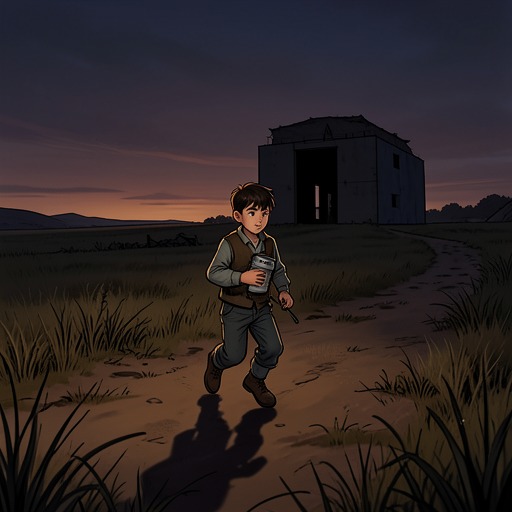
Johnny’s recollection of the separation is radically incomplete. He remembers his mother being led away, at least as a blurred shape in the doorway, but he cannot fully recover the day itself. In a later vision or recollection, he sees himself at seven gripping Pelafina’s wrists and trying to prevent her departure while his father holds her shoulders and leads her toward the foyer. Pelafina kisses Johnny’s cheeks and forehead, strokes his face, and mutters affectionate but strange endearments. The tenderness of these gestures exists beside the fact that she is being removed because she has become dangerous to him.
The scene culminates in Pelafina screaming for Johnny as she is taken away. He remembers the sound first as a roar and then recognizes it as the saddest call of all: a mother crying out for her child. Afterward, Johnny stops talking for a long while. He learns to resent Pelafina, using blame to cover his hurt, and eventually insists upon her absence. The details of the five and a half minutes disappear from conscious memory as though they had been a bad dream, but the disappearance is not resolution. The forgotten episode remains active beneath Johnny’s later life, returning through images of dark hallways, blurred thresholds, and the sound he cannot initially name.
Letters as Care and Distance
The letters preserve a form of relationship that Johnny’s childhood could not sustain in person. The Three Attic Whalestoe Institute Letters make Pelafina’s voice available across institutional distance, but they also reveal the limits placed on her contact with her son. In a January 20, 1983 letter, she explains that she would have written a hundred more times if the Director had not strongly recommended that she curtail her efforts. Johnny’s new mother objected to the supposedly intrusive and divisive character of Pelafina’s communications, and Pelafina concedes that both the Director and the new household may be right that Johnny needs to build a new, solid life without being troubled by his mad mother.
This concession is simultaneously self-effacing and protective. Pelafina acknowledges the authority of the institution and the claims of Johnny’s new family, yet the letter itself contradicts the idea that she is merely an intrusion. Her writing remains an attempt to offer guidance, faith, and continuity to a son from whom she has been separated. The epistolary form makes the relationship fragmentary and one-sided: each letter is a delayed address, a preserved act of self-presentation, and evidence of affection that Johnny can encounter only after the circumstances of the relationship have already changed.
A March 19, 1988 letter returns directly to the separation. Pelafina tells Johnny not to forget that his father stopped her and took her to The Three Attic Whalestoe Institute, while admitting that he may remember nothing because he was seven. She describes it as the last time she saw him before a much later reunion, followed by another loss of sight. Her wording turns memory into a shared but asymmetrical possession: Pelafina remembers the event and asks Johnny to remember it, while Johnny’s own mind has protected him by withholding it.
The Locket and Recovered Maternal Meaning
The relationship becomes materially present through the locket that Pelafina leaves Johnny after her death. The object is not valuable to him in monetary terms; he refuses to regard it as something to sell even while living on tuna, rice, and water and losing weight. Its importance lies in what it contains and connects. An engraving identifies the gift as coming from Johnny’s biological father and bears the date March 5, 1966, while the interior holds a carefully folded letter written by Johnny at eleven, disguised as a thank-you letter. It is the first letter Pelafina received from the son she had left when he was seven and the only one she saved.
The locket therefore joins several stages of the relationship: the father’s love, Pelafina’s absence, Johnny’s childhood effort to reach her, and the mother’s decision to preserve that effort. Johnny delays opening it because he fears finding nothing inside. The discovery reverses that expectation. What he finds is not a direct explanation of the past but proof that his younger self’s attachment reached Pelafina and that she kept a tangible record of it. The object transforms maternal absence into a form of testimony: even where memory fails, the saved letter demonstrates that the bond was not erased on both sides.
Significance for Johnny’s Emotional Life
Johnny’s account of Pelafina explains why attachment is so difficult for him. He describes himself as numb, dazed, and ghostlike, craving feminine attention while finding the possibility of a mutual relationship unreal. His history with his mother supplies the clearest contradiction at the center of that pattern: the person who offered letters of faith and encouragement was also the person whose mental collapse made her presence physically unsafe. Intimacy is consequently associated with both rescue and threat, with being needed and with being endangered by another person’s need.
The relationship also makes Johnny’s later remembering a form of ethical reconstruction rather than simple nostalgia. He initially reduces Pelafina to absence, resentment, and madness, but the recovered scene forces him to hold incompatible truths together: she tried to harm him; she loved him; she was ill; his father removed her to protect him; and her letters may have helped him survive. The locket and the institutional letters keep that contradiction from being resolved into either sentimental forgiveness or total condemnation. Pelafina remains both the mother who failed to remain with her child and the mother whose words, saved paper, and remembered tenderness continue to reach him after separation and death.