
Mapping the Psychedelic Brain
How to Change Your MindNeuroscience moves from receptor action to brain networks, offering explanations for ego dissolution and therapeutic flexibility without resolving consciousness itself.
increasing Bearing strength in each event
 decreasing
Bearing strength in each eventdecreasingA Chemical Key

Tryptamines and the Brain
A family resemblance
Psychedelic compounds resemble serotonin and can activate 5-HT2A receptors. The chemistry identifies an important entry point but does not explain the content of experience.
A pharmacological foothold
Franz Vollenweider’s work shows that blocking the receptor can block psilocybin’s effects. The finding makes psychedelic consciousness experimentally approachable, not fully understood.
The Default Network
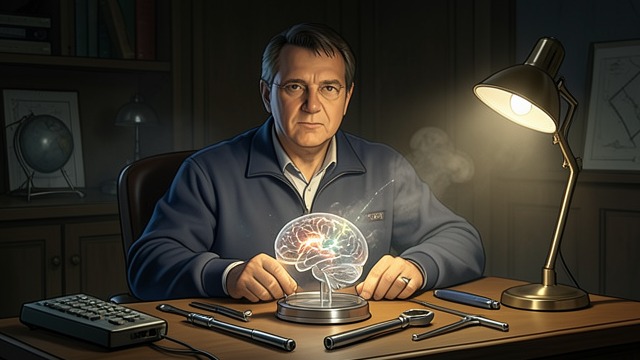
A Network at Rest
The mind’s inward traffic
Marcus Raichle identifies a network active when people are not focused on an external task. It is associated with self-reflection, memory, mental time travel, and rumination.
A possible center of selfhood
The network helps organize the autobiographical story of a person. Its prominence offers researchers a way to study how ordinary identity is constructed and maintained.
Psilocybin Imaging
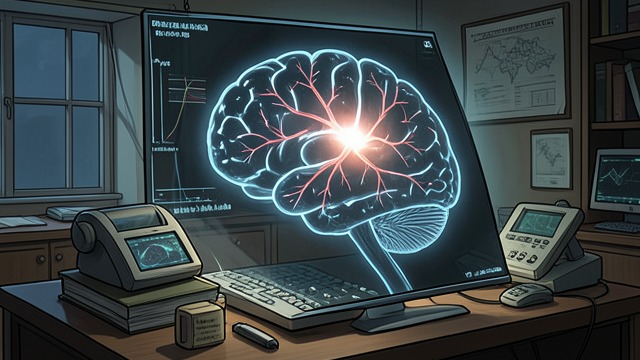
An Unexpected Finding
Activity falls
Robin Carhart-Harris expects increased brain activity but observes reductions in blood flow and oxygen use, especially in the default mode network. The result challenges a simple picture of psychedelics as globally stimulating the brain.
Experience aligns with signal
Greater reductions correlate with reports of ego dissolution. The correlation suggests a neural counterpart to altered selfhood, without proving that one network alone creates the self.
Networks Reorganize
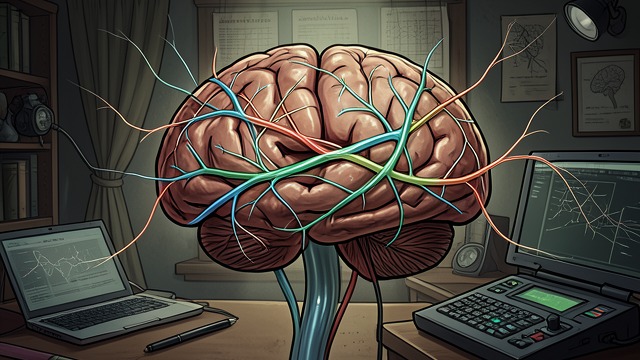
A More Interconnected Brain
New lines of communication
Imaging suggests that normally distinct brain networks communicate more widely under psilocybin. Some familiar pathways weaken as cross-talk increases.
Many possible experiences
New connections may help explain vivid imagery, synesthesia, and unexpected meanings. The same flexibility can produce confusion as well as creativity, so connectivity is not automatically beneficial.
An Unfinished Explanation
Biology and Consciousness
A model, not a verdict
The entropic brain theory links rigid patterns with some forms of suffering and increased flexibility with potential change. Its metaphors guide hypotheses but remain provisional.
The explanatory gap persists
Brain scans can track correlates, not settle why experience feels like something from within. Neuroscience clarifies mechanisms while leaving the hard problem open.
From the 1950s through 1998
After the 2001 discovery
During the first Imperial experiments in 2009
In the Imperial research published in 2014
In the book’s neuroscience reflections
