
The Three Journeys
How to Change Your MindMichael Pollan’s travelogue moves from controlled exploration through ego dissolution to a terrifying, brief encounter with the limits of selfhood.
increasing Bearing strength in each event
 decreasing
Bearing strength in each eventdecreasingA Careful First Step

Entering the First Altered State
Caution before departure
Pollan chooses a remote guide and begins with breathwork, hoping to test how he responds to altered consciousness before taking LSD. His existing heart concerns complicate the plan.
A partial opening
The LSD journey brings family memories, music, and unusually open emotion, but not a complete mystical experience. It gives him a manageable first encounter rather than the overwhelming revelation he imagined.
The Mushroom’s Difficult Passage

Following Images and Music
A strange inner landscape
With Mary, Pollan takes psilocybin in a ceremonial setting. The experience first confines him to an alien computer-like world, then loosens his ordinary identity and reorganizes his sense of self.
Grief and connection
Images of death and family converge with Bach’s music. The journey becomes a rehearsal for loss and a powerful encounter with love, though its meaning remains open to interpretation.
The Toad’s Violent Threshold
A Sudden Collapse
Terror without bearings
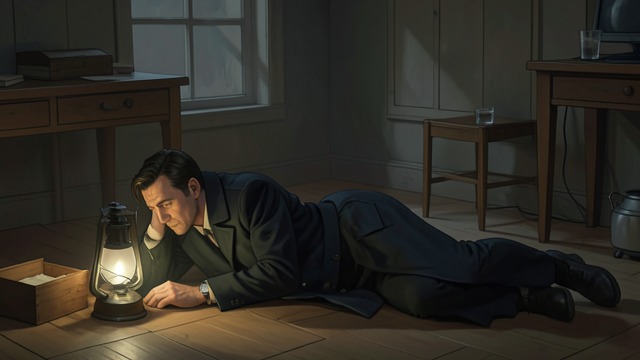
The toad’s fast onset overwhelms Pollan’s prepared words. His familiar self and even the awareness that had survived earlier ego loss seem to disappear into terror.
Reconstitution and gratitude
As ordinary reality returns, Pollan experiences relief, gratitude for existence, and a reflection on being rather than doing. The intensity leaves him unsure what knowledge, if any, the journey supplied.
Testing the Mystical Label

Measuring an Unruly Experience
A questionnaire meets the journey
Pollan uses the Mystical Experience Questionnaire to assess his experiences. Its categories fit the psilocybin session more readily than the toad’s violent, unusual arc.
Classification without certainty
A score can name features of an experience, but it cannot prove a metaphysical claim. Pollan recognizes that the label clarifies some aspects while flattening others.
A Larger Repertoire

Returning with a Practice
Short-lived aftereffects
The journeys’ emotional openness fades over weeks, yet the memory of another way of attending remains. Meditation sometimes allows Pollan to revisit that less controlled mental space.
A lasting possibility
He treats the experience as a landmark rather than a permanent conversion. Its value lies partly in showing that consciousness has more than one available form.
The first guided journey
The second guided journey
The third journey
In the months after the journeys
In the closing reflections
