1966 Human Be-In
How to Change Your MindThe 1966 Human Be-In was a mass gathering in San Francisco that brought psychedelic experience, countercultural spectacle, and public advocacy together before a crowd of about twenty-five thousand. Held in Golden Gate Park in January 1967, it became a defining public appearance for Timothy Leary: the former professor addressed a gathering where LSD was freely distributed and proclaimed a new age, while his slogan “turn on, tune in, drop out” became inseparable from his public identity.
Background and Participants
After leaving Harvard, Leary and Richard Alpert took their psychedelic project beyond Cambridge, moving with former students and associates through several locations. As the counterculture gathered force, Leary was invited, along with Allen Ginsberg, to speak at the first Human Be-In in San Francisco. The invitation placed Leary before a vast public audience, far removed from the university setting in which his psychedelic work had begun.
The Gathering in Golden Gate Park
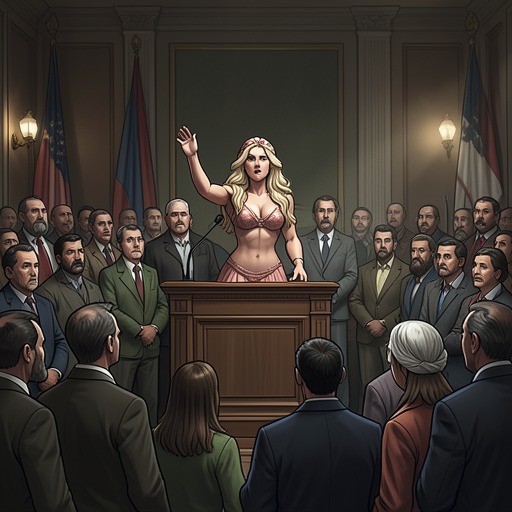
In January 1967, approximately twenty-five thousand young people assembled in Golden Gate Park. Attendees could take freely distributed LSD as speakers addressed the crowd and proclaimed a new age. Leary appeared in a conspicuous change of dress: he had traded his Brooks Brothers clothes for white robes and love beads, with flowers in his graying hair. The shift made the former professor a visible emblem of the counterculture addressing the gathering.
Leary urged the tripping crowd to “turn on, tune in, drop out.” The phrase compressed an invitation to psychedelic experience and a challenge to conventional participation into a portable public slogan. Its circulation helped carry the event’s message beyond the park and made the speech a turning point in Leary’s public persona.
The Slogan’s Afterlife
The phrase’s origin became part of its story. Leary first said he had thought it up in the shower; years later, he claimed Marshall McLuhan had “given” it to him. Whatever account is taken, the slogan clung to Leary for the rest of his life. Its reach brought him recognition among the rising counterculture, but also contempt from parents and politicians around the world. The Human Be-In thus marked both the expansion of psychedelic advocacy into a mass public spectacle and the beginning of a durable, polarized image of Leary.