Captain Trips
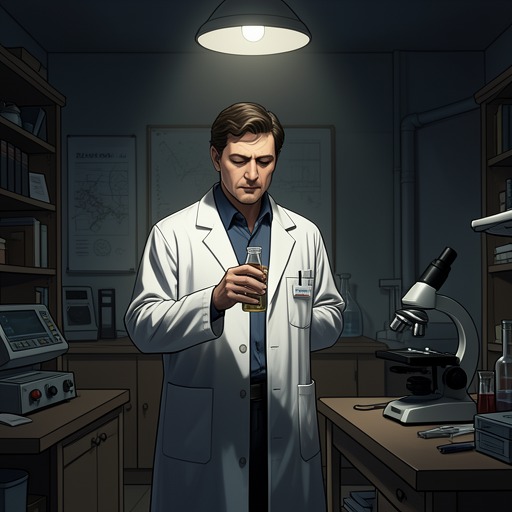
How to Change Your MindAl Hubbard, known as Captain Trips and the Johnny Appleseed of LSD, was an improbable bridge between psychedelic research, government and business networks, and a therapeutic practice that treated the drug experience itself as a means of change. Though he had no formal training as a scientist or therapist, he helped Humphry Osmond and Abram Hoffer move beyond the idea that LSD merely mimicked psychosis, and he introduced practices of setting, music, imagery, and guidance that became central to psychedelic therapy. His influence was considerable; the facts of his life, and even the motives behind his activities, remain stubbornly uncertain.
Identity and an Uncertain Past
Hubbard’s biography resists a clean account. He was born poor in the hills of Kentucky in either 1901 or 1902; his FBI file gives both dates. He liked to say he was twelve before he owned a pair of shoes and had not gone beyond the third grade. As a teenager, he devised the Hubbard Energy Transformer, a battery supposedly powered by radioactivity, and sold half the patent for $75,000. The invention came to nothing, and Popular Science later included it among technological hoaxes. The gap between Hubbard’s audacious claims and their uncertain foundations would recur throughout his career.
He was an ardent Catholic with a pronounced mystical bent, but also a man of strikingly flexible professional loyalties. At various times he worked as a rumrunner and gunrunner and as an agent for the Bureau of Alcohol, Tobacco, and Firearms. He also worked for Canadian Special Services, the U.S. Department of Justice, and the Food and Drug Administration. His FBI file suggests possible links to the CIA in the 1950s, but heavy redactions make Hubbard’s role impossible to establish. The possibility that he exchanged information for freedom to operate remains speculation, not a settled explanation of his career.
The portrait is further complicated by his appearance and self-presentation. His FBI file lists him as five feet eleven, while photographs and videos make him look short and stocky, with a crew cut and a large, round head. He often wore a paramilitary uniform and carried a Colt .45, presenting himself like a small-town sheriff. The tough, armed operator and the Catholic mystic were not separate phases of his life so much as opposing facets of the same difficult-to-pin-down figure.
Conversion and a Mission for LSD
In 1951, Hubbard was successful but unhappy, and, according to Willis Harman’s account of Hubbard’s story, searching urgently for meaning. While hiking in Washington State, he said, an angel appeared in a clearing and told him that something important to humanity was coming and that he could play a part in it. A year later, an article about rats given LSD led him to track down the researcher and obtain the drug. Hubbard described the ensuing experience as mystical: he witnessed life beginning on Earth and his own conception. He took this as the sign he had been waiting for, and concluded that he had a special role in bringing LSD to as many people as possible.
Hubbard turned that conviction into a campaign. Through his connections in business and government, he persuaded Sandoz to supply him with a remarkable quantity of LSD. Accounts disagree about its scale: one describes a one-liter bottle, another forty-three cases, and a third six thousand vials. Reports also differ about whether he kept the supply in a Zurich safe-deposit box or buried it in Death Valley; a substantial amount, at least, traveled with him in a leather satchel. He became Sandoz’s exclusive LSD distributor in Canada and later obtained an FDA Investigational New Drug permit for clinical research in the United States, despite his limited schooling, criminal record, and a PhD that had reportedly come from a diploma mill.
Between 1951 and 1966, Hubbard introduced an estimated six thousand people to LSD. He favored influence from the top down: executives, government officials, members of Parliament, Catholic Church officials, actors, writers, philosophers, university officials, and computer engineers figured among his intended audience. He believed that giving psychedelic experiences to leading business executives could change society as a whole, and disdained the more democratic approach associated with Timothy Leary. Not everyone he sought to recruit agreed; J. Edgar Hoover, whom Hubbard claimed as a close friend, declined. For Hubbard, the project was less a business than a mission to redirect history.
From Psychotomimetic Drug to Therapeutic Experience
Hubbard’s 1953 lunch with Humphry Osmond at the Vancouver Yacht Club helped establish a collaboration that altered the direction of psychedelic research. Osmond was impressed by Hubbard’s resources, connections, and access to LSD. Alongside the influence of Aldous Huxley, Hubbard helped prompt a shift away from the psychotomimetic model. He proposed that the mystical experience some people had under a single high dose of LSD or mescaline might itself be harnessed therapeutically: the experience could expose a person to a wider perspective on their life, and that shift might help them change. In this approach, the experience mattered more than the chemical considered in isolation.
Hubbard’s most lasting contribution was practical. He recognized that the surroundings of a session could shape the journey, and that the stark white walls and fluorescent lights of a hospital were poorly suited to an inward, potentially revelatory experience. He brought pictures, music, flowers, and diamonds into treatment rooms, using them to prepare patients for a mystical experience or to redirect a journey when it became frightening. He showed patients paintings by Salvador Dalí and images of Jesus, or invited them to study the facets of a diamond he carried. Treatment spaces made to feel domestic rather than clinical came to be called Hubbard Rooms. Although researchers later described these conditions through the framework of set and setting, Hubbard’s methods also resembled the work of traditional healers: using objects, words, and music to work with the heightened suggestibility of an altered state.
One Vancouver patient, an alcoholic paralyzed by social anxiety, recalled that Hubbard handed him roses during an LSD session and prompted him first to hate them and then to love them. As the patient remembered it, the flowers withered and fell before appearing brighter and more spectacular; the episode helped him see that his relationships with other people were shaped in part by his own outlook. The account captures Hubbard’s therapeutic instinct: an object in the room could become more than decoration, serving as a concrete way to experience a new interpretation of one’s difficulties.
A Mobile Network of Researchers and Patients
By the late 1950s, Hubbard had become a circuit-riding intermediary among research centers across North America. He assisted Humphry Osmond and Abram Hoffer with their work on alcoholism in Weyburn, met R. Gordon Wasson in Manhattan, and visited research groups or prominent individuals elsewhere. In Los Angeles, he worked with Betty Eisner, Sidney Cohen, and Oscar Janiger, sharing both treatment advice and supplies of Sandoz LSD. Back in Vancouver, he persuaded Hollywood Hospital to devote an entire wing to treating alcoholics with LSD, and sometimes flew celebrities there for treatment. He also established two other Canadian alcoholism-treatment facilities. The Hubbard method became part of a Canadian treatment business, even as he objected to institutions charging patients more than $500 per session. He viewed psychedelic therapy as philanthropy and spent down his fortune advancing it.
His network carried knowledge as well as the drug. He moved among widely separated centers, later adding Menlo Park and Cambridge to his circuit, and contributed to the spread of clinical expertise beyond any one formal institution. At the same time, the possibility that he collected information for the CIA remains unresolved. Some people who knew him considered it plausible; others pointed to his criticism of the agency’s use of LSD. Hubbard condemned the CIA’s MK-Ultra program, which explored LSD as a weapon, a truth serum, a tool of mind control, or a means of embarrassing political opponents. Its approach remained tied to the psychotomimetic model even after other researchers had begun to understand the drug differently. The known record supports Hubbard’s criticism of the program, but does not settle whether he had a covert relationship with the agency.
Legacy and the Underground Lineage
Hubbard’s influence continued through people and practices rather than through a stable public institution bearing his name. In Menlo Park, Myron Stolaroff, an Ampex executive who had become convinced that Hubbard could bring LSD to the world, assembled a group of colleagues to discuss spirituality and the possibility of using the drug to develop human potential. Hubbard guided the group’s journeys and trained members to guide others. Stolaroff later recalled him as an exceptionally good therapist. An effort to remake Ampex as a psychedelic corporation, including workshops and sessions for executives, ultimately foundered when the company’s general manager objected to Hubbard’s Christian imagery. Stolaroff left Ampex in 1961 and, with Willis Harman, founded the International Foundation for Advanced Study to investigate LSD’s effects on personality and creativity.
After sanctioned psychedelic therapy ended, Hubbard remained one of several sources in the professional lineages of underground guides. Many of the guides interviewed by Michael Pollan traced their therapeutic ancestry to figures including Timothy Leary, Stanislav Grof, Hubbard, or Leo Zeff. The underground was not simply a continuation of Hubbard’s work, but its existence and practices helped preserve knowledge during the period when such therapy was illegal. Later, some underground practitioners were recruited to train guides for university trials, and researchers consulted them about elements of guided sessions, including music. This traffic between underground practice and institutional research reflects the durable influence of methods developed outside conventional scientific credentials.
Hubbard’s legacy is therefore both foundational and uncomfortable. He helped make the room, the guide, and the unfolding experience part of psychedelic treatment, not incidental surroundings to the drug’s pharmacology. Yet the man associated with that therapeutic design carried a murky record, improvised authority, and unresolved connections to intelligence work. His career shows how psychedelic knowledge traveled through personal networks as well as laboratories—and how a practice could outlast the uncertain, contradictory figure who helped bring it into being.