Eva Mendez
How to Change Your MindEva Mendez was the name R. Gordon Wasson used to conceal the identity of the Mazatec curandera known as María Sabina. Her decisive place in the story lies in a collision: she practiced mushroom healing and divination within a local tradition, while Wasson interpreted the ceremony through his own theory of humanity’s encounter with the divine. The attention that followed his account carried her practice far beyond Huautla de Jiménez, but it also brought consequences for her and her village that she came to regret.
Healer in a Hidden Tradition
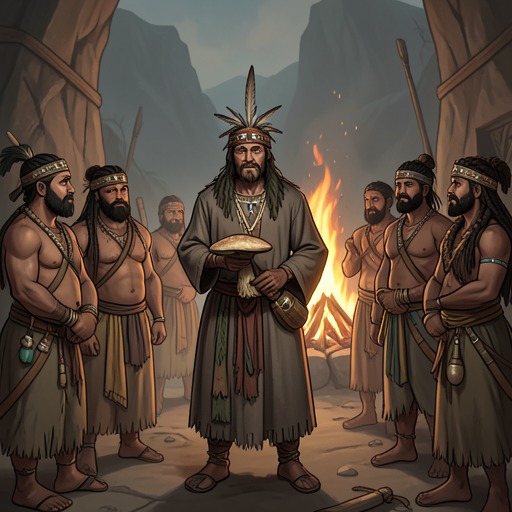
The mushroom ceremony Wasson entered in 1955 belonged to a practice with a long history of concealment. After the Spanish conquest, sacramental mushroom use was driven underground; church authorities condemned it, and accounts describe interrogation, punishment, and the destruction of mushroom stones. A sixteenth-century account by the missionary Bernardino de Sahagún describes people eating mushrooms in a religious observance, experiencing varied visions, and later speaking with one another about what they had seen. That earlier record provides historical context, but it does not establish that the practice meant the same thing in Sabina’s time.
By 1955, many Mazatecs were devout Catholics, and, as Wasson knew, mushrooms were used not simply for worship but for healing and divination. People consulted them to find missing people or important objects. Sabina’s work therefore cannot be reduced to Wasson’s search for evidence that psychoactive fungi had given humanity its first idea of God. The gap between those purposes is central to her portrayal: an outside investigator arrived with a broad theory, while the healer’s practice served concrete needs in her community.
The 1955 Ceremony
On the night of June 29–30, 1955, during his third trip to Huautla, Wasson persuaded Sabina to let him and his photographer take part in a ceremony in which no outsider had previously participated. She was sixty-one and respected as a curandera. The velada took place after dark in the basement of a local official’s home, before a simple altar decorated with Christian images. Wasson later used the name Eva Mendez to protect her identity.
After cleaning the mushrooms and passing them through incense smoke, Sabina handed Wasson a cup containing six pairs, which she called the little children. He recorded the taste as unpleasant, but described himself as happy to have reached the culmination of six years of pursuit. His account of the visions moves from angular, decorative patterns to elaborate palaces, then to a mythological beast drawing a regal chariot. The surviving description is Wasson’s account of his own experience; it should not be mistaken for Sabina’s explanation of the ceremony or for a record of what she experienced.
Wasson’s notebooks preserve the practical chronology of that night: he noted his arrival at 8:15, the ingestion at 10:40, and the snuffing of the last candle at 10:45. The minute-keeping gives the encounter the shape of a documented field event, even as the meanings later attached to it exceeded what such a record could settle.
Wasson’s Interpretation and Sabina’s Practice
Wasson came to Huautla with the hypothesis that psychoactive mushrooms lay at the roots of religious experience. He treated his own visions as support for that idea and presented Sabina’s ceremony as a form of sacred communion. To gain access, he told her he was worried about his son and wanted to learn where he was and whether he was well. Wasson later said that, on returning to New York, he found the information he had received accurate. The account thus links the ceremony to divination in practice, even as Wasson placed it inside a larger religious theory.
Sabina’s understanding, as reported later, differed from the one Wasson advanced. She said that before his arrival people took the mushrooms to help the sick get well, not simply to find God. That difference matters: calling the ceremony a universal search for the divine risks obscuring the local purposes and Catholic setting in which it took place. Wasson’s account made Sabina visible to a distant public, but it also translated a complex practice into terms shaped by his own preconceptions.
Publicity and Its Cost
Wasson’s account in Life was read by millions, and his appearance on the CBS program Person to Person carried the story to a still wider audience. Interest in magic mushrooms grew, and thousands eventually traveled to Huautla and sought out Sabina. The village became first a beatnik destination and then a hippie mecca; mushrooms that had been kept as a closely guarded secret were openly sold on the street.
Wasson later accepted responsibility for bringing what he called commercial exploitation to Huautla. The consequences were not merely a change in outsiders’ interest: Sabina’s neighbors blamed her for what was happening to the village, her home was burned, and she was briefly jailed. The account does not present her as having sought this transformation. Instead, the widening circulation of the ceremony’s story turned a healer’s act of sharing into a public attraction whose effects she could not control.
Near the end of her life, Sabina expressed regret about sharing the mushrooms with Wasson and, through him, with the world. She believed the newcomers had spoiled the mushrooms and diminished their force. That judgment gives the fame story its bitter reverse: the publicity that made her name—or the protective name used for her—internationally known also signaled, in her view, a loss of the practice’s former purity and power.
A Later Image
Sabina’s presence continued in the imagery of psychedelic practice. Years later, the narrator found her photograph among the spiritual objects at a guide’s shrine, alongside a photograph of a Hindu guru. The image appeared within a mixed collection of religious symbols, which the narrator came to understand as an expression of the community’s spiritual syncretism. It offers a small but telling afterlife for Sabina’s story: she had become a recognizable figure in a wider culture that joined traditions together, even though the account also records how that same wider attention had harmed her community.