First Wave of Psychedelic Research, c. 1950s–1966
How to Change Your MindThe First Wave of Psychedelic Research, c. 1950s–1966, was the period in which researchers moved psychedelics from scattered medical investigations into a wide-ranging program of clinical treatment and psychological inquiry. Its decisive significance lay not only in the number of studies it produced, but in the challenge it posed to psychiatry: a powerful altered state might be more than a temporary imitation of illness. The work spread through hospitals, universities, and informal networks of clinicians, and then collapsed under mounting controversy and regulation. Its closure did not erase its influence; research and therapy continued in narrower institutional and underground forms.
From Psychosis to Therapy
In the 1950s, a prominent early line of research treated LSD as a possible model of psychosis. Humphry Osmond and Abram Hoffer, working with alcoholics at the Saskatchewan Mental Hospital in Weyburn, began to doubt that framework as they listened to volunteers describe experiences they understood as transcendent or spiritual. Aldous Huxley’s mescaline experience added pressure to reconsider the assumption that hallucinations and altered identity necessarily resembled mental illness. The disagreement was conceptual as well as clinical: researchers were debating whether such experiences should be classified as symptoms, therapeutic instruments, or something closer to mystical experience.
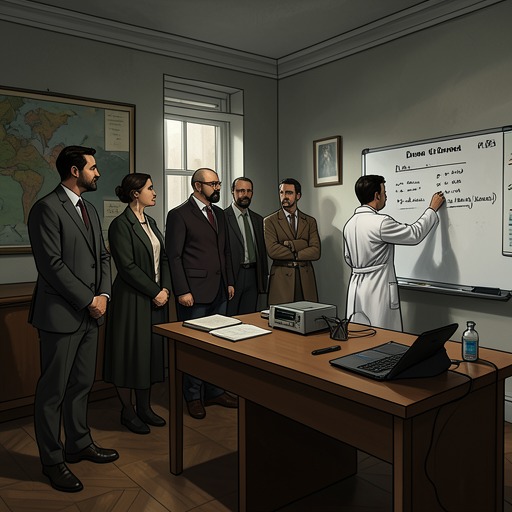
The Saskatchewan work also made the conditions surrounding a session difficult to separate from the drug itself. Osmond and Hoffer learned that an engaged, empathetic therapist could help shape the experience and reduce the likelihood of a frightening one. They suspected that some adverse reactions might be encouraged by the stark, impersonal atmosphere of a white room and a white-coated clinician. The later language of set and setting was not yet in use in this work, but the practical insight was already emerging: the treatment did not consist of a chemical in isolation.
By the end of the decade, LSD was widely regarded in North America as a promising treatment for alcohol addiction, and the Government of Saskatchewan helped make LSD therapy a standard treatment option in the province. That apparent success drew scrutiny from the Addiction Research Foundation in Toronto, which sought to repeat the trials under tighter controls. Its clinicians placed volunteers in neutral rooms, avoided engaging with them except to administer questionnaires, and sometimes restrained or blindfolded them. The results did not match those reported in Saskatchewan, and several volunteers had terrifying experiences. The contrast exposed a methodological problem that was also a therapeutic one: the replication altered the interpersonal conditions that supporters considered essential to the treatment. Critics could reasonably point to weaker results under stricter controls, while proponents could reasonably argue that the controlled setting had changed the intervention.
A Distributed Research Network
The first wave did not develop through hospitals and academic departments alone. Al Hubbard linked distant centers by carrying LSD, practical knowledge, and clinical experience between researchers. By the late 1950s, his circuit connected Weyburn with R. Gordon Wasson in Manhattan, research groups in Chicago, and work in Los Angeles with Betty Eisner, Sidney Cohen, and Oscar Janiger. He also persuaded Hollywood Hospital in Vancouver to dedicate a wing to treating alcoholics with LSD, and discreetly flew celebrities there from Los Angeles. The treatment became a business in Canada, but Hubbard objected when institutions charged patients heavily for sessions; he regarded psychedelic therapy as philanthropy and spent down his fortune promoting it.
Hubbard’s movement between centers made him a conduit for supplies and methods as well as a builder of professional relationships. He later added Menlo Park and Cambridge to his circuit. His work with researchers helped transmit practices beyond any single institution, though the book leaves open whether he also passed information to the CIA; people who knew him disagreed, and Hubbard criticized the agency’s use of LSD as a weapon. Whatever his intelligence connections, the research network depended on intermediaries like him, whose influence came from connecting clinicians, sharing materials, and teaching session practices.
A separate branch grew from Myron Stolaroff’s experience at Ampex. After taking 66 micrograms of LSD, he became convinced that the drug could help healthy people explore their capacities, not only treat illness. He brought colleagues together to discuss spirituality and human potential, including Don Allen and Willis Harman, and Hubbard traveled to Menlo Park to guide sessions and train others. Stolaroff briefly tried to reshape Ampex into a psychedelic corporation, with weekly workshops and sessions for executives; the effort faltered after the company’s general manager objected to religious images Hubbard brought into his office. In 1961, Stolaroff left Ampex and, with Harman, founded the International Foundation for Advanced Study to investigate LSD’s effects on personality and creativity. Its staff included psychiatrist Charles Savage, psychologist James Fadiman, and Allen, who left engineering to become a screener and guide. The foundation secured an FDA research permit and supplies of LSD and mescaline.
Expansion and Scientific Disputes
The research agenda extended from alcoholism and personality to questions about social behavior and religious experience. In 1961, Timothy Leary and Ralph Metzner devised the Concord Prison Experiment, testing whether psilocybin might reduce recidivism among incarcerated men. Thirty-two inmates received psilocybin in prison sessions; one member of Leary’s team also took the drug, while another remained sober to observe. A comparison group received no drug or special treatment. Leary reported that 25 percent of the psilocybin group had returned to prison ten months after release, compared with 80 percent of the control group. Decades later, Rick Doblin’s reconstruction of the cases found that Leary had exaggerated the results and that the groups showed no statistically significant difference. The dispute sharpened criticism of the experiment’s methods and of the gap between dramatic claims and the evidence supporting them.
A more credible, though still imperfect, inquiry took place in 1962: the Good Friday Experiment. Walter Pahnke studied twenty divinity students using a double-blind design in which neither investigators nor participants knew who had received psilocybin and who an active placebo. Pahnke did not disclose that one participant had panicked and needed sedation, a serious limitation in the record. His broader conclusion—that psilocybin could reliably occasion experiences resembling those described in accounts of mystical experience—nevertheless helped inspire later research, including a rough replication at Johns Hopkins University in 2006. Across these studies, the first wave produced both ambitious therapeutic claims and a recurring argument over what counted as credible evidence.
Shutdown and Survival
By 1966, the political and cultural climate around psychedelics had changed sharply. In April, Sandoz withdrew LSD-25 from circulation, transferring most of its remaining stock to the U.S. government. The withdrawal contributed to the shutdown of many of the roughly seventy research programs then operating. In May, Timothy Leary and Sidney Cohen testified at Senate hearings, trying to distinguish supervised medical research from illicit use. Their defense did not prevent further restrictions. In October, the FDA ordered about sixty researchers around the country to stop their work.
The order reached the International Foundation for Advanced Study at a moment that captured the abruptness of the break. James Fadiman had just dosed four participants in a creativity experiment when the letter revoking the project’s approval arrived. He and his colleagues delayed acting on it until the following day; then the foundation, along with virtually every other U.S. program still underway, closed. The sequence turned an administrative notice into a literal interruption of ongoing research, and marked how quickly a once-expanding field could be brought to a halt.
One major program survived: the Maryland Psychiatric Research Center at Spring Grove. Researchers there, including Stanislav Grof, Bill Richards, Richard Yensen, and Walter Pahnke, continued work with psilocybin and LSD on alcoholism, schizophrenia, and the existential distress of cancer patients. The program lasted until 1976. Its survival was unusual, and former staff attributed it in part to director Albert Kurland’s strong reputation and Washington connections, which helped him keep the center operating and obtain LSD after other programs had closed. Elsewhere, practitioners carried the work underground. Later guides could trace professional lineages to figures including Timothy Leary, Stanislav Grof, Al Hubbard, and Leo Zeff; Myron Stolaroff argued that anecdotal evidence from underground therapists contributed to the research that resumed in the late 1990s.
Afterlife of the First Wave
The distance between suppression and revival was bridged by people and practices that never entirely disappeared. At a 2010 conference organized by the Multidisciplinary Association for Psychedelic Studies, James Fadiman invited underground guides to meet the following morning, expecting only a handful. One hundred attended. The gathering revealed a dispersed body of practitioners who shared methods and professional connections despite lacking a formal organization. University researchers later sought advice from underground guides on subjects such as music in guided psilocybin sessions, another sign that knowledge had moved across the boundary between illegal practice and academic research.
The new clinical studies renewed interest without settling the questions that had troubled the first wave. In December 2016, reports on the Johns Hopkins University and New York University cancer trials described clinically significant reductions in anxiety and depression for about 80 percent of participants, lasting at least six months; the intensity of reported mystical experience closely correlated with symptom improvement. The trials included only eighty subjects in total and required larger studies before the government would consider rescheduling psilocybin. A small feasibility study of psilocybin for treatment-resistant depression at Imperial College London also produced rapid improvements, but lacked a control group and was not randomized. The results encouraged further investigation, not a definitive claim of cure.
That caution is part of the first wave’s continuing significance. Its researchers opened new possibilities by treating context, therapist involvement, and subjective experience as integral to psychedelic treatment, but its history also contains weak controls, inflated conclusions, and institutional collapse. The later revival inherited both sides of that record: evidence that psychedelic therapy might help across several conditions, and a warning that early promise, small samples, and unusually intensive care cannot substitute for stronger tests. The first wave ended as an organized research movement in 1966, but its network, questions, and contested methods continued to shape what came after.